

The fast-changing business environment in Saudi Arabia, through the Vision 2030 programs, has generated an unprecedented need to adopt complex solutions in human resources management. The Kingdom is seeing the rapid uptake of digital HR tools by organizations to facilitate the handling of workforce management, guarantee regulatory compliance, and improve workforce experiences. The Saudi market has distinct demands, such as the provision of Arabic language, compliance with labor laws, compliance with the GOSI (General Organization of Social Insurance), and compliance with the requirements of the Saudization (Nitaqat).
HR software in the Saudi Arabian market is not limited to simple personnel management, but it provides solutions that are holistic in nature and are based on payroll processing, attendance tracking, performance management, recruitment, and employee self-service portals. The systems benefit both large and small businesses (startups and large companies) by assisting them in managing their human capital more effectively and relieving them of administrative load, as well as enhancing operational efficiency.
The present guide will discuss the most popular HR software in Saudi Arabia, its features, capabilities, and their applicability to the needs of various organizations. No matter the size of your company or the profession of a large corporation, learning about these platforms will enable you to make a wise decision in terms of your investments in HR technology.
Also Explore: Top AI Image Generators
Best 11 HR software in Saudi Arabia
1. Bayzat HR System
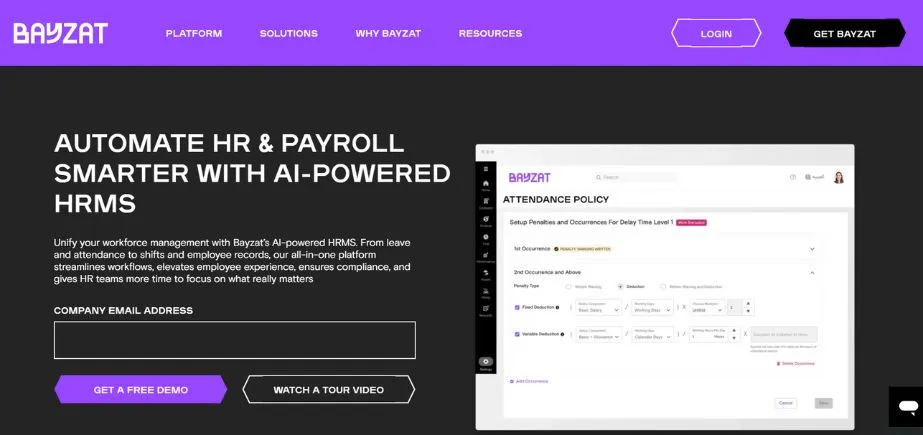
Bayzat will be a full GCC-based HR and benefits platform. It was established in 2014 and provides all-inclusive solutions of HR management, payroll processing, and benefits administration. The site has English-Arabic support, smooth integration with GOSI, and WPS support. Bayzat is very proficient in automating the daily routine HR activities as well as offering a strategy through the use of superior analytics. The ease of use and the ability to access information and benefits through mobile devices enable the HR teams to concentrate on strategic projects as the employees take advantage of self-service over their information and benefits.
Key Features:
- Extensive database control of employees.
- Computerized payroll with WPS compliance.
- Time and labor management system.
- Appraisal and performance evaluation instruments.
- Self-service portal for employees.
- A platform to benefit the administration.
- GOSI compliance and integration.
- iOS and Android mobile applications.
- Approvals and workflows are customizable.
- State-of-the-art analytics and reporting.
Best For:
The medium and large-scale companies that need a single HR and benefits solution with powerful regional compliance options.
Website:
www.bayzat.com
2. palm.hr
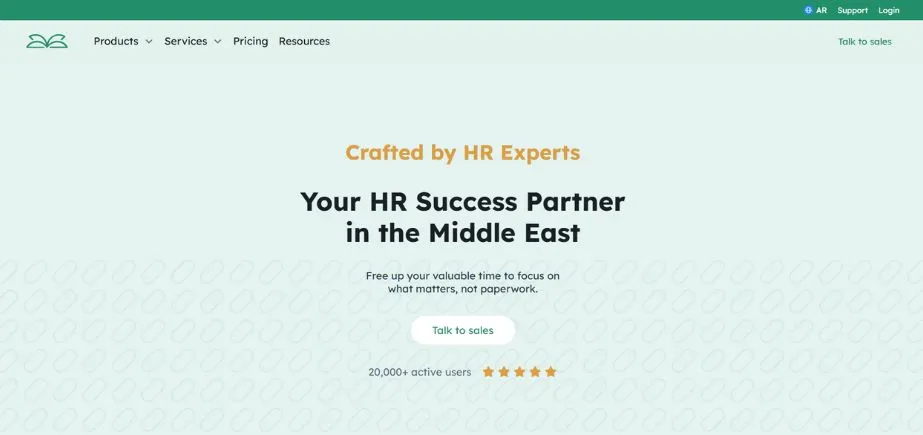
palm.hr is an MENA-specific HR management platform that is cloud-based. It provides superior customization flexibility and the full lifecycle of the employee. The system offers strong support for the Arabic language, complete compliance with Saudi labor laws, real-time integration with GOSI, and automatic generation of WPS files. Its open-ended design enables the companies to begin with the necessities and expand as the company expands, which makes palm.hr relevant to companies in various growth levels.
Key Features:
- End-to-end recruitment and onboarding.
- Smart tracking of attendance and time.
- Extensive payroll administration.
- Auto accruals of leave are in place.
- Performance management system..
- Tracking of training and development.
- Electronic filing and management.
- Self-service portal for employees.
- Visualization of organizational chart.
- Reports and dashboards can be customized.
Best For:
Fast-growing organizations that require a scalable, flexible HR solution at their level and high localization in the Middle East.
Website:
www.palm.hr
3. Jisr HR Solution
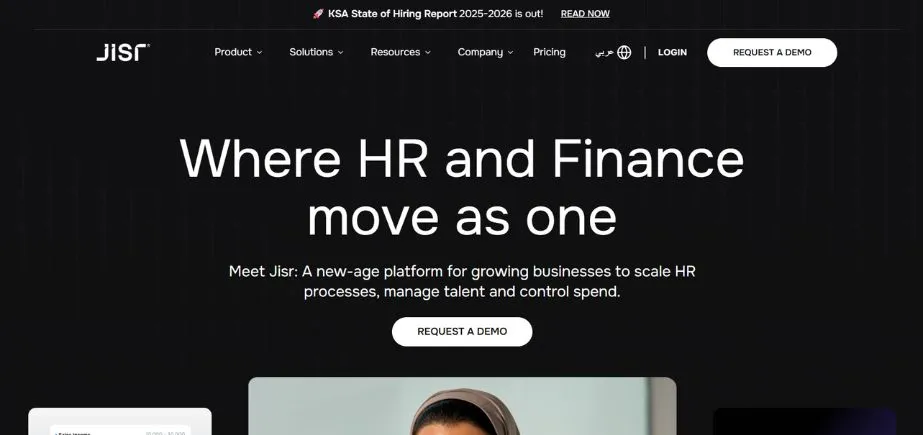
Jisr is a Saudi-created HR platform that is well-localized and has insight into the requirements of the Kingdom. It has an Arabic-first interface, and it is powerful in managing the complicated Saudi laws, such as Nitaqat compliance, Muqeem integration, and government portal communications. Being a trusted provider by the companies of the private sector and state organizations, Jisr helps to simplify complex HR procedures and preserve flexibility in organizations. It provides a solid ally to Saudi enterprises going through the complexities of managing their workforce in a changing economy because of its local support teams and continuous regulatory updates.
Key Features:
- Full-fledged HRMS in Arabic-first.
- WPS and GOSI Payroll processing.
- Biometric-integrated attendance management.
- Total leave management system.
- Nitaqat and Saudization tracking.
- Employee portal and mobile application.
- Document and contract management.
- Performance assessment instruments.
- Training management module
- Compliance reporting in detail.
Best For:
Saudi companies looking to find locally-developed software, which has significant knowledge of Kingdom-specific needs.
Website:
www.jisr.net
4. Malachite System
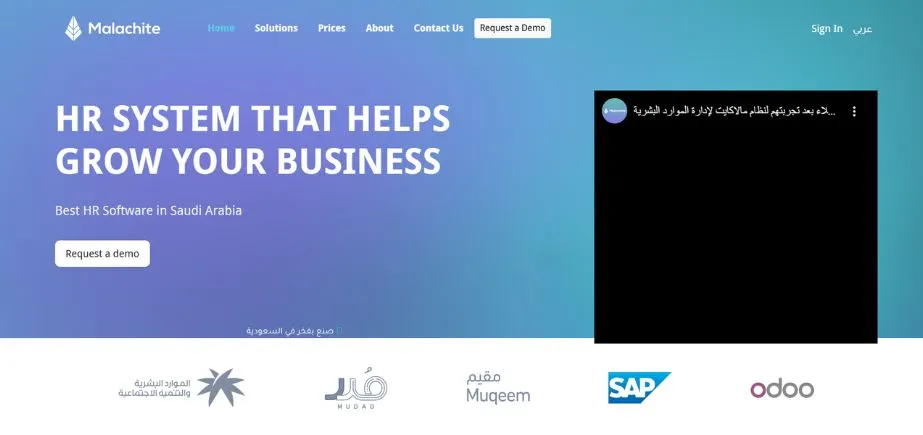
Malachite is a powerful ERP platform and a powerful HR management solution for the Saudi market. It is more secure and stable, and manages vast operations and complicated hierarchies. The platform is highly integrated with other business systems, and it has a wide range of customization. Malachite also focuses on data security by providing audit trails and reporting functions, which would make it useful to the organization that has to get all the documentation and regulations in detail. Its multi-company and multi-branch support is especially appropriate to the large companies that have complex needs.
Key Features:
- Embedded ERP inclusive of HR module.
- State-of-the-art payroll and compensation management.
- Multi-branch and multi-company support.
- Critical employee documents and files.
- Time-card and shift-work.
- Leaves and benefits administration.
- Hiring and recruiting processes.
- Performance management system
- Individual training and development monitoring.
- Comprehensive reporting and analytics.
Best For:
Large companies that need integrated ERP systems that have advanced HR management features.
Website:
www.malachite-system.com
5. Zimyo
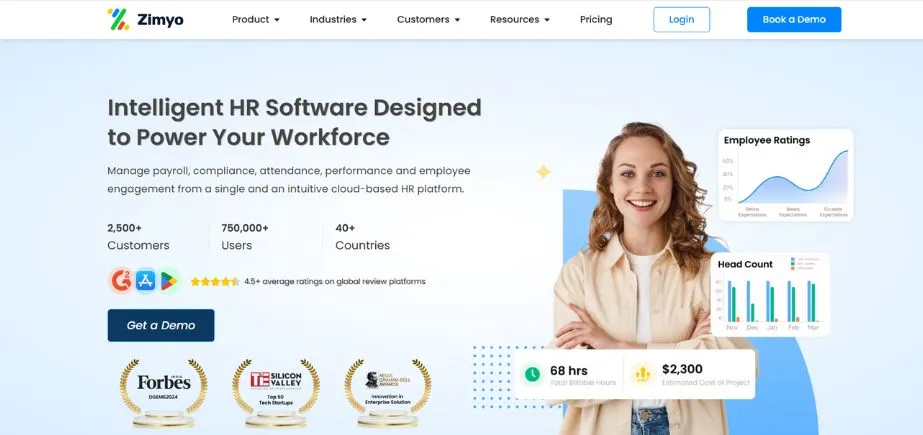
The modern cloud-based HR platform Zimyo provides high functionality and a user-friendly experience. It has a modular structure where companies can choose specific modules that suit their needs and still have expansion capabilities. The site has AI-assisted recruiting applications, sentiment detection, and predictive analytics to make data-oriented decisions. Zimyo focuses on an employee-centered design through engaging self-service websites and applications. Its competitive prices and customizable contracts help attract startups and SMEs that want enterprise features without complexity and high costs, and it helps to meet the demands of the Saudi compliance standards.
Key Features:
- All-embracing HRMS on a modular architecture.
- Artificial intelligence-based applicant tracking system.
- GPS-based attendance management.
- Processing of payrolls with compliance features.
- Goal management and performance (OKRs).
- Employee engagement questionnaires.
- Learning management system
- Expense management module
- E-signing and document repository.
- Mobile-first experience of employees.
Best For:
Startups and SMEs that want a modern, affordable HR software with high employee engagement capabilities.
Website:
www.zimyo.com
6. GulfHR
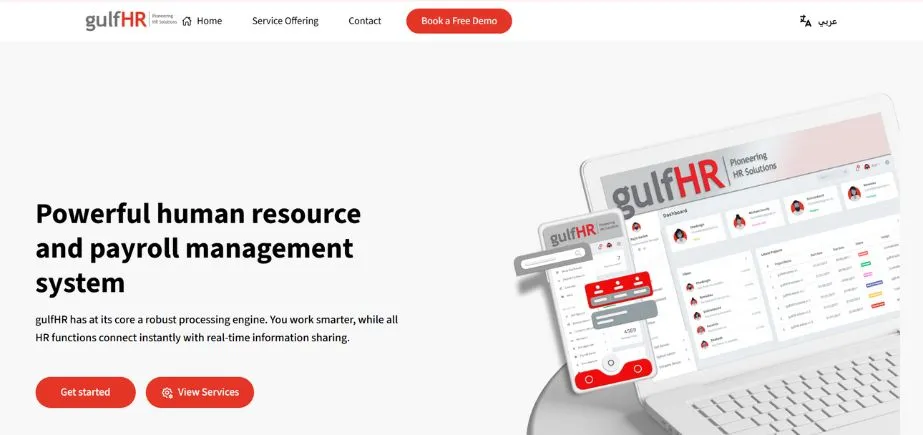
GulfHR is a locally based HR company that has in-depth GCC experience and provides holistic solutions to organizations in Gulf nations, including Saudi Arabia. The platform shows outstanding knowledge of regional labor regulations, cultural peculiarities, and business operations. It is doing a better job in managing multinational workforces, managing complex sponsorship requirements, and complying with regulations. GulfHR offers superior Arabic language and bilingual customer care. Elastic deployment, such as cloud-based and on-premise deployments, provides organizations with flexibility in controlling their data without losing access and security.
Key Features:
- Premeditated information system of employees.
- Localization of payroll management in GCC.
- Time keep and attendance trackers.
- An engine with complex leave management rules.
- Calculation of service benefits.
- Hiring and staffing processes.
- Performance appraisal system.
- Training management
- GOSI and WPS compliance
- Bilingual support (Arabic/English).
Best For:
Organizations with a presence in the GCC countries that have a need for regionally specific HR solutions.
Website:
www.gulfhr.com
Keep Exploring: Best Free Chrome Extensions for Off-Page SEO
7. ZenHR
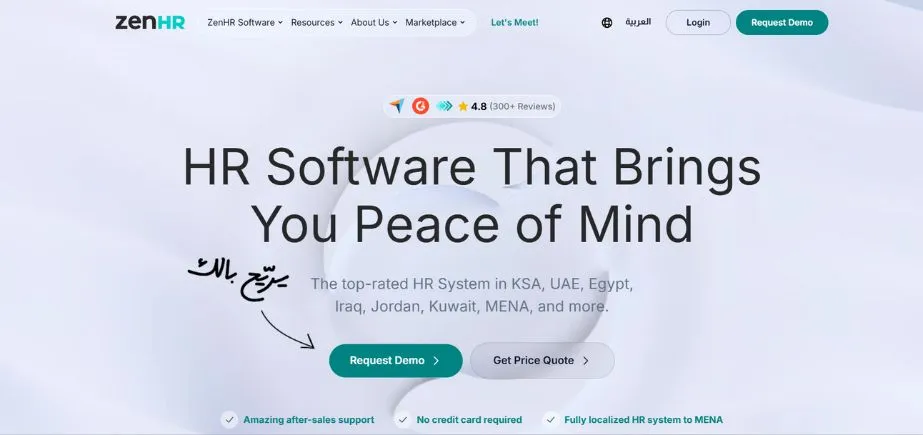
ZenHR is a convenient and well-designed HR system covering the MENA region with a high concentration of Saudis. It integrates indispensable management tasks with tactical talent management instruments. The modern interface and easy navigation allow speedy adoption of the interface by organizations. ZanHR focuses on the automation of the routine functions and liberates the HR professionals to pursue strategic projects. It has an ideal mobile experience, which has been offered using native applications, providing employees and managers with the ability to reach the platform on the go. Its functional features and simplicity enable access to sophisticated HR management by non-technological companies with limited IT capabilities.
Key Features:
- Local automated payroll.
- Online attendance and time calculation.
- Extensive vacation administration.
- Performance appraisals and 360-degree appraisals.
- Self-service portal for the employees.
- The process of recruitment and applicant tracking.
- Introductory training and development module.
- Document management system
- Employee and manager mobile applications.
Best For:
Companies that are interested in the user-friendly HR software that offers a high level of attention to the employee experience and engagement.
Website:
www.zenhr.com
8. Artify 360
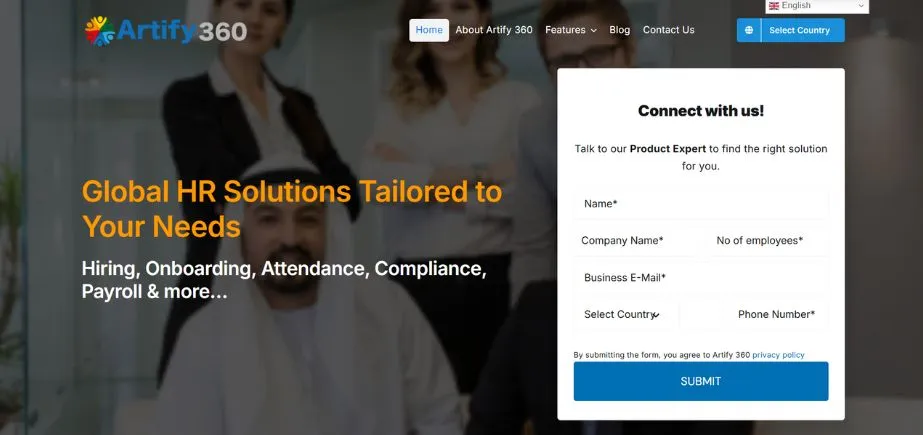
Artify 360 is the new generation of human capital management, which integrates the conventional HR services and the innovative people analytics and AI services. The platform will allow 360-degree views of employees in terms of skills, competencies, career goals, and performance trends. It integrates predictive analytics that determine retention risks, succession planning requirements, and skill gaps. The performance management module is conducive to ongoing feedback, real-time recognition, and planning development in accordance with organizational purpose. The employee development and engagement at Artify 360 render it useful to organisations that develop high-performance cultures and retain the best employees.
Key Features:
- There is a 360-degree employee management system.
- In-depth performance management.
- Constant feedback and recognition instruments.
- Tracking of skills and competencies.
- Succession planning module
- A platform of learning and development.
- Onboarding and talent acquisition.
- Anticipatory people analytics.
- Engagement surveys of the employees.
- Goal setting and objectives tracking.
Best for:
Organizations that focus on developing talent, managing performance, and using data to make HR decisions.
Website:
www.artify360.com
9. GreytHR
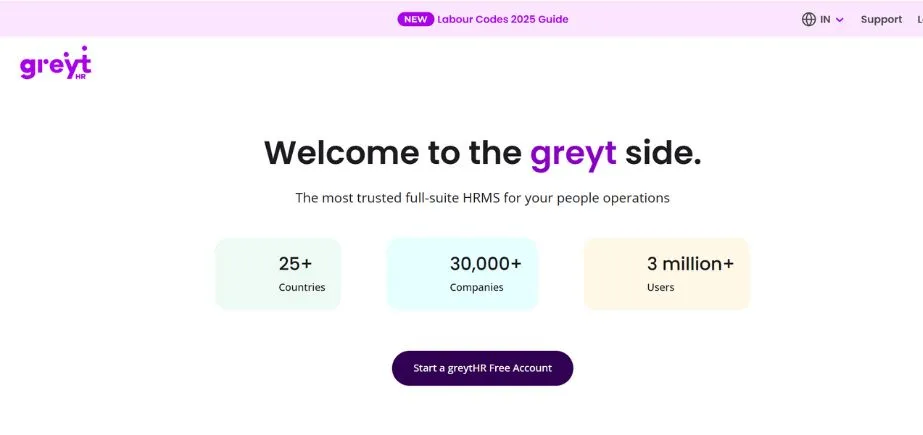
GreytHR is a popular HR and payroll software among SME with increasing Saudi presence. It is also easy to implement with simple requirements, low costs, and elaborate features that fulfill the fundamental business requirements and make complicated HR tasks easier to automate and follow intelligent workflows. The platform is also exceptional in carrying out payroll processing, which is accurate and compliant, and requires less time. Its employee self-service portal and mobile application allow employees to access various information, seek leaves, pay slips, and expenses without having to go through the HR department to enhance efficiency and satisfaction among the expanding businesses.
Key Features:
- Full HR and salary administration.
- Tracking of attendance automatically.
- The mobile app in leave management.
- Database and documentation of employees.
- Statutory payroll processing.
- Self-service portal for employees.
- Expense management
- Generation of a letter and document.
- Reporting and analytics
- Mobile with cloud-based access.
Best Use:
Small and medium-sized companies that need low-cost, simple-to-use HR and payroll systems.
Website:
www.greythr.com
10. Ramco
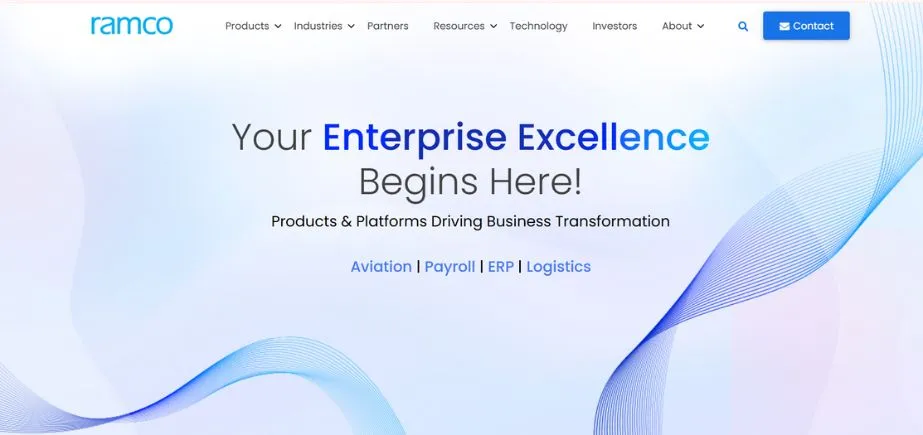
Ramco provides enterprise-grade HR and payroll services based on its unified cloud-based system on next-generation technology. It has decades of international experience that it uses to manage complicated multi-country operations without breaking local compliance. The platform is also effective in dealing with the payroll of a large number of employees with a variety of pay structures. To improve the experiences of employees, Ramco integrates AI and chatbot services. Its mobile-first and global payroll feature is useful in the context of a multinational corporation, whereas its strong analytics can help obtain strategic information on how to optimize human capital investments and employee planning.
Key Features:
- Global enterprise HRMS.
- Multi-country payroll processing.
- Time management and time tracking.
- Talent management suite
- Recruitment and onboarding
- Learning management system
- Chatbot self-service for employees.
- Planner analytics Workforce.
- Mobile-first architecture
- Artificial intelligence, HR service delivery.
Best for:
Global HR management needed with local adherence by large enterprises and multinational corporations.
Website:
www.ramco.com
11. Ojoor
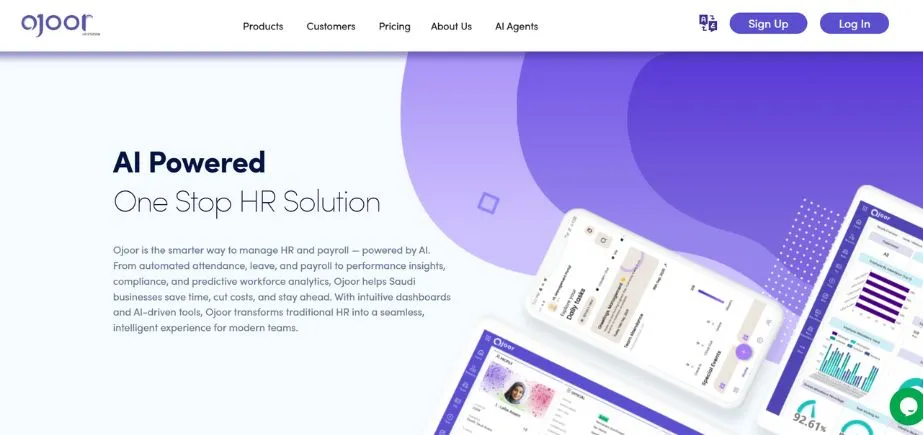
Ojoor has narrowed down to retail, hospitality, and service industries, knowing their peculiarities such as high turnover, schedules in shifts, and numerous locations. The platform is also superior in handling a huge frontline staff with advanced shift arrangements, time monitoring with position confirmation, and simple onboarding of staff to ensure fast employment. It has a mobile-first design, which makes it possible to access crucial HR functions through smartphones by employees not connected to a desk. Ojoor can be easily integrated with the point-of-sale and retail operations software to establish coherent business management ecosystems and to ensure high levels of compliance and auditability.
Key Features:
- Hospitality and retail-oriented HRMS.
- Multi-location workforce management.
- Modern shift scheduling and planning.
- GPS-verified time and attendance.
- Quick onboarding and offloading.
- Timecard processing workers are paid on an hourly wage basis.
- Mobile-first employee engagement.
- POS and operations integration.
- Compliance management
- Store-level reporting and analytics.
Best for:
Businesses with huge distributed frontline workforces in the retail, hospitality, and service industries.
Website:
www.ojoor.com
Key Features to Look for in Saudi HR Software
In choosing the HR software to implement in Saudi Arabia, the following are the key capabilities that organizations should consider:
Regulatory Compliance:
The program should be capable of dealing with Saudi-related demands such as GOSI integration, WPS compliance, integration with Muqeem, and Nitaqat reporting. Regulatory changes require automatic updates that ensure that there is always compliance.
Arabic Language Support:
Full Arabic localization of the interface, reports, and workforce communication will guarantee accessibility to Arabic speakers and language formulation.
Payroll Management:
Strong payroll engines, which are capable of supporting complicated Saudi pay structures, i.e., basic salaries, allowances, deductions, end-of-service benefits, and leave encashments with complete precision.
Self-Service Capabilities:
Employee and Manager self-service portals lessen the administrative workload and enable staff to handle their information, requests, and approvals through web and mobile interfaces.
Integration Capabilities The capability to have integration with the existing systems, such as accounting applications, time tracking applications, access control applications, and government portals, will enable a smooth flow of data throughout the organization.
Scalability:
A Structure that expands alongside your company and can accommodate a growing number of employees, other sites, and requires more features without affecting performance.
Mobile Accessibility:
Native mobile apps or web-based interfaces that allow HR management and employee services to be accessed on smartphones and tablets to meet the demands of the modern workforce.
Reporting and Analytics:
Multifaceted reporting features that one may use to gain an understanding of workforce statistics, compliance levels, and HR performance, and make decisions based on the information.
Data Security:
Data encryption, robust security features such as role-based access controls, audit trail, and compliance with data protection regulations to protect sensitive information about employees.
Local Support:
Availability of customer support teams with knowledge of the Saudi business environment, able to speak Arabic, and offer prompt service when implementing and in the course of the operation.
Advantages of the Adoption of HR Software in Saudi Arabia
Companies that apply contemporary HR software tools successfully achieve important returns in a variety of dimensions:
Improved Productivity:
Automation of all administrative processes like leave requests, payroll preparation, and document management liberates the HR departments to work on other activities that will be more beneficial to the business.
Better Compliance:
With automated compliance capabilities, the chances of regulatory breach, fines, and litigation are minimized as more organizations are always compliant with the Saudi labor laws and government standards.
Improved Employee Experience:
Self-service portals and mobile access enable employees with convenient access to information and services they need, making them more satisfied and engaged, and less expensive for HR services delivery.
Cost Reduction:
Digital HR operations remove paper processes, minimize mistakes of manual processes, which need to be corrected, and streamline staffing of HR operations by increasing productivity.
Data-Driven Decisions:
Full analytics and reporting will give the leadership data on workforce trends that will allow them to act proactively and plan ahead.
Greater Accuracy:
Payroll, leave balances, and benefits are automatically computed and minimise errors that may undermine employee confidence and lead to compliance problems.
Scalable Growth:
Cloud-based HR applications extend smoothly with organizations and can expand into new destinations and add more employees without significant system upgrades.
Improved Security:
The contemporary HR solutions have strong security capabilities that offer greater protection to sensitive employee information than the conventional paper-based or spreadsheet systems.
Implementation Considerations
To successfully implement HR software in Saudi Arabia, it is important to plan and execute implementation on several major fronts:
- Needs Assessment: Before assessing vendors, do a careful analysis of the specific needs of your organization, such as whether features are mandatory or not, and whether they are nice to have or not, and also, whether they are required to be left as separate off-the-shelf products or need to be integrated.
- Vendor Assessment: Demo, trial, and reference checks of already existing customers with similar industries or size of organisation to determine the suitability of the software.
- Data Migration: Preorganize the process of moving the current employee data from existing systems, ensuring data accuracy and completeness, and the safety of data during the transition should be considered.
- Customization Balance: Decision on the level of system customization to the extent that addresses the needs without generating too much complexity that will complicate future upgrades and raise costs.
- Integration Planning: By what systems will you need to integrate with the HR platform, and create explicit data exchange procedures and schedules?
- Testing: Complete testing of all features, workflows, and integrations prior to full deployment, i.e., payroll calculations, compliance reports, and mobile functionality.
- Continued Support: Have an agreement with the vendors on the responsiveness of support on a regular basis, updates within the system, and also on assistance during any regulatory changes.
Saudi HR Technology in the Future
The HR software market in Saudi Arabia is still developing at a high pace, and several dynamic trends are defining the future of the market:
Artificial Intelligence:
AIs are being introduced more frequently, such as chatbots to service employees, predictive analytics to retain employees, and intelligent resume screening.
Sophisticated Analytics:
More complex workforce analytics and predictive modeling assist companies in optimizing workforce planning and talent management programs.
Employee Wellness:
Wellness programs, mental health resources, and work-life balance features indicate the increasing interest in employee well-being in a holistic way.
Gig Economy Support:
R systems that have been modified to accommodate the contingent employees, freelancers, and flexible work arrangements alongside standard employment.
Improved Mobile Experiences:
Further development of mobile capabilities to facilitate full remote HR service provision and employee interaction.
Blockchain Integration:
The use of blockchain technology is emerging as a secure credential verification, employment history, and cross-border employment documentation.
Continuous Performance Management:
Shift toward periodic to ongoing feedback and recognition, continuous developmental dialogues.
Integration with Business Systems:
Further merger of HR systems with the general business platforms, such as ERP, CRM, and business intelligence systems.
Conclusion
The digital transformation process in Saudi Arabia has provided organizations with opportunities that have never been experienced before to transform their human resources management using advanced software. The platforms that were profiled in this guide are the best available to Saudi businesses; it is also true that they are the top choices that can be proposed, and each has its advantages depending on the organizational context, size, and industry.
The choice of the appropriate HR software must be made with specific attention to the needs of your organization, the budget, technical requirements, and the strategic goal. It can be the local compliance, employee engagement, advanced analytics, or industry-specific features that matter to you the most, but the Saudi market can provide mature solutions that can support your needs.
With the Kingdom in the process of transformation as per the Vision 2030, the management of human capital is more essential to organizational success. The current HR software not only ensures compliance and efficiency but also allows managing the workforce in a strategic way that is required to compete in the fast-changing markets.
Companies that invest sensibly in HR technology in the modern world are poised to achieve sustainable growth, improved employee experiences, and operational excellence that delivers competitive advantage in the dynamic business world of Saudi Arabia.
Frequently Asked Questions
Which single most significant feature is important in Saudi Arabian HR software?
The majority of these are in regulatory compliance, such as GOSI integration, WPS compliance, and Nitaqat reporting abilities. In the absence of such features, organizations are likely to face punishment and lawsuits.
Are these HR systems Arabic and English supportive?
The majority of the most popular HR websites that provide services to Saudi Arabia have bilingual support, but the extent of Arabic localization depends on the vendor. Test language ability in the assessment.
How long does the average HR software take to implement?
The implementation plan varies from a few weeks to implement basic cloud solutions to many months, depending on the size of the organization, the data migration requirement, and other customization requirements.
Does the HR software have compatibility with the current payroll systems?
The majority of modern HR systems have integration capabilities, and the level of integration can be different. Negotiate on certain integration needs with suppliers during evaluation.
What is the average price of HR software in Saudi Arabia?
The cost of the pricing depends heavily on the features, the number of users, and the model, with simple solutions costing a few dollars per employee per month and large companies spending a lot on enterprise portals.
Which is better, cloud-based HR software or on-premise?
Cloud-based solutions have the benefits of being more accessible, scalable, and less expensive to purchase in the short run as compared to on-premise systems that offer more control over data and can be customized. The decision is determined by organizational priorities and technical abilities.
What is the policy of the HR systems regarding the Saudi labor law changes?
Reliable sellers track the change in regulations and adjust their systems in accordance with them, which is usually automatic. Check the track record of the vendor and update procedures in the evaluation process.
Is HR software helpful to small businesses?
Absolutely. Several solutions exist in the form of scaled solutions tailored especially to SMEs, offering professional HR management services at reasonable prices and low implementation requirements.
Continue Exploring: Best Ahrefs Alternatives