
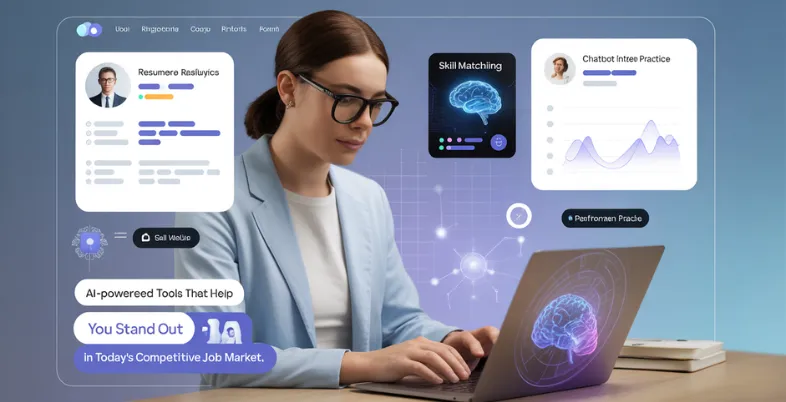
The “spray and pray” method doesn’t work for job applications. It never really has, but these days, with how easy it’s become, it’s even less effective. People have misused AI in job search, resulting in lazy, generic, irrelevant, and non-targeted applications. The cool thing is, you can 100% use AI to your advantage. In this article, I try to explain how. It’s time to bring a gun to a knife fight.
Applying for jobs today is miserable. If you feel like you’re shouting into a void, it’s because you are. The days of submitting a generic PDF and hoping a human reads it are over.
The stats paint a bleak picture. According to recent data from Ashby, applications per hire have tripled since 2021. That means for every single role you apply to, you are competing against 3x the volume of candidates you would have just a few years ago.
To cope with this flood, companies have turned to automation. Surveys indicate that anywhere from 43% to 99% of hiring managers now use AI in some capacity to screen, sort, and rank candidates.
Here is the uncomfortable truth: You are fighting an algorithm with a Word document.
If recruiters are using AI to filter you out, you need to use AI to force your way in. This isn’t “cheating”; it’s an arms race. And if you refuse to adapt because of some misplaced sense of nobility, you will lose to the candidate who didn’t.
Here is how to build a tech stack that gets you hired in 2025.
1. The Resume: Stop Guessing Keywords
The first gatekeeper isn’t a person; it’s an Applicant Tracking System (ATS). These systems parse your resume into digital profiles and rank them based on keyword matches. If you don’t hit the right threshold, you are invisible.
Most advice tells you to “tailor your resume.” That’s fine, but humans are terrible at guessing which keywords matter. You might obsess over “leadership” while the ATS is filtering for “cross-functional team management.”
This is where Rezi.ai comes in.
Rezi doesn’t just “write” your resume; it engineers it. We analyzed millions of hired resumes to understand exactly what the software looks for. The tool identifies missing keywords from the job description and helps you integrate them naturally. It’s not about tricking the system—it’s about speaking its language fluently.
The stat: A properly optimized resume can increase interview chances significantly. In a market where corporate job openings receive an average of 250+ resumes, being in the top 10% match rate is the difference between a phone screen and the rejection pile.
2. The Application Management: Treat It Like Sales (Teal)
If you are applying to five jobs a week, you have a hobby, not a job search. To break through the noise, you need volume and precision. But managing 50+ active applications in a spreadsheet is a nightmare.
Teal acts as a personal CRM (Customer Relationship Management) for your career. It allows you to bookmark jobs from LinkedIn or Indeed, track your status for each, and sets reminders for follow-ups.
Why does this matter? Because persistence wins. Most candidates apply and ghost. If you send a follow-up email 48 hours after applying, you are already in the top 1% of conscientious applicants. Teal automates the organizational load so you can focus on the outreach.
3. The Interview: Fix Your Delivery (Yoodli)
Congratulations, you beat the ATS. Now you have to talk to a human. This is where the “soft skills” gap kills qualified candidates. You can be a coding genius, but if you ramble, use “um” every three seconds, or fail to make eye contact (even over Zoom), you’re done.
Yoodli is an AI speech coach. You record yourself answering common interview questions (“Tell me about yourself”), and it analyzes your delivery in real-time. It flags filler words, checks your pacing, and even monitors your eye contact.
It’s brutal, honest feedback that your friends won’t give you.
The context: A huge part of the interview is subconscious bias. While we like to think hiring is objective, it isn’t. However, AI might actually be helping here. Research from Spotted Zebra suggests that AI systems can deliver up to 39% fairer treatment for women and 45% fairer treatment for minority candidates compared to human-led processes by focusing purely on skills and data rather than “vibes.”
If the machines are judging you on merit, make sure your delivery lets that merit shine through.
4. The Visuals: Perception is Reality (Aragon / HeadshotPro)
We live in a shallow world. Your LinkedIn profile picture is the first thing a recruiter sees. If it’s a blurry crop of you at a wedding with someone’s arm around your shoulder, you look like an amateur.
Professional photography is expensive and time-consuming. Aragon or HeadshotPro use generative AI to create studio-quality headshots from your selfies.
Is it vanity? No, it’s branding. In a stack of LinkedIn profiles, the one that looks polished and professional gets the click. It signals competence before you’ve said a word.
5. The Live Interview: When Practice Isn’t Enough (Verve AI)
Yoodli helps you prepare, but preparation and real interview performance are not always the same.
The biggest challenge with interview practice is that it simulates pressure without recreating the reality of a live interview. Once you are speaking with a hiring manager over Zoom or in person, your working memory can narrow under stress. Even well-rehearsed examples may suddenly become difficult to recall. You might lose your train of thought, provide a weaker answer than intended, or spend the next few minutes thinking about a response you wish you had handled better.
This is not a preparation problem. It is a retrieval problem that occurs during the actual interview, when it matters most.
Verve AI addresses this challenge by acting as a real-time AI interview copilot. Instead of helping only before the interview, it supports you while the conversation is happening. The tool listens to the interview, recognizes when a new question is asked, and displays a suggested response within one to two seconds. There is no need to activate it manually, allowing you to stay focused on the conversation.
To get the best results, spend time preparing Verve AI before your interview. Upload your resume, add relevant project documents, and preload your strongest behavioral interview stories using the Q&A feature. When an interviewer asks a question, Verve AI surfaces responses based on your own experience and preparation rather than relying on generic AI-generated templates.
The desktop application is available for both Windows and macOS. It works discreetly during screen sharing and supports major video conferencing platforms, including Zoom, Google Meet, Microsoft Teams, and Amazon Chime.
A practical way to think about these tools is as a complete interview preparation workflow: Rezi helps your resume pass applicant tracking systems (ATS), Teal keeps your job search organized, Yoodli improves your communication and interview skills, and Verve AI provides real-time assistance when you are answering questions in the interview itself.
The “Cheating” Myth
I hear this objection constantly: “Isn’t using AI to write my resume or prep for interviews dishonest?”
Let’s look at the numbers.
- 99% of Fortune 500 companies use ATS to filter you.
- 43%+ of recruiters use AI to write job descriptions and candidate outreach emails.
The company is using a tank to hire you. Don’t feel bad about using a bazooka to get the job.
Furthermore, the “human touch” we are so afraid of losing was never that great to begin with. Human recruiters are tired, biased, and overworked. They spend an average of 6 to 7 seconds looking at a resume. They aren’t reading your life story; they are scanning for patterns.
AI tools help you present those patterns clearly. They strip away the formatting errors, the typos, and the vague language that obscure your actual value.
Conclusion
The job market has fundamentally changed. The volume of applications is too high, and the technology used to screen them is too advanced for you to rely on “grit” and “passion” alone.
You need a strategy.
- Optimize your resume data with Rezi.
- Organize your outreach with Teal.
- Perfect your pitch with Yoodli.
- Polish your brand with AI headshots.
The tools are there. The data proves they work. The only question is whether you’re willing to use them.
Next Step: Go to Rezi.ai and run your current resume through the AI scanner. Look at your score. If it’s below 80, you now know exactly why your phone isn’t ringing. Fix it today.