
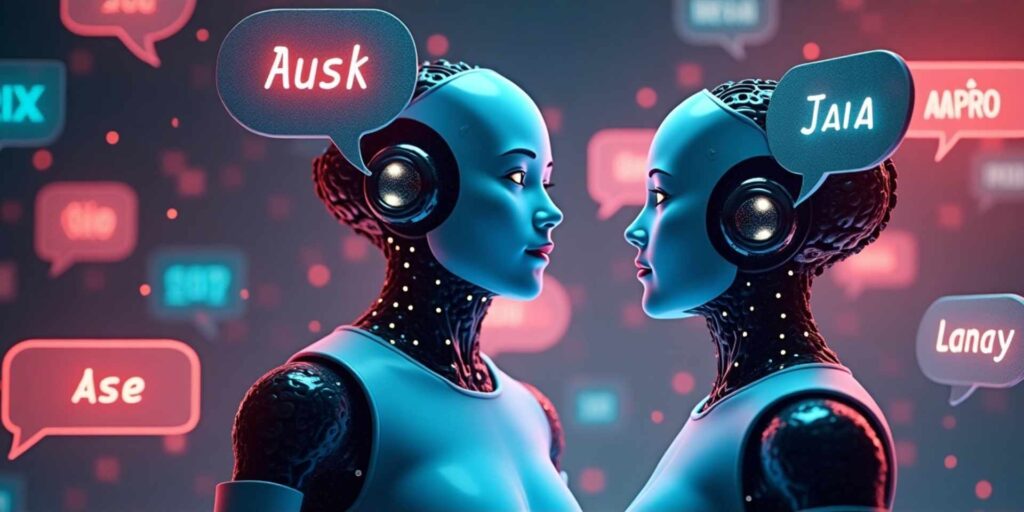
The year 2025 marks a pivotal moment in the evolution of artificial intelligence, as multilingual AI powered agents move from experimental technology to essential business infrastructure. Currently, we’re seeing hyper-speed progress in AI innovations, with models achieving performance improvements of over 60% on challenging benchmarks just in the last year alone.
The multilingual AI wave is revolutionizing the way businesses engage with customers, automate within-firm business processes, and go global to other regions of the world, opening vast productivity streams as well as new streams of revenue for businesses that apply it. With investment in generative AI continuing to rise, hitting new heights this year, the emphasis is all about developing agents that can freely speak and act across languages and cultures, opening the digital world to truly be borderless. In this article, we will explore the top 10 multilingual AI agents, transforming the AI world. So, let’s begin!
Why Multilingual AI Is Critical for Global Campaigns
A worldwide campaign is no longer a choice but a requirement in the globalized world today. Here are a few reasons why multilingual AI is critical for global campaigns:
- Wider Market Reach: Multilingual AI agents allow companies to tap into new markets by translating text, customer support, and marketing messages in large quantities, reaching millions of new consumers who are out of reach because of language barriers.
- Improved Customer Experience: With 24/7 native-language customer support, the agents cut down on waiting time and frustration, enhancing satisfaction and loyalty.
- Data-Driven Personalization: Multilingual AI assistants can process conversational data across geographies and deliver critical insights into local trends, preferences, and sentiments that can be utilized to craft more effective marketing and product strategies.
- Operational Efficiency: Multilingual functions such as customer support, content translation, and sales outreach can be automated, freeing human teams to work on more complex, high-value tasks, significantly improving productivity.
- Competitive Advantage: Those firms that implement multilingual AI agents proactively can gain a tremendous competitive advantage over other firms using ineffective, costly human-focused translation and support.
Criteria for Evaluating Multilingual AI Agents
Selecting the proper multilingual AI powered agents demands having a firm grasp of what they do that goes beyond mere translation. Here is what to consider:
- Language Accuracy & Fluency: The agent needs to do more than swap words; it must get the meaning, sayings, and world facts to give back answers that are right in grammar and fit the culture well.
- Language & Dialect Support: A good agent supports a vast array of languages, including lesser-known “low-resource” languages, and has the ability to support multiple regional dialects and accents.
- Performance & Latency: How quickly an agent can respond in and understand multiple languages is critical to real-time use cases like voice assistants and live chat, where latency is deadly to the user experience.
- Integration & Scalability: The agent must also integrate with your current technology stack, like CRM and ERP systems, and be scalable to handle greater levels of interactions from a large user base.
- Multimodality & Flexibility: Multilingual high-performing AI agents can process as well as generate not only text but also speech, images, etc., providing omnichannel, flexible support.
Comparative Analysis Table
| Name | Creator | Modalities | Language Support | Best For |
| Adobe Agent-Orchestrator | Adobe | Text, images, video | Extensive, via partner models | Personalized CX Orchestration |
| Smartcat AI Agents | Smartcat | Text, documents | 280+ languages | Global content localization |
| Ringg AI Voice Agents | Ringg | Voice, text | Dozens of languages | Voice-first customer support |
| Kruti by Ola Krutrim | Ola Krutrim | Text, image, voice | Indic languages, English | India-centric transactional tasks |
| Conversica AI Assistants | Conversica | Text (email, SMS, chat) | Over 10 languages | Sales lead qualification & nurturing |
| Oracle AI Agents for Sales | Oracle | Text, data | Multilingual translation | Sales team productivity within Oracle |
| IBM Watson Assistant | IBM | Voice, text | Over 13 languages | Enterprise-grade conversational AI |
| Google Gemini 2.5 Models | Text, audio, images, video | Extensive language support | High-performance, multimodal agents | |
| Gupshup Auto Bot Builder | Gupshup | Text, chat, voice | Over 30 languages | No-code bot building & growth |
| Microsoft Initiative | Microsoft | Foundational (LLM) | Focus on low-resource languages | Future-proofing multilingual AI |
Top 10 Multilingual AI Agents in 2025
1. Adobe Agent-Orchestrator Ecosystem
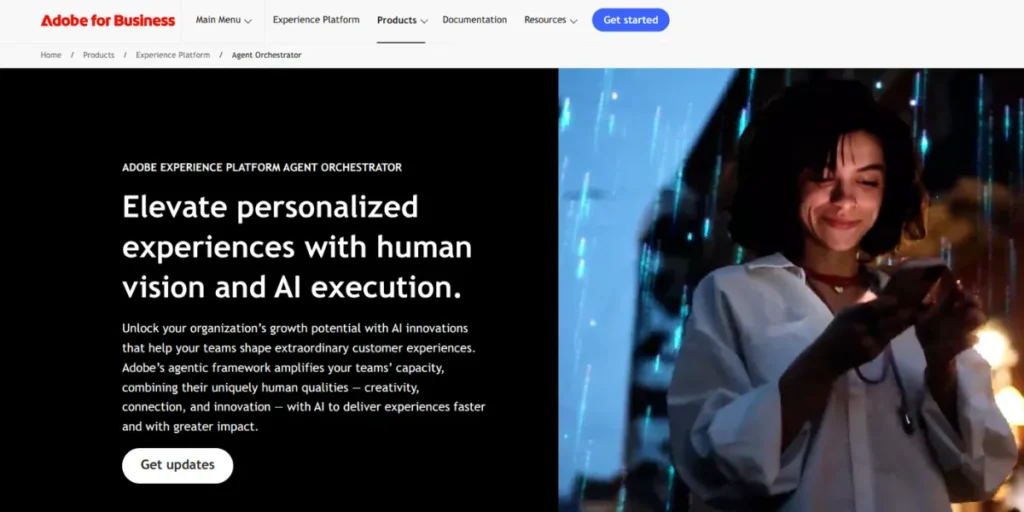
The Adobe Agent-Orchestrator system is a strong setup that lets firms manage and set up special AI agents who can speak many languages on Adobe and other group’s tools. Built on a deep, semantic understanding of enterprise data, content, and customer experiences, it enables the ability to deliver authentic one-to-one personalization at scale. By coordinating a sequence of specialist agents, from content generation to audience segmentation, it allows businesses to automate high-value work and create space for human teams to lead strategy and creativity. This setup is exceptionally committed to Customer Experience Orchestration (CXO), so every customer touch is unique and relevant, and it leverages Adobe’s commercially safe Firefly models and secure first-party data insights.
Languages Supported: Several languages via its integration with Adobe’s and third-party models.
Best Use Cases: Orchestration of custom customer experience, automated content generation, B2B account orchestration, and web optimization.
Pros: Strong integration with Adobe’s suite, strong focus on personalization, strong orchestration capabilities, and enterprise-grade security.
Cons: Can be challenging to deploy, best suited for businesses already invested in the Adobe platform, and perhaps too costly.
Website: https://business.adobe.com/products/experience-platform/agent-orchestrator.html
2. Smartcat AI Agents
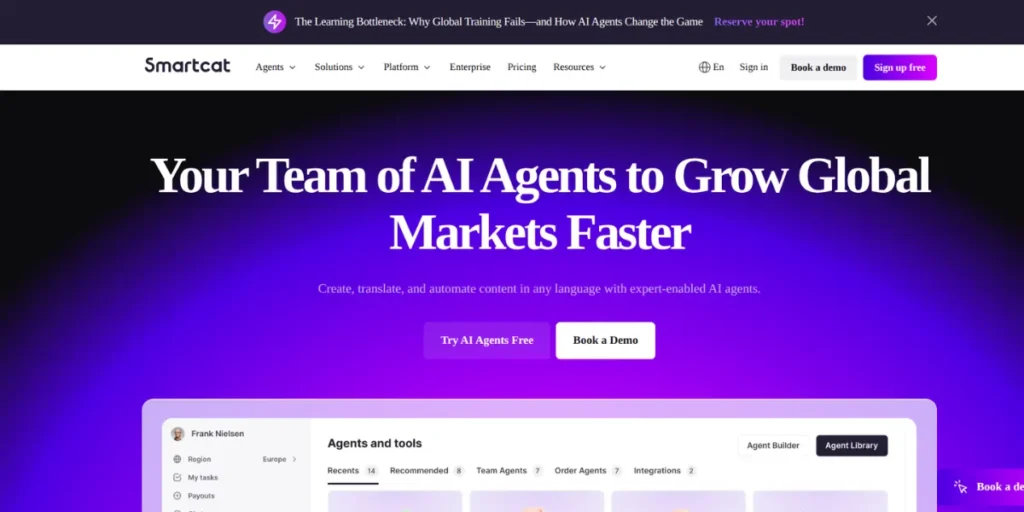
Smartcat AI Agents have been created to revolutionize the global content creation and localization cycle. These expert-powered agents far outshine traditional AI, continually learning from an organization’s brand style guide, people, and feedback to accelerate multilingual, complex workflows with the highest quality and speed. The platform features pre-built agents for processes like document translation and software localisation, as well as a no-code Agent Builder to customize agents for particular applications. Smartcat’s agents communicate with human experts, escalating only when needed, allowing teams to create, translate, and localise content simultaneously, dramatically reducing time-to-market for global campaigns.
Languages Supported: 280+ languages and dialects.
Best Use Cases: Localizing content globally, document translation at the enterprise level, software and website localization, and marketing campaign translation.
Pros: High-speed capabilities and quality, continuous learning from human feedback, support for large languages, and a no-code builder for customization.
Cons: Primarily focused on translation and localization, may have a learning curve in terms of usage, and can be price-variable based on use.
Website: https://www.smartcat.com/ai-agents/
3. Ringg AI Voice Agents
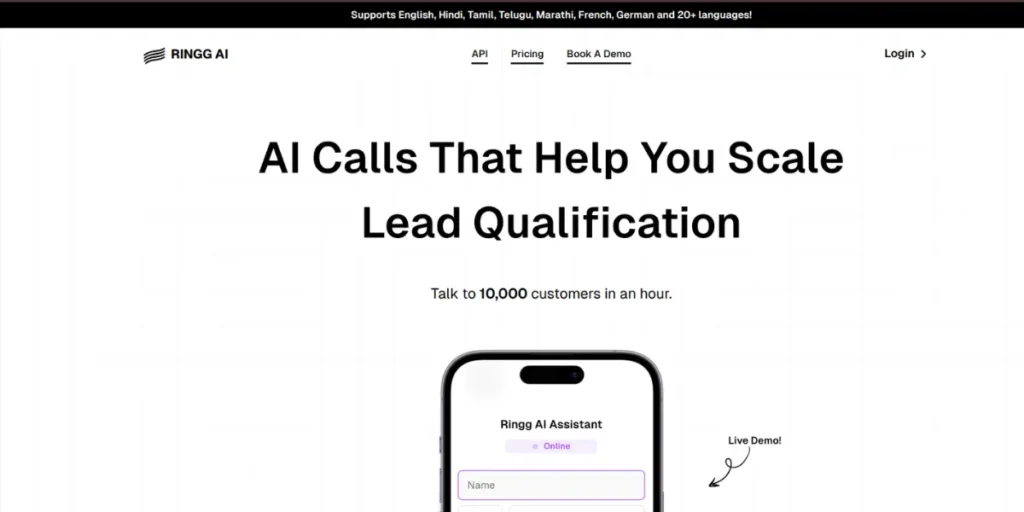
Ringg AI provides very realistic and practical multilingual AI voice agents with voice-based dialogue expertise. These types of agents are designed to handle long, multi-turn conversations and, therefore, are most suitable for customer support, sales, and internal operations. They combine state-of-the-art speech recognition with deep NLP to understand what is being said, interpret the intent, and respond accordingly. Ringg’s technology is more than question answering; it’s empowering meeting scheduling, customer escalation, and voice-driven virtual assistants for various applications. This makes them an essential ingredient for companies that desire to offer 24/7, high-quality, multilingual voice support.
Languages Supported: Dozens of languages, with a focus on major international business languages.
Best Use Cases: 24/7 customer service, sales lead qualification, call center automation, voice-based virtual assistants.
Pros: Extremely realistic and natural voice, ideal for complex conversations, works smoothly with telephony systems, and is focused on operational efficiency.
Cons: Limited in non-voice modalities, could require significant training for some applications, performance is audio quality dependent.
Website: https://www.ringg.ai/
4. Kruti by Ola Krutrim
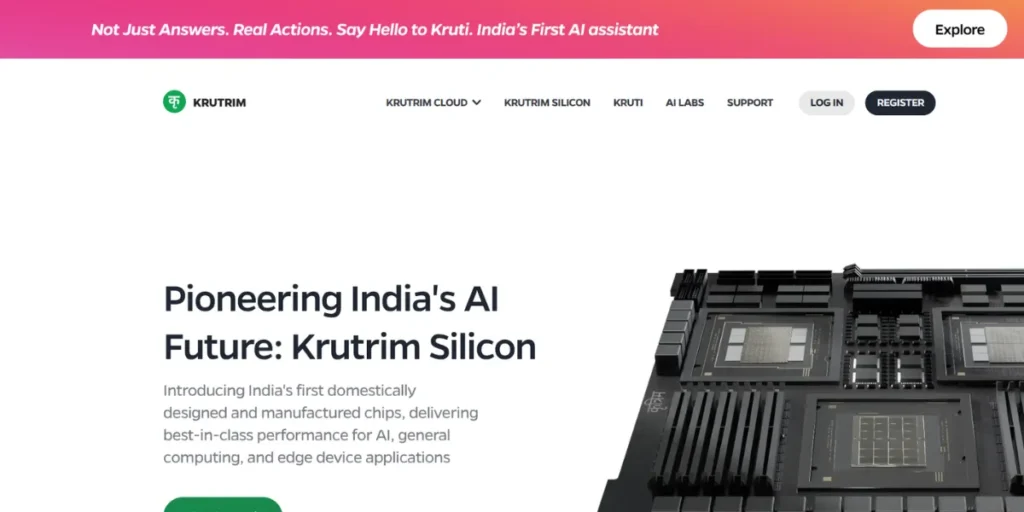
Ola Krutrim’s Kruti is India-centric, multimodal AI with an agentic design and therefore is a standout multilingual AI agent. It is designed to comprehend and interact with India’s linguistic and cultural subtleties, having multiple Indic language support and natural, human-like audio outputs. Kruti’s Agents Mode allows users to delegate entire tasks, from booking a cab to paying a bill, transforming it from a simple conversational tool into an end-to-end workflow executor. This capacity to manage transactional power, coupled with its sophisticated knowledge of local context and integrations with local services, makes it a distinctive and highly effective solution for the Indian market and beyond.
Languages Supported: Several Indic languages and English.
Best Use Cases: India-focused conversational AI, transactional use cases (food ordering, bill payment), customer support in regional languages.
Pros: Strong India-focused approach, transactional, multimodal (text, image, speech), and culturally aware.
Cons: Specifically designed for the Indian market, it may find limited application outside the country; language-based support is varied.
Website: https://olakrutrim.com/
5. Conversica AI Assistants
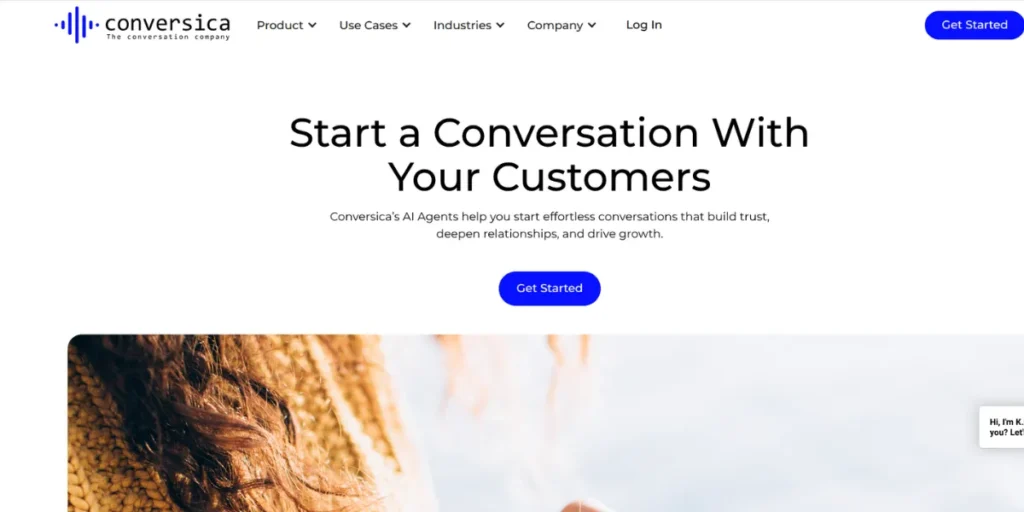
Conversica provides AI assistants that qualify leads, follow up on sales, and communicate with customers. Multilingual virtual AI employees function as virtual members of a team, having two-way, human-conversational interactions to drive business outcomes. They are patient and effective at following up on leads over a long period of time, giving human sales and marketing teams an opportunity to work on warm leads. The assistants can be deployed across several channels like email, SMS, and chat, providing an end-to-end brand experience. Conversica’s AI is pre-trained to identify standard business conversations and can be customized with industry-specific messaging and sales playbooks.
Languages Supported: Over 10 languages, with a focus on key business languages.
Best Use Cases: Lead qualification and nurturing, sales follow-up, customer engagement, and marketing campaign support.
Pros: High follow-up persistence, human-sounding conversations, focuses on business outcomes, omnichannel support.
Cons: Primarily text-based, might require extensive setup and training, and can be costly for smaller firms.
Website: https://www.conversica.com/
6. Oracle AI Agents for Sales
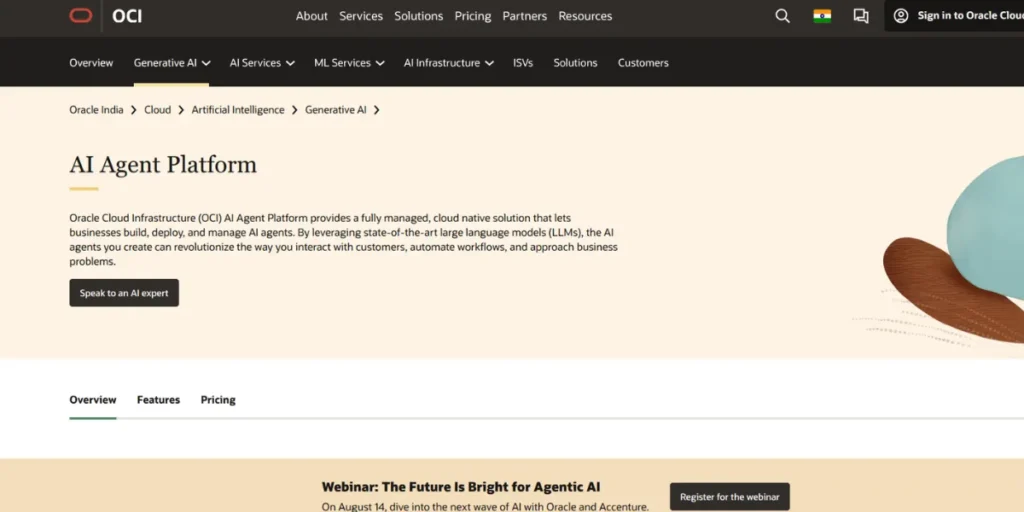
Oracle AI Agents for Sales is a group of new agentic and generative AI capabilities integrated into Oracle Fusion Cloud Sales. The multilingual AI agents are designed to help sales organizations enhance customer engagements and accelerate sales cycles by automating narrow and labor-intensive processes. The agents have the ability to automatically craft customized, customer-ready emails, summarize recent account activity, and provide an overall view of a client by drawing on data from across finance and supply chain. The embedded AI serves as a guide and assistant, not only optimizing productivity but also enabling sales representatives to form deeper, contextually relevant relationships with global audiences through automatically translating interactions.
Languages Supported: Built-in generative AI capability for multilingual translation.
Best Use Cases: Sales team productivity, tailored communication with customers, lead insights, and account activity tracking.
Pros: Highly integrated into Oracle Cloud, leverages cross-functional information, improves sales effectiveness, and provides global team auto-translation.
Cons: For firms already on Oracle’s platform, it may require special sales team training, as it is not a standalone offering.
Website: https://www.oracle.com/in/artificial-intelligence/generative-ai/agents/
7. IBM Watson Assistant (Multilingual Voice)
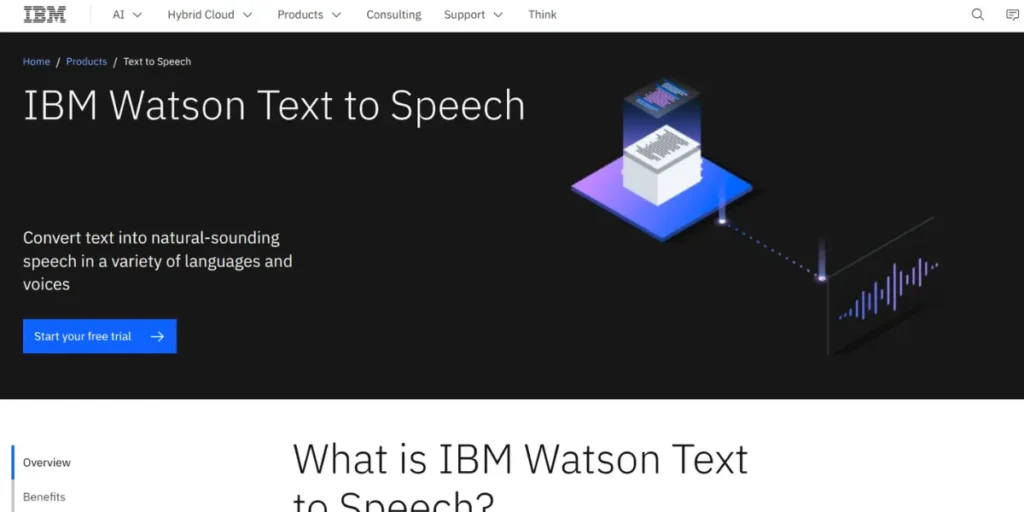
IBM Watson Assistant is the most powerful, enterprise-level conversational AI platform for delivering tailored experiences through multilingual voice and text. It has the sophisticated NLU to correctly identify user intent and navigate rich, multi-turn conversations. This platform uses strong integrations with telephony infrastructure for the unbroken voice experience, a business area where it has held on to dominance for much longer in the multilingual AI voice agent market. Watson Assistant is most trusted in industries with high regulation, like finance and healthcare, due to its strong data protection features and ability to be deployed in private cloud environments, giving organizations greater control over their data.
Languages Supported: Over 13 languages, regional dialects supported.
Best Use Cases: Enterprise customer service, internal helpdesks, virtual banking and healthcare assistants, voice-based applications.
Pros: Enterprise-grade security, strong NLU features, great voice integration, and a highly trusted brand in AI.
Cons: Might be more complicated and costly to implement compared to some other products, a greater learning curve, and less focus on low-resource languages.
Website: https://www.ibm.com/products/text-to-speech
8. Google Gemini 2.5 Models (Flash & Pro)
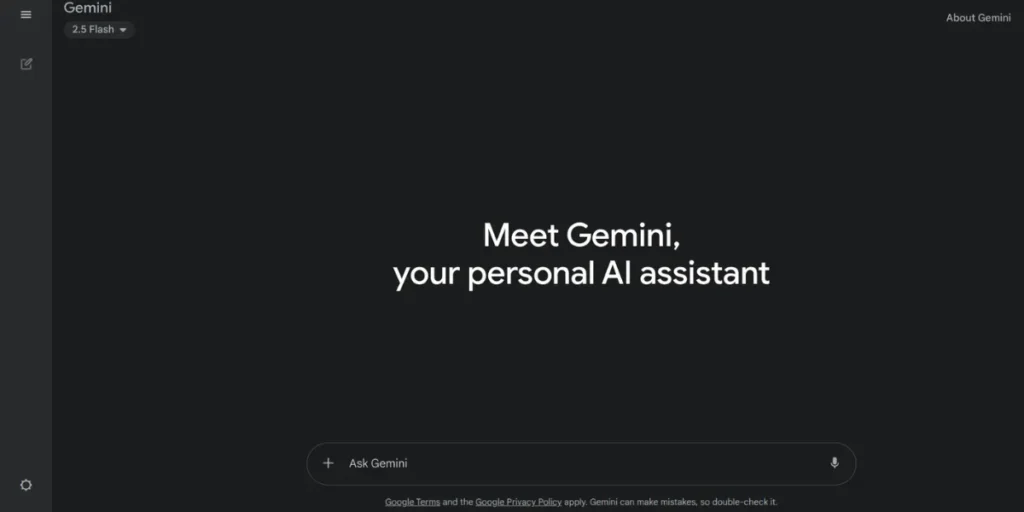
Google Gemini 2.5 models are the new benchmark of multilingual AI agents, with best-in-class performance and built-in multimodality. Gemini 2.5 Flash is low-latency enabled for real-time use and well-suited for real-time, multilingual voice and chat conversations. The more powerful Gemini 2.5 Pro is a “thinking model” for complex tasks that can think out its responses. Both models possess huge windows of context, and they can read and operate on problems from large datasets and various sources of information like text, audio, images, and video, and therefore are highly versatile towards building state-of-the-art multilingual AI agents.
Languages Supported: Rich support for a wide range of languages.
Best Use Cases: Real-time conversational AI, multimodal apps (text, voice, image), advanced reasoning tasks, coding generation.
Pros: State-of-the-art performance, native multimodality, massive context window, complexity-optimized, and speed-optimized.
Cons: Closed model without open-weight release, usage is managed by Google’s API, and the pricing is complex.
Website: https://gemini.google.com/
9. Gupshup Auto Bot Builder
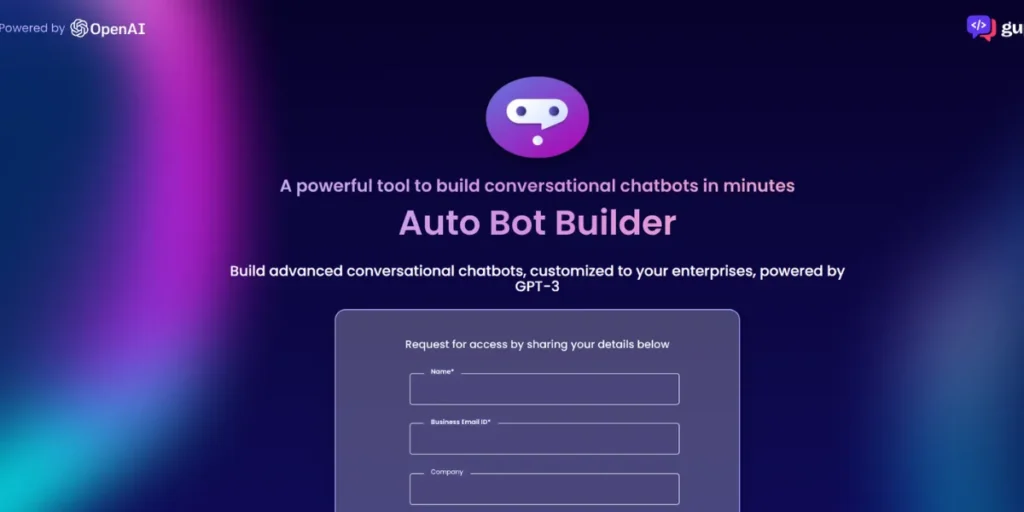
Gupshup’s Auto Bot Builder is a low/no-code platform for creating and deploying conversational multilingual AI agents that can be rapidly configured to satisfy business requirements. The platform is customer lifecycle-oriented, offering marketing, commerce, and support agents. The environment facilitates orchestration of personalized, bi-directional conversations in numerous channels, from WhatsApp to voice. Gupshup’s agents are self-serviceable and can perform job tasks like lead generation, product recommendations, and 24/7 customer support in a customer’s preferred language without having to write a single line of code. This makes it the ideal solution for businesses that wish to turbocharge growth with AI without an army of developers.
Languages Supported: Over 30 languages.
Best Use Cases: Conversational commerce, omnichannel customer support, automated marketing campaigns, lead generation.
Pros: Low/no-code platform, fast time to value, omnichannel support, delivers business outcomes across the customer life cycle.
Cons: Can be less adaptable to highly custom or complex requirements, reliance on integrations for advanced-end functionality, and performance inconsistency.
Website: https://www.gupshup.io/autobotbuilder
10. (Bonus) Microsoft Multilingual LLM Initiative
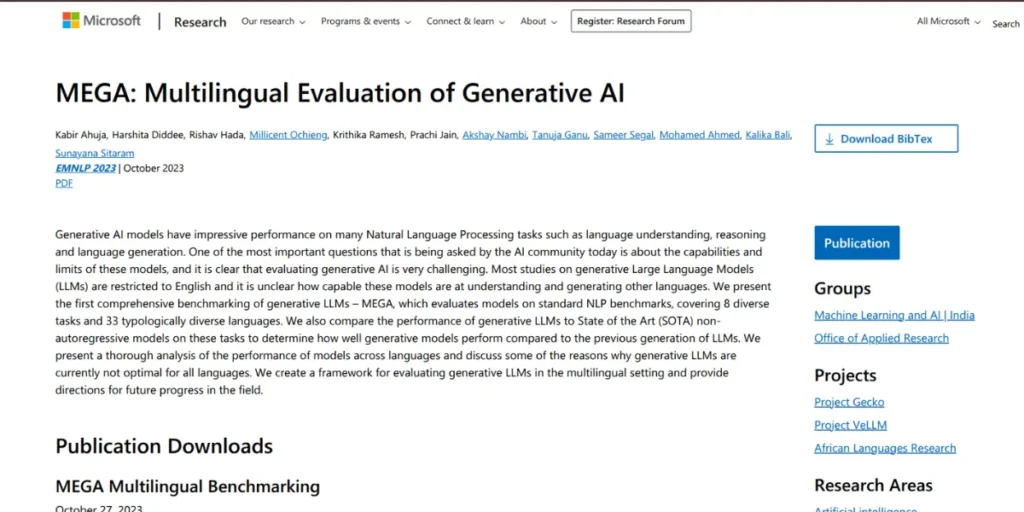
Microsoft’s Big Multi-Language AI Plan works hard to fix how AI does with many languages, mainly the ones that don’t have much data. This plan sets up new places for smart ideas and brings in new data projects. The goal is to have more data in many languages to make AI better, mostly for the languages that are not used much. This is not a particular AI agent but an initial work in creating a more inclusive and representative AI ecosystem. Through collaboration with educational institutions and sponsoring data collection, Microsoft is making its future multilingual LLMs, and consequently its AI agents, more efficient and culturally aware for the entire world and not half of it.
Languages Supported: Focus on bringing support for under-resourced European and other global languages.
Best Use Cases: Research in its earliest stages, developing more inclusive and accurate future AI models.
Pros: Aims to fill an essential gap in AI, vision for the long term with respect to inclusivity, and collaboration with the academic community.
Cons: Not a short-term consumer product, value is created over time, and its impact on current products is indirect.
Website: https://www.microsoft.com/en-us/research/publication/mega-multilingual-evaluation-of-generative-ai/
Highlight Cases & Use Scenarios
Multilingual AI agents are now a fact instead of an imaginary future, transforming industries by solving complicated, diverse, and often repetitive tasks. Here are a few highlight cases and use scenarios:
- E-commerce: A global retailer deploys a multilingual AI agent to provide 24/7 customer support online and on social media on its website in dozens of languages, answering product questions and tracking orders.
- Healthcare: An international hospital group uses AI voice agents to make appointment bookings and remind patients about medication in their own language, significantly increasing patient compliance and engagement.
- Financial Services: A bank uses Oracle AI Agents for Sales to automatically summarize a customer’s financial history and recent transactions before a meeting, to allow their sales representative to have more informed, personalized conversations with foreign customers.
- Marketing & Advertising: A marketing firm uses Smartcat AI Agents to quickly translate the complete advertising campaign, ad copy, images, and video text for rollout across 10 countries within a day.
- Internal Operations: A corporate behemoth uses a specially crafted Kruti-like agent to manage internal communication, HR queries, and IT support in regional languages for its various offices located across India, making all its employees feel they are being effectively serviced.
Implementation Challenges & Insights
The hope of AI that speaks many languages is big, but setting them up is not easy. Problems range from tech issues to moral ones, and they need to be fixed with smart thought and a clear plan. Getting past these is key to making your multi-language AI work well, and they include:
- Data Imbalance: Most AI solutions are trained on English data, which creates performance gaps where agents excel in high-resource languages but fail in low-resource languages, and therefore require explicit data collection and training for target markets.
- Cultural Context & Nuance: Literal translation is insufficient; agents must learn to identify and respect cultural idioms, social mores, and humor to prevent miscommunication or even offense.
- Evaluation & Benchmarking: Failure to benchmark multilingual performance on standard tests, especially conversational ones, stops objective comparison and selection of the best multilingual AI agents for a given task.
- Integration Complexity: Adding a new AI agent into an existing, typically scattered, technology stack is a technical challenge that entails robust APIs and orchestrated strategies to ensure the workflow is seamless.
- Ethical & Safety Concerns: Keeping the multilingual AI agents as neutral as possible and avoiding producing offending or insulting content continues to be a concern, especially while dealing with multicultural environments and sensitivities.
Future Trends in Multilingual AI
The field of multilingual AI is advancing at a lightning pace, and the trends that will shape the second half of 2025 and later are as follows:
- Hyper-Personalization at Scale: Future multilingual AI powered agents will leverage real-time data to create not just multilingual but hyper-personalized content and experiences that are customized for each individual user’s past and likes.
- Emotionally Intelligent Agents: AI agents will learn better to acknowledge and respond to human emotions, so as to support more empathetic customer service and more nuanced, human-like conversations across languages.
- Seamless Multimodality: There will be greater fusion of text, voice, and visual modalities, with agents that are able to switch between them seamlessly, such as an agent that can read an image, understand a voice question about it in another language, and provide a text response.
- Proactive & Autonomous Agents: Instead of sitting idle for a user request, multilingual AI agents will be proactive and interact with users and do tasks independently without any human intervention, such as an agent that detects a support problem and resolves it even before the customer complains.
- Human-in-the-Loop Collaboration: The industry will embrace a “human-in-the-loop” methodology wherein human experts, including translators and cultural advisors, collaborate with AI agents to review and refine outputs, monitoring quality and cultural accuracy while maintaining efficiency.
Conclusion
The 2025 multilingual AI revolution is more than an upgrade in technology, but a revolution in business practices by companies across the globe. By choosing agents with an emphasis on linguistic accuracy, performance, and ease of integration, and by ironing out implementation challenges in advance, businesses can position themselves for success.
The future of multilingual AI agents is towards greater intelligence, emotional intelligence, and seamless integration, and it becomes imperative for organizations to start their journey right away in order to stay in the game. The strategic implication is unmistakable: not just deploy AI, deploy multilingual AI to create a truly global, customer-centric, and future-proof organization.
FAQs
What are multilingual AI agents?
Multilingual AI powered agents are a type of artificial intelligence that can not only converse and be understood in more than one human language, but they can also perform tasks in several human languages beyond simple translation to provide contextual and culturally relevant interaction.
How are multilingual AI powered agents different from traditional chatbots?
Unlike traditional chatbots that remain confined to scripted answers, multilingual AI agents use advanced machine learning and NLU to reply dynamically to open-ended inquiries and even execute complex, multi-step tasks.
Do multilingual AI based agents understand dialects and accents?
Indeed, the AI agents that are currently available to be multilingual are increasingly capable of recognizing and understanding numerous dialects and accents, which makes them more applicable to real-world usage.
What is the biggest challenge in having a multilingual AI agent?
The principal challenge is to deliver good quality performance on low-resource languages since most AI models are still significantly trained on data from a small set of high-resource languages, which may lead to errors.
Do multilingual AI agents replace human customer service?
No, multilingual AI based agents are actually best described as competent tools that supplement human customer support agents, handling simple questions and allowing human agents to handle more complex issues where empathy and nuanced problem-solving abilities are required.