 Get 50% off on Vault theme. Limited time offer!
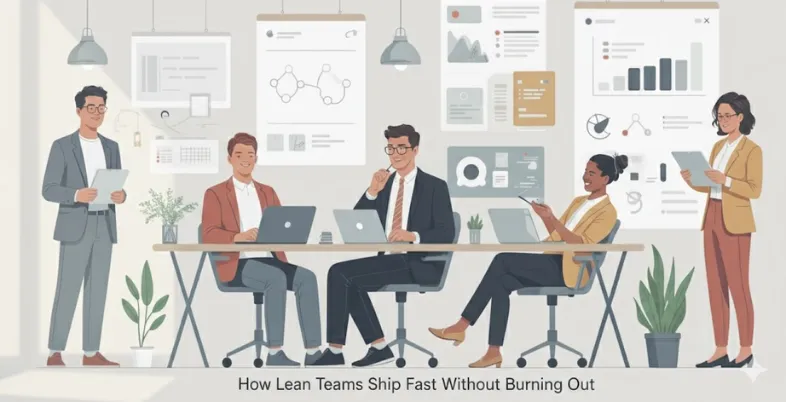
 How Lean Teams Ship Fast Without Burning Out
Why “Doing It All” Destroys Momentum
Founders doing everything manually face decision fatigue, missed opportunities from slow follow-ups, and burnout disguised as hustle. When you’re the person answering support tickets at 9 AM, writing code at 2 PM, and chasing invoices at midnight, there’s no time left for actual strategy.
The problem isn’t effort. It’s where that effort goes. Cold leads sit untouched because nobody has time to follow up. Feature ideas collect dust in Notion because there’s no design bandwidth. Vendor invoices pile up in your inbox because manual data entry always gets pushed to tomorrow.
Lean doesn’t mean doing more with less sleep. It means smart systems that handle work you shouldn’t be doing manually.
What a 3-Person Team Can Ship With the Right Stack
The right automation stack lets small teams accomplish what used to require specialist hires across design, operations, and development. A three-person startup can now ship like a team five times its size without adding headcount or working weekends.
Here’s what changes when you stop manually doing work that AI already handles better.
Prototyping Product Features Without a Designer
The PM or founder has feature ideas, but no design bandwidth. Those ideas sit in docs. Stakeholder reviews get delayed. User testing happens with ugly wireframes or not at all.
Alloy captures your product’s design system with a browser extension and lets you prototype through conversation. Instead of waiting on design queues, product managers describe features conversationally and get mockups that match their product’s existing style, ready to share with stakeholders or export as React components.
Prototypes that used to take weeks now happen in hours. You test concepts with users before writing code. Stakeholder alignment happens faster because everyone sees the same high-fidelity version.
Eliminating Manual Document Processing
AI-powered document processing handles messy formats including multi-page contracts and handwritten forms, extracting data and pushing it into existing systems without manual entry. Invoices, contracts, receipts, vendor forms—documents pile up. Someone has to extract data and enter it into systems. At a startup, that someone is the founder at midnight.
Intelligent platforms read any format you throw at them. Scanned PDFs, multi-page contracts, even handwritten expense reports. They extract what matters and push it where it needs to go—your accounting system, your CRM, your procurement database.
No more manual data entry. No more reconciliation spreadsheets. No more weekend invoice catch-up sessions. The system runs continuously, processing documents as they arrive.
Automating Data Extraction Without Broken Scrapers
You need competitor pricing, contact information, and product data, but it’s scattered across websites. Someone writes a scraper. It breaks when the site updates. A developer fixes it. Repeat forever.
AI browser automation sees pages the way humans do. Instead of brittle CSS selectors that break with every redesign, it uses computer vision to understand what’s on screen. You describe what you need—pricing tables, contact information, product specs—and it handles the rest. When sites change their layout, the automation adapts far more reliably than traditional scrapers.
No more midnight alerts about broken scrapers. No more pulling developers off feature work to fix data collection scripts. Your data extraction runs reliably in the background while you focus on what to do with the insights.
What Changes When You Stop Doing It All
Teams shift from weeks-long mockup cycles to hours, midnight data entry to automatic processing, and constantly fixing scrapers to reliable background research. Before, mockups took weeks. Documents piled up, and data entry happened at midnight. Scrapers broke constantly, stalling research. The founder was buried in low-leverage work.
After, prototypes happen in hours and stakeholder alignment moves faster. Documents process automatically, and clean data flows where it needs to go. Market research runs reliably without dev babysitting. IT support runs through automated Slack ticketing instead of interrupting engineers. The founder focuses on strategy, product, and growth.
The difference isn’t working harder. It’s building systems that handle what humans shouldn’t do manually.
Lean Means Smart, Not Stretched
The best lean teams aren’t grinding hardest—they’ve built systems that handle work humans shouldn’t do manually, shipping like larger teams without the headcount. You don’t need a 20-person team to ship like one. You need the right stack.
When prototyping happens through conversation instead of design queues, when documents process themselves, when research runs without breaking, you get your time back. Not to work more hours, but to do the work that actually matters. The strategy sessions. The customer conversations. The product decisions that only you can make.
Lean teams win by choosing their battles. They automate the obvious stuff and save their energy for what automation can’t do.

Maria Mazur is the founder of Mazurly, a platform helping digital nomads build sustainable remote businesses. With a background in marketing and years of remote work, she helps creators build businesses that actually work from anywhere.