 Get 50% off on Vault theme. Limited time offer!
 How to Start a Logistics Company in India: 2026 Guide
The Indian logistics industry is undergoing an unprecedented shift, with the country’s booming economy and digital revolution showing no signs of slowing. Did you know that India’s logistics sector is projected to reach $800 billion in valuation by 2030, accounting for 11% of the country’s GDP? The Indian government’s commitment to the National Logistics Policy and the growing number of online transactions mean that the transportation of goods from point A to point B has become the lifeblood of the new, tech-savvy life. Whether it’s the small package from an online retail store or the massive industrial equipment, there has to be someone in between.
These days, starting the logistics business isn’t just about trucks. Starting a logistics business isn’t just about trucks; it’s about clever planning, the best technology, and identifying your role in the vast global flow of goods. Starting the logistics business nowadays is quite an exciting proposition as the need for reliability has never been higher, and especially in the Tier 2 and 3 cities, the connectivity is rapidly expanding. Additionally, with a proper strategy in place, even a new entrepreneur can create their own niche in the industry.
In this article, we will walk you through every single detail you need to know about how to start a Logistics Company.
What Is a Logistics Business?
Logistics is the science and art of optimising resource acquisition, storage, and distribution. It encompasses the overall supply chain process of ensuring that items are delivered to customers on time and in pristine condition. This industry covers activities such as moving items, storage, merchandise, and packing. At the core of this industry, you act as the link between manufacturers and retailers.
Types of Logistics Companies
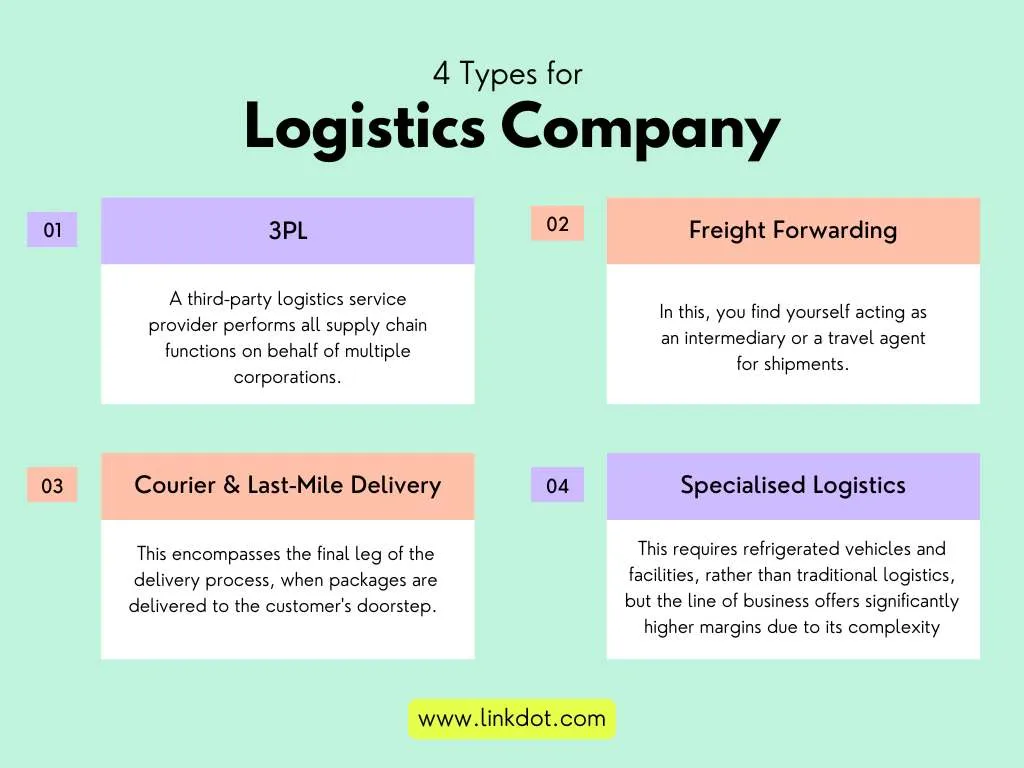
There are several ways you could enter this field, depending on what you are interested in and the amount of capital you are prepared to put into the business. Here are various types of logistics companies:
- 3PL (Third-Party Logistics): A third-party logistics service provider performs all supply chain functions on behalf of multiple corporations. This encompasses pickup from the manufacturer, warehousing, packaging, and delivery.
- Freight Forwarding: In this, you find yourself acting as an intermediary or a travel agent for shipments. This is where you establish the best routes for goods transport, whether by air, land, or sea.
- Courier & Last-Mile Delivery: This encompasses the final leg of the delivery process, when packages are delivered to the customer’s doorstep. The last mile has become one of the fastest-growing delivery niches, driven by the rising popularity of local food, grocery, and e-commerce apps.
- Specialised Logistics (Cold Chain & Pharma): This involves transporting temperature-sensitive products, such as vaccines and fresh produce. This requires refrigerated vehicles and facilities, rather than traditional logistics, but the line of business offers significantly higher margins due to its complexity.
Is Logistics Business Profitable in India?
Indeed, the logistics industry is very profitable in India due to the large volume of trade and the complex supply chain. The operating profit margin for the road-based logistics industry is generally between 10.5% and 12.5%, depending on the efficiency levels. Some of the factors supporting it are as follows:
- High Demand: With the growth of the Direct-to-Consumer marketing model, more packages are being shipped today than ever before.
- Scalability: You can start with a single van and scale to hundreds of vehicles as your customer base expands.
- Stable Income Source: A constant income flow will be available once the manufacturing contract agreements are signed.
- Government Facilitation: The PM Gati Shakti scheme and others are minimising the cost of doing business.
How to Start a Logistics Company in India
Starting a logistics company in India requires strategic planning, regulatory clarity, and operational discipline. Each step below is structured to give you context first, followed by clear action points, and then additional guidance, so nothing feels rushed or confusing.
Step 1: Research & Choose Your Niche
A niche is essential. Investments and business registrations must be made with a clear understanding of the logistics problems to be solved. The logistics industry is vast, and success comes with specialisation as opposed to trying to meet all needs.
Significant areas of research:
- Market Analysis: Uncover market demands that exist in your local area, like cold logistics, bulk transport, or last-mile deliveries.
- Competitor Mapping: It involves analysing existing competitors about pricing, delivery time, fleet size, and technology.
- Customer Demand: Identify if your customers will be manufacturers, retailers, or online sellers.
Also, when you identify your specific niche, it will be easier to handle your expenditure and market your services as a professional.
Final decisions to lock in:
- Local, regional, or Pan-India operations
- B2B, B2C, or hybrid logistics model
- Specialised or General Freight Handling
Step 2: Create a Business Plan
A business plan will serve as your guide for successfully running your logistics firm today and expanding in the future.
Key components of your plan:
- Executive Summary: The business vision, services, and plans.
- Operations Plan: Routes, vehicle types, delivery times, and warehousing plan.
- Financial Forecast: Start-up expenditure, Monthly expenses, Revenue projections.
In addition to figures, another thing that needs consideration in your plan is uncertainty.
Strategic evaluation section:
- SWOT Analysis: Strengths, Weaknesses, Opportunities, and Threats.
- Operational Risk Assessment: Fuel prices, driver availability, government regulations.
A good plan enhances your decision-making capabilities and credibility when dealing with banks and business organisations.
Step 3: Register Your Business
Now that you have a plan, legally registering your logistics business will give your company credibility, compliance, and scalability. Selecting the proper business form also has implications for taxation, risk, and potential funding sources down the line.
Registration Basics:
- Structural Organisation: Sole Proprietorship, LLP, or Private Limited Company.
- GST Registration: Required for logistics services.
- Business Name Approval: Uniqueness and availability of the business name must be checked.
After you have registered, you will be afforded the facilities of issuing a GST invoice, dealing with large enterprises, and conducting your business without any legal impediments.
Other compliance to follow:
- PAN and current accounts.
- Professional Tax (if applicable).
- Local trade licenses.
Step 4: Arrange Funding & Investment
This is because logistics companies are considered to be capital-intensive, especially during the initial years. Proper financial planning can prevent any cash flow problems.
Primary funding sources:
- Self-Funding: Suitable for starting on a small scale, with one or two vehicles.
- Bank Loans: Commercial vehicle & SME loans from major banks.
- Startup India Registration: Availability of taxation benefits and funding societies.
In addition to the initial capital outlay, you will have to budget for other operational expenses.
Expenses to Budget For:
- Fuel and Maintenance.
- Driver wages and insurance.
- Technology subscriptions.
A practical funding plan helps ensure that scaling happens smoothly and doesn’t lead to overleverage.
Step 5: Acquire Equipment & Technology
Speed, visibility, and automation are what modern logistics is all about. It won’t be easy to scale without the appropriate tools.
Operational infrastructure:
- Fleet: Trucks, Vans, Bikes, EVs based on your Niche.
- GPS Tracking: Real-time vehicle visibility.
- Safety Equipment: As per Transport norms.
Technology is equally vital in matters of efficiency.
Essential software systems:
- TMS (Transport Management System): Order Tracking & Routing.
- WMS (Warehouse Management System): Warehouse management, if a warehouse is being utilized.
With the right combination of equipment and technology, delivery accuracy improves and customer trust increases.
Step 6: Hire Staff & Build Operations
After establishing the business, your logistics operations rely extensively on human resources. Well-trained logistics staff will result in fewer delays.
Key Positions to be Hired:
- Drivers: Valid Commercial Licenses, Clean Driving Records.
- Operations Manager: Routing, scheduling, and resolving concerns.
As the operations expand, the support functions will also gain importance.
Role-Supporting Persons to Consider:
- Customer service executives.
- Network or system administrators.
- Compliance & Documentation team.
Having strong internal processes means that there is consistency, and this is an essential aspect of long-term contracts.
Step 7: Market Your Logistics Business
Now that your operations are ready, visibility is necessary in a competitive market such as logistics. Marketing assists in the monetization of your logistical advantage.
First marketing channels:
- Networking: Trade associations & business networking groups.
- Digital Footprints: Website, LinkedIn, Google Business Listing.
Obtaining new clients is often enhanced through collaboration.
Growth-oriented strategies:
- Trial runs by manufacturers and retailers.
- Long-term contracts with SMEs and e-commerce sellers.
When reliable service and intelligent marketing are combined, it fosters customer loyalty.
How to Start a Logistics Company from Home
You can begin without ample office space by being a Virtual Logistics Manager or a Freight Broker. Here are the steps to follow:
- Home Office Setup: You require a laptop and internet access, as well as a telephone.
- Digital Load Boards: Make use of online load board services like BlackBuck or Rivigo for finding loads that can be assigned to transporters.
- Be the middleman: Organise the transaction, manage the online documentation, and receive your commission every trip.
- Low Risk: You have minimal financial risk because your company doesn’t own the trucks.
How to Start a Logistics Business Without Any Investment
The Partner Model permits starting with zero capital. Here’s how:
- Commission Agent: Act as the sales agent for large logistics companies and introduce them to large clients.
- Amazon Hub Delivery: Participate in the “Amazon Hub” (previously known as ” I Have Space) program and deliver packages using the space you already utilise in your home or business.
- Logistics Coordinator: Only manages the data and flow of business for online retailers, while the other carrier handles the actual shipping.
Small-Scale Logistics Business Ideas
1. Packers and Movers
Urbanisation is gradually increasing, meaning that there are more job seekers and those looking for improved living, making the entire moving process a goldmine. The business entails offering service as a whole, ranging from wrapping all your valuables to unloading them at the new destination. You can start by carrying out local house shifting, meaning that the entire process takes place within the same city. The only major standout factor in this niche is the guarantee of not getting any damage. Customers usually fear damage to their costly home appliances.
- Investment Needed: ₹2 Lakhs – ₹5 Lakhs (This will include packing tools, safety goods, and down payment for a used truck.)
- Profit Potential: ₹5,000 to ₹15,000, depending upon the quantity of products and distance.
2. E-commerce Delivery Franchise
In the wake of the increasing trend of online shopping, there is a constant demand among giants like Amazon, Flipkart, and Delhivery for the last-mile delivery partner to deliver the product to a particular set of pin codes. By becoming a franchise, you become the nodal point that is responsible for sorting the deliveries to finally reach the customer’s doorstep on time. This is a well-organised business where you will have a constant stream of orders without the need to find customers yourself.
- Investment Needed: ₹1.5 Lakhs – ₹3 Lakhs (For a small office/warehouse space, basic computer systems, and security deposit).
- Profit Potential: per delivered parcel: ₹20-40; the average hub processes 100-300 parcels every day.
3. Medical or Pharma Courier
This is a premium and priority logistical service that deals with the transportation of sensitive products such as blood samples, test results, or life-saving medications. Unlike other courier services, this business requires that you pay acute attention to temperature and timeliness because, in this business, losing precious minutes can mean losing precious lives. You may partner with diagnostic centres, private hospitals, and pharmacies to enable pick-ups and drops. Due to the delicate nature of this business, you may charge more compared to other Courier Services.
- Investment Needed: ₹2 Lakhs -₹4 Lakhs (This includes initial cold storage boxes, a two-wheeler or a van, and medical licenses.)
- Profit Potential: The margins are high for each delivery. The lab contracts can fetch ₹50,000 to 1 Lakh per month.
4. Reverse Logistics Specialist
Returns are estimated to be between 20% and 30% for every purchase in the e-commerce industry. This creates a massive problem for the brand, which is why the service of a reverse logistics expert is necessary. Your business will specifically involve picking up returns from customers, inspecting these for defects, and then shipping them back to the brand’s storage or the seller. This business is remarkably consistent throughout the year, regardless of sales seasons, which is why it is a superb opportunity for you to apply your knowledge of logistics to.
- Investment Needed: ₹3 Lakhs – ₹6 Lakhs (For a sorting centre, quality-check staff, and transport tie-ups).
- Profit Potential: There will be a constant flow of income ranging from 15% to 25% for each return processed, although brands would rather pay a set rate each month.
5. 2-Wheeler Fleet for Hyperlocal Delivery
Hyperlocalized delivery can be considered the “instant” logistics part, wherein products are delivered within a 5km radius in under 30-60 minutes. You can offer delivery support for local grocery shops, meat shops, or restaurants that do not want the larger aggregations by simply managing a small fleet of two-wheelers. The model that you will be running here is a heavy-frequency model, as your bikers are always on the move throughout the day. You can even consider a “concierge” service wherein your bikers can collect anything from a set of keys to a lunch box.
- Investment Needed: ₹50,000 – ₹1 Lakh (If you start with a few riders who have their own bikes, it includes delivery bags & a basic tracking application).
- Profit Potential: High volume of everyday earnings; able to earn ₹30,000 to ₹60,000 profit per month with only 5-10 riders.
Logistics Business Franchise Opportunities
If you are looking for a way to bypass the process of trial and error that comes with starting a new business, then franchising with an established firm is a good decision. Here are three of the best franchises that operate in the Indian market:
1. DTDC (Desk to Desk Courier & Cargo)
This is one of the best-known brands in India, and DTDC provides entrepreneurs with a cost-effective way of entering the logistics industry with its vast network in India. This is an ideal franchise model for entrepreneurs in smaller towns (Tier-2 and Tier-3) looking to set up their own logistics business. Here, you fulfil all the bookings, collections, and deliveries of packages in a given area.
2. Delhivery
The fastest-growing logistics unicorn in India, Delhivery, has two franchise models: the ‘Courier Stores’ franchise model for booking and the ‘Delivery Centre’ franchise model. Delhivery’s business model is quite technology-based, and they use artificial intelligence tools to aid route optimisation and bill generation for the clients. It’s the best business model suited for the cities.
3. Blue Dart
Tied up with the world leader DHL, Blue Dart is the go-to option as a B2B and valuable logistics services provider. The franchise business strategy emphasises efficient services and caters to corporate customers who demand safe and on-time delivery. Though the initial investment costs are higher, the profits and services offered are among the best.
How To Start A Logistics Business With Amazon
Amazon provides the Delivery Service Partner (DSP) program for entrepreneurs. Here’s how you can start a logistics business with Amazon:
- Lower Start-Up Costs: The initial investment required can be as low as ₹1.5 Lakhs to ₹2 Lakhs.
- Hands-on Training: Two weeks of training on leading a team and their tech are provided by Amazon.
- Built-in Demand: You won’t need to look for customers, as Amazon gives you the packages daily.
- Team Building: As part of your duties, you must build and maintain a team consisting of 20-40 drivers.
Role of E-commerce, Dropshipping & Shopify in Logistics
Technological advancements in e-commerce have merged buying with shipping, thus giving rise to new job opportunities in logistics companies:
- Shopify Integration: Today, it has become a standard practice for all logistics companies to have apps that can be integrated directly into the seller’s Shopify store.
- Real-Time Tracking: Customers would like to be able to watch their package as it moves across the map, and this is only feasible with IoT-capable trucks.
- Micro-warehousing (Dark Stores): Meeting the “10-minute delivery” demand, logistics companies are establishing small warehousing units within residential areas.
- Global Drop Shipping: Managing “First Mile” pickups from Indian artisans and then shipping goods to international customers.
- Auto-Labelling: Systems used for printing shipping labels as soon as an order is placed on the Internet.
Legal Requirements & Registration in India
To be able to operate within the law while avoiding steep fines, you have to overcome the following hurdles:
- Business Entity: Start with a Private Limited Company or LLP to establish legitimacy with bigger clients such as Amazon or Flipkart.
- GST Registration: Required for any business offering taxable services in inter-state transactions.
- Shop & Establishment Act: This requires licensing by your state government to run any commercial office or warehouse.
- Goods Carrier Permit: This permit is required to transport commercial goods, according to the Motor Vehicles Act, and must be obtained if you own a fleet of vehicles.
- Carriage by Road Act, 2007: You need to register as a “Common Carrier” in case you are carrying goods on their behalf.
- Insurance: “Marine Insurance” or “Transit Insurance” would be essential to mitigate the risks of damage/theft of the goods in your custody.
Conclusion
The process of starting a logistics business in India can be one of learning and potential. While the early process involves a certain amount of research and footwork, the end results can be significant due to the enormous infrastructure outpour in India.
Remember, the key in a business of this type lies in being reliable and in delivering on the commitments you make to your customers. As you expand, concentrate on improving technology and developing your fleet. The best time to build your business in the heart of the supply chain in India is today.
FAQs
1. How much initial investment would be required in a logistics start-up?
For a small-scale courier service business, you would require an initial investment of ₹2 Lakh to ₹5 Lakh. But starting a truck transport business using new vehicles would require an initial investment of more than ₹20 Lakh.
2. Is licensing required for logistics in India?
Yes, you must register for basic business licenses such as GST, Trade License, and transport licenses like National Permit licenses based on your business niche.
3. Can a logistics business be started from home?
Yes, you can start a freight brokerage business or a virtual coordination service where you connect shippers with transporters through online services without any assets.
4. What is the most profitable logistics field in Indian logistics?
The most profitable fields in Indian logistics are Cold Chain logistics and Specialised Hazardous Goods transport.
5. Do I require a warehouse facility to begin with?
No, not necessarily. There are several logistics schemes, such as freight forwarding, carrying documents, and truck transportation, that do not require any storage space.