 Get 50% off on Vault theme. Limited time offer!
 Top 10 Patient Communication Tools (2025) Doctors Can Trust

Healthcare is changing fast. Physicians and patients must find more effective avenues of communication with one another. Patients are happier and healthier when they get good communication. Doctors and patients can have easy access to these tools, which facilitate their communication with Patient Communication Tools.
These applications simplify healthcare. They assist physicians in transmitting messages, scheduling appointments, and distributing examination outcomes. The patients have the opportunity to pose questions anytime. This improves healthcare for everyone.
What are Patient Communication Tools?
Patient communication tools are special software programs that assist physicians and patients in communicating with each other. Imagine WhatsApp, but specific to healthcare. They are secure tools and have strict regulations concerning patient information privacy.
Such tools are capable of sending text messages, emails, and reminders. They are also able to provide marks on medical records and test outcomes. Others even allow patients to have a video conferencing session with their physicians. All these occur securely and safely.
Patient communication tools work on phones, tablets, and computers. This implies that patients are able to use them at any location. They can also be used by doctors even in their office or at home.
Why Look for Patient Communication Tools?
The following are the key reasons why patient monitoring tools are significant:
- Better Patient Care: It is also because patients can message their doctor directly without waiting on hold, and thus, they are helped faster.
- Save Time: Doctors need not make entire appointments to answer simple questions through text.
- Reduce Missed Appointments: Patients can be reminded of their schedule through automated reminders.
- Keep Information Safe: These tools are HIPAA-compliant and ensure greater privacy for patients, compared to standard email.
- Happy Patients: The patients feel well taken care of when they can speak with their healthcare team easily.
Key Features to Look for in Patient Communication Tools
The following features can be essential when selecting the tools to use when communicating with patients:
- HIPAA Compliance: The product should adhere to rigorous privacy regulations to ensure the information of patients is secure and protected.
- Easy to Use: The tool should be easy to use by both doctors and patients without any form of training.
- There are many ways of communicating: Find out tools that have the features of text, email, voice calls, and video chat.
- Works with Other Systems: The tool must be linked with the current computer systems and the medical records of a doctor.
- Mobile Friendly: The tool must be easily accessible to the patients on their phones and tablets.
Top 10 Patient Communication Tools
1. Klara
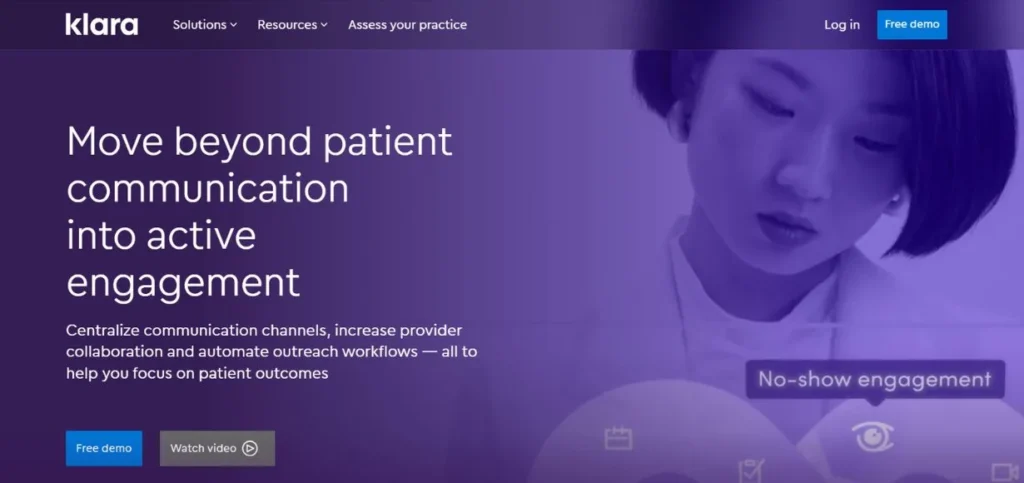
Klara is one of the most popular patient communication tools in healthcare today. It assists medical practices in communicating with patients via secure text messages, emails, and phone calls. Klara is loved by doctors as it is easy to use, and all the conversations with patients are gathered in one place. It is an excellent tool in small clinics and big hospitals. Klara also assists with appointment reminders and follow-ups.
Klara has been said by many healthcare providers to have made their patients happier and more engaged. The site is reputed to be quite secure and in compliance with all healthcare privacy regulations. It interoperates with the majority of electronic health records and integrates smoothly with various productivity solutions like Snipping Tools, enhancing workflow efficiency for healthcare teams.
Key Features
- Secure text messaging
- Scheduling tools: Appointment scheduling tools
- Patient intake forms
Pros
- Very easy setup
- Great customer support
- HIPAA-compliant security
Cons
- Can be expensive
- Weak customization possibilities.
- Requires staff training
Best For: Hospitals
Pricing: Custom pricing based on practice size
Website: https://klara.com
2. Weave

Weave is a complete patient communication tool platform that does more than just messaging. It integrates phone services, text messaging, and payment services. This suits well in dentists’ and small medical clinics. Weave is a tool that assists practices in addressing their whole patient journey, including booking to billing. The tool sends out automatic appointments and allows patients to make appointments online.
It also assists practices in getting reviews from satisfied patients. The phone system of Weave is very modern and capable of serving numerous calls simultaneously. The system is well compatible with mobile devices, and thus, the employees can use it anywhere within the office.
Key Features
- Integrated phone system
- Payment processing is involved.
- Online review management
Pros
- All-in-one solution complete
- Great for dentists
- Mobile app works
Cons
- Higher monthly costs
- Complex setup process
- Many features unused
Best For: Dentists
Pricing: Starting at $299/month
Website: https://www.getweave.com/
3. Solutionreach
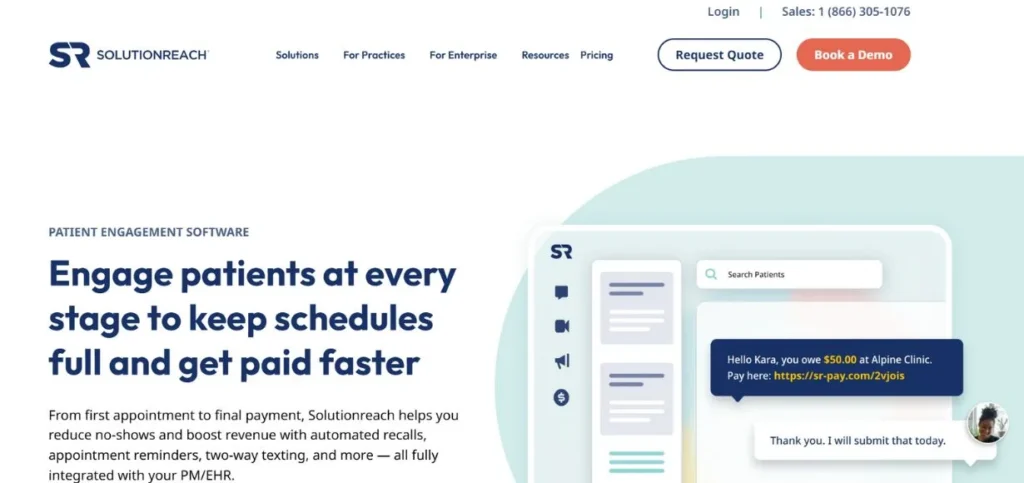
Solutionreach is a trusted patient communication tools provider that has been helping healthcare practices for many years. It focuses on automated engagement and outreach to patients through innovative Conversational AI tools that make communication more personal and efficient. The platform reminds you about appointments, recalls, and health education, which are automatically sent. Solutionreach does a fantastic job of ensuring that practices remain in touch with patients in between visits.
It provides email, text, and voice messaging. Detailed reports on how the communication efforts are performing are also given using the tool. Solutionreach is used by many hospitals and large medical practices due to its capacity to manage thousands of patients. The platform is compatible with the majority of practice management software.
Key Features
- Automated patient outreach
- Health education messaging
- Detailed analytics reports
Pros
- Proven track record
- Ridley’s automation capabilities are excellent.
- Scales for practices
Cons
- Older user interface
- Limited real-time messaging
- Setup takes time
Best For: Automation
Pricing: Custom pricing available
Website: https://solutionreach.com
4. Luma Health
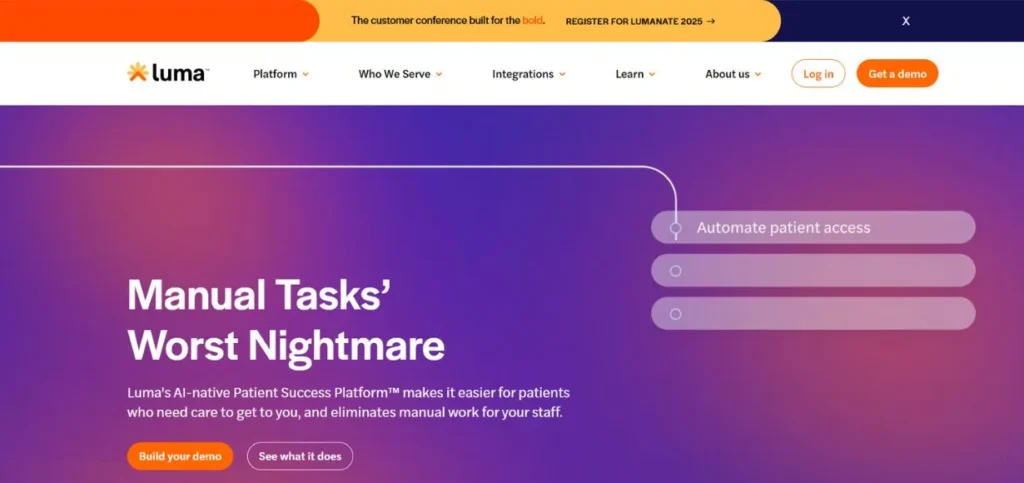
Luma Health is a company specializing in the simplification of healthcare scheduling and communication. This patient communication tools platform helps patients book, change, and cancel appointments easily. It also provides intelligent reminders, which saves no-shows considerably. Luma Health operates on artificial intelligence, forecasting the likelihood of patients missing a booking.
The platform will provide two-way texting to enable the patients to pose questions regarding their care. It is particularly effective with practicalities that are very busy and have a high number of patients daily. The tool interoperates with the majority of the electronic health records and practice management systems. Luma Health assists practices in filling empty slots by contacting patients who desire an earlier time.
Key Features
- Intelligent scheduling of appointments.
- No-show prediction built on AI.
- Two-way text messaging
Pros
- Cuts down non-attendance.
- Smart scheduling features
- Easy patient experience
Cons
- Focus mainly on scheduling
- Limited clinical features
- Price increases yearly
Best For: Scheduling
Pricing: Starting at $129/month per provider
Website: https://lumahealth.io
5. OhMD
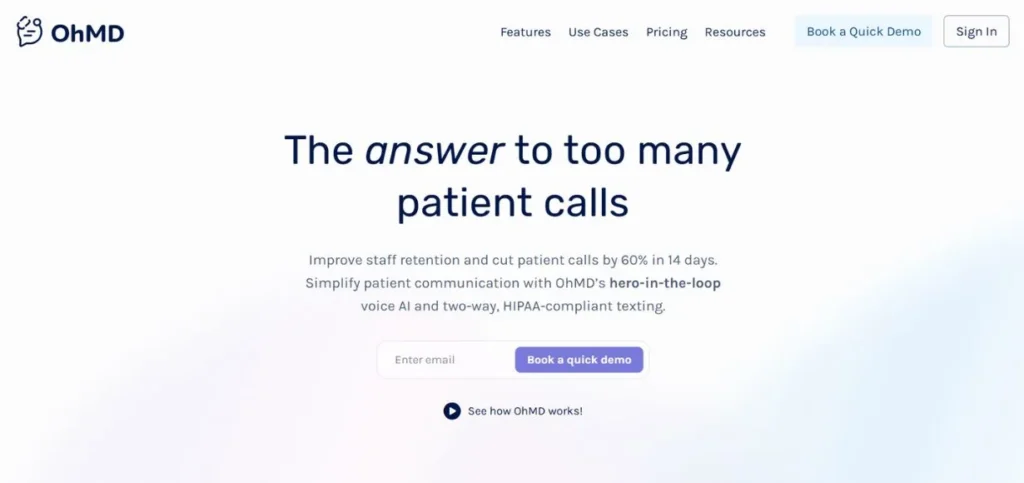
OhMD is a simple and affordable patient communication tool solution that focuses on secure text messaging. It is ideal for small practices that desire to begin utilizing patient texting without incurring a lot of money. The platform is very simple to install and operate.
Physicians are able to text patients using their phone or computer. OhMD adheres to every HIPAA privacy regulation to store patient data securely. Simple appointment scheduling and reminder also come as features of the tool. Small clinics and many solo practitioners prefer OhMD since it is simple and does not have complex features that they do not require. The customer care has been reported to be quite responsive and helpful.
Key Features
- Simple secure texting
- Basic appointment reminders
- HIPAA-compliant messaging
Pros
- Very affordable pricing
- Quick setup process
- Great for beginners
Cons
- Limited advanced features
- Basic reporting only
- No phone integration
Best For: Texting
Pricing: Starting at $19.95/month
Website: https://ohmd.com
6. Updox

Updox is a healthcare communication solution that offers end-to-end services to both large and small healthcare practices. Its platform is integrated to perform messaging, faxing, and phone services. Updox has been characterized by great security and good customer service.
The tool assists practices in minimizing paperwork by digitizing a majority of communications. It provides patient portals where patients can access their medical records and test results. Telehealth video calling is also provided by Updox. The platform is also compatible with the majority of electronic health record systems. Updox is picked by many practices since it integrates various means of communication into a single solution.
Key Features
- Secure fax services
- Patient portal access
- Telehealth video calls
Pros
- Comprehensive feature set
- Strong security measures
- Excellent customer service
Cons
- Can feel overwhelming
- Higher learning curve
- More expensive options
Best For: Security
Pricing: Starting at $29/month per user
Website: https://updox.com
7. TigerConnect
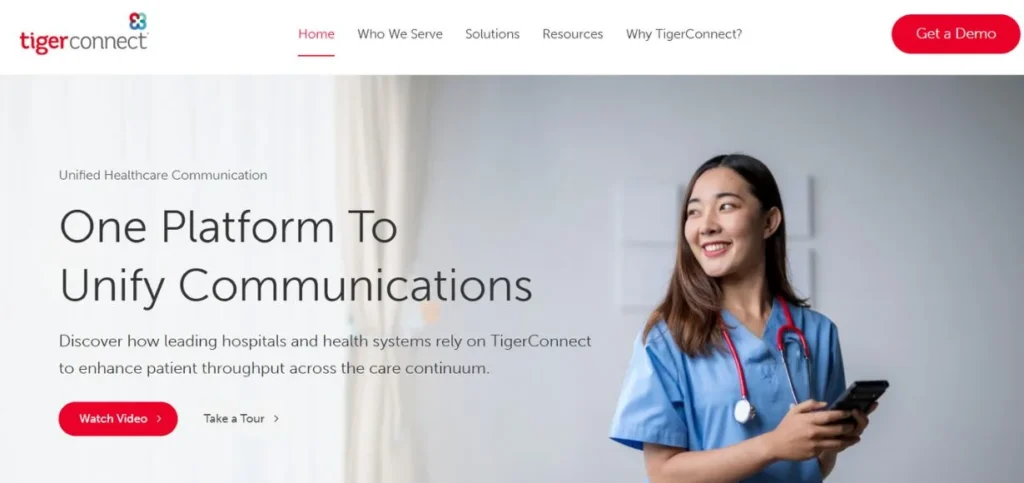
TigerConnect is a powerful patient communication tool platform designed for hospitals and large healthcare systems. It also deals with safe communication among members of healthcare teams and patients. Many nurses, doctors, and other hospital personnel use the platform to organize patient care. TigerConnect also implements such advanced features as the level of message priority and scheduling on-call.
The tool assists medical teams in communication during emergencies and urgent cases through advanced Collaboration Tools. It is compatible with smartphones, tablets, and computers. TigerConnect is the most secure healthcare system and meets the standards needed by hospitals. Thousands of healthcare workers can be linked through the platform.
Key Features
- Priority message levels
- On-call scheduling system
- Those associated with security at the enterprise level.
Pros
- Built for hospitals
- Advanced security measures
- Scales to thousands
Cons
- Complex for practices
- Higher pricing tiers
- Requires IT support
Best For: Hospitals
Pricing: Custom enterprise pricing
Website: https://tigerconnect.com
8. Phreesia
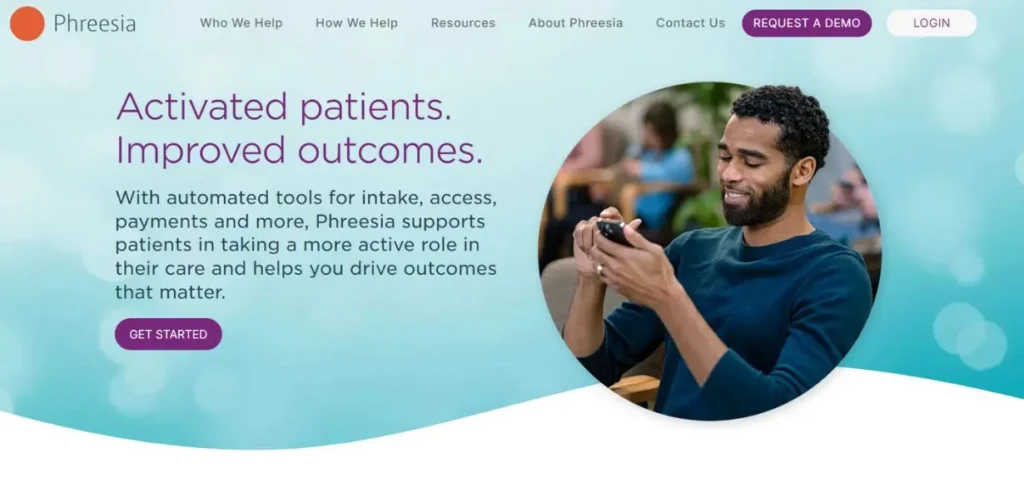
Phreesia is a leading patient communication tools platform that specializes in patient intake and registration. The tool assists patients in filling out paperwork before they get to their appointment. This saves time for the patients and the staff. Phreesia provides waiting rooms with tablets where the patient is able to update their information. The platform also delivers appointment reminders and payment processing for patients.
It connects with the majority of the practice management systems to ensure the automatic updating of information. Large medical practices and health systems particularly like Phreesia. The tool will give in-depth analytics regarding patient satisfaction and engagement. Phreesia has resulted in tremendous productivity in many practices.
Key Features
- Digital patient intake
- Waiting room tablets
- Payment collection system
Pros
- Streamlines patient intake
- Saves on a lot of paperwork.
- Good analytics reporting
Cons
- Focus mainly on intake
- Demands investment in hardware.
- Complex initial setup
Best For: Intake
Pricing: Custom pricing based on patient volume
Website: https://phreesia.com
9. Carepatron
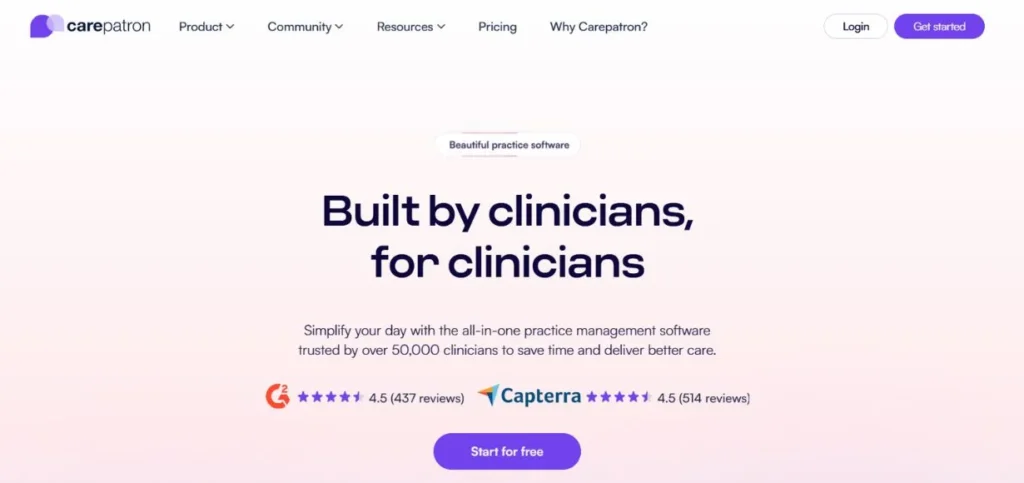
Carepatron is a patient communication tool platform in the modern world aimed at offering healthcare professionals simple, effective communication. The tool provides safe messaging, booking appointments, and video calls. Carepatron is also characterized by a clean and easy-to-use design, which does not need extensive training.
The platform is very effective when it comes to mental health providers, therapists, and counselors. It has a note, treatment plan, and patient progress tracking features. Carepatron has a free and paid plan, which means that it may be used by solo practitioners. The tool is web-basedd,d hence it operates anywhere one has internet access. Most users like the fact that they can start using Carepatron easily.
Key Features
- Clean, simple design
- Telehealth video calling
- Treatment planning tools
Pros
- Free plan available
- Very user-friendly
- Great for therapists
Cons
- Limited advanced features
- Smaller user community
- Newer platform still
Best For: Therapists
Pricing: Free plan available, paid plans start at $29/month
Website: https://carepatron.com
10. NexHealth
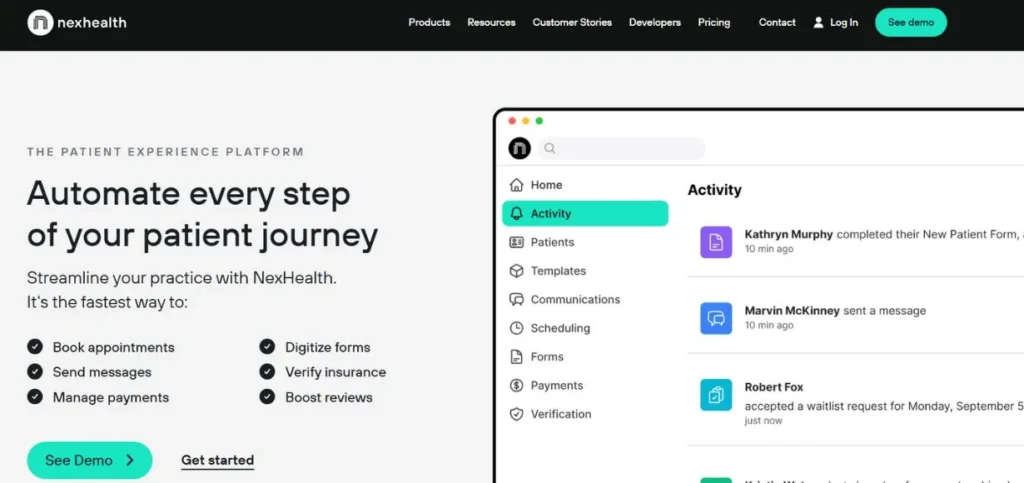
NexHealth is an innovative patient communication tools platform that helps practices automate patient communication and scheduling. The tool links with more than 500 various practice management systems. NexHealth is particularly effective regarding online booking of appointments and automatic alerts. The platform will provide two-way texting and emailing with the patients.
It also offers online booking as well as online payment. NexHealth operates based on smart automation to minimize the level of required manual labor of workers. The tool will give reports in a more detailed manner that will indicate the performance of communication efforts. The reason a lot of practices choose NexHealth is that it fits in their current systems.
Key Features
- 500+ system integrations
- Smart automation features
- Online appointment booking
Pros
- Very good integrations on offer.
- Good automation strengths.
- Good online booking
Cons
- Can be complex
- Integration setup time
- Learning curve exists
Best For: Integration
Pricing: Custom pricing based on features needed
Website: https://nexhealth.com
How to Choose the Right Patient Communication Tools
When choosing the most appropriate patient communication tools in your practice, you need to be careful:
- Know Your Budget: Decide how much you will be able to pay every month on communication tools and adhere to it.
- List Your Needs: List the specific features that you need the most, such as texting, scheduling appointments, and video calls.
- Check Integration: Ensure that the tool is compatible with the existing practice management software and electronic health records.
- Try Before Buying: A majority of them provide a free trial period, and therefore, you can test the tools on your staff and patients.
- Read Reviews: Check the reviews online and request referrals to the tools from other healthcare providers.
Common Mistakes to Avoid
The following are the largest errors that practices commit during patient communication tool selection:
- Choosing Too Many Features: There are simple systems that have basic texting and appointment reminders, unless you require a complicated system.
- Ignoring Staff Training: Even basic tools require training, and thus, schedule some time to train your staff on how to use them.
- Forgetting About Patients: Select easy-to-use tools when dealing with older patients and other individuals who lack technology skills.
- Skipping Security Checks: Ensure that tools are HIPAA compliant and are securely put in place at all times.
- Not Planning Integration: Ensure that the new tool will be compatible with your current computer systems and processes.
Conclusion
Patient communication tools have become essential for modern healthcare practices. The tools assist physicians and patients to remain in touch, minimize cancellations, and enhance the quality of care. The appropriate tool may save time, make patients happier, and make healthcare more accessible.
Select Doctor-patient communication apps, depending on your requirements and finances. Begin with simple features and incorporate additional features as you get more used to it. Remember that the best communication tools are the ones that both your staff and patients will actually use regularly.
Patient messaging solutions continue to evolve with new features and improvements. HIPAA-compliant communication tools are becoming more affordable and easier to use. Telehealth communication platforms are also becoming standard parts of healthcare delivery.
Good communication between doctors and patients will determine the future of healthcare. Patient tools make this possible in ways that were never available before. Wise decision-making, effective training of your personnel, and observing your practice turn into a more connected and efficient healthcare provider.
Frequently Asked Questions
Are the tools of communicating with the patients actually safe and HIPAA-compliant?
No, reputable tools of communication with patients are created in accordance with the HIPAA requirements. They are encrypted, and they possess special security features. Nevertheless, you must always ensure that whatever tool you use expressly mentions it to be HIPAA compliant and provides a Business Associate Agreement.
What are the average patient communication tools prices?
Prices are very different depending on the features and size of practice. Simple communication tools with patients begin at around 19-29 per month with small practices. Extensive solutions are between 100 and 500 per month and above. Most of the tools provide personalized pricing depending on the number of patients or providers.
Are patients able to use such tools when they are not technologically savvy?
Most modern patient communication tools are designed to be very simple for patients to use. They make use of a regular text message or basic apps. Text message communication with a doctor is more convenient than calling and waiting on hold in the waiting hall. The majority of the platforms also provide phone support to guide patients on their way to start.
Do patient communication tools work with existing practice management software?
Most established patient communication tools integrate with popular practice management systems and electronic health records. Nevertheless, it is always necessary to examine compatibility before selecting a tool. Certain integrations take time to set up and could also be associated with extra expenses.
How is patient communication different than normal messaging apps?
Tools of patient communication are purpose-built healthcare tools and have hard privacy regulations. Patient communication via regular messaging platforms such as WhatsApp or Facebook Messenger is not HIPAA-compliant and should not be used in any way. It also displays such features of healthcare tools as appointment scheduling and medical record integration, which are not provided by regular apps.