

India’s food scene is changing rapidly thanks to a growing middle class, more people moving to cities and a young population eager for global tastes. One major player in this change is the Quick Service Restaurant (QSR) sector which is quickly expanding and is expected to reach an impressive $38.71 billion by 2029 growing at a strong rate of 8.74% from its current value of $25.46 billion in 2024. Big international brands like Burger King are not just part of this market; they are leading the way giving ambitious business owners a great chance to succeed in the tasty world of food and profit.
For those interested in a well-known franchise opportunity in India’s booming food market a Burger King franchise is an appealing option. The popular flame-grilled Whopper along with the brand’s smart adjustments to suit Indian tastes sets franchise owners up for great success. However entering this profitable field requires a good understanding of the financial side. This article will provide clear information about the costs of a Burger King franchise cost in India offering real data, honest insights and a guide for future franchisees to find their way to success. In addition to Burger King, investors also explore opportunities like McDonald’s franchise costs in India, which is another leading QSR brand offering strong market presence and proven profitability in the Indian food industry.
About Burger King
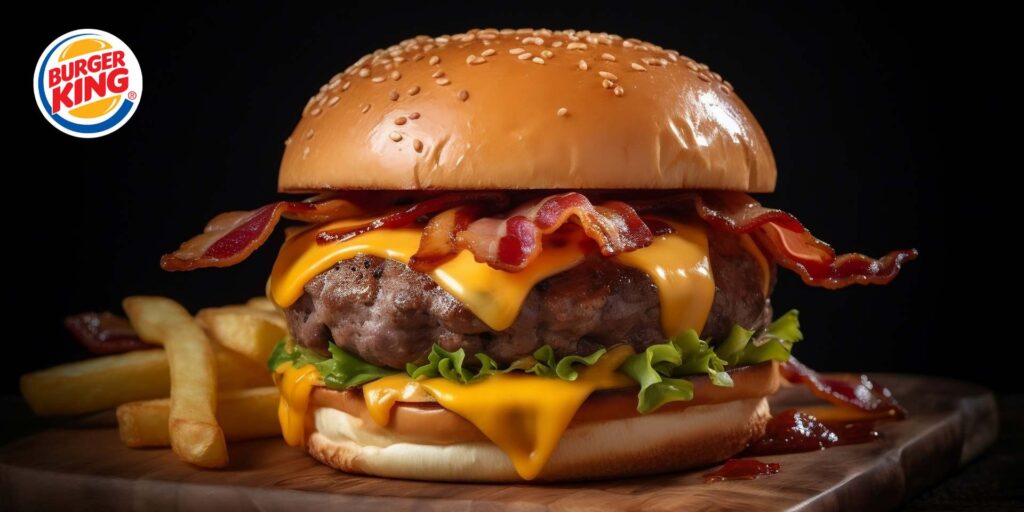
Established in 1954 in Miami, Florida, Burger King grew from a tiny single restaurant to a multinational QSR giant, with outlets in more than 100 nations and more than a million consumers daily. The company’s lasting success is because of its single-minded focus on its Unique Selling Proposition (USP): flame-grilling its burgers. This unique preparation method gives Burger King’s products a smoky, deep flavor that differentiates the brand from others and has become synonymous with Burger King’s identity.
Burger King launched its first store in India in 2014, a highlight of its global expansion efforts. Since Burger King was aware of India’s cultural diversity and varied cuisine, it followed a strategy of strategic localization. This includes:
Burger King Key Highlights 2026
- Menu Revamps: Including some variety of both veg and non-veg dishes made up of new-age veg dishes apart from our signature flame-grilled burgers. They added some dishes with Indian local flavor and spices for the local taste buds as well.
- Economic Pricing: Price the menu items in a way that they would appeal to budget-conscious Indian customers. To offer good values and prices along with maintaining the quality at high levels is our aim.
- Targeted Promotion: Create campaigns that address the Indian consumer directly naming the global brand alongside something local in particular.
- Strategy of Expansion: Highlighting expansion of presence in large Indian cities and Tier 2 cities. This will help us establish a strong presence in the urban market and then slowly expand our footprint.
Unique Selling Proposition (USP)
At the back of Burger King’s global success lies its unshakeable dedication to flame-grilling. It’s not a method of cooking; it’s the DNA of the company that sets it apart from competing burger restaurants that have more or less flat-top grill or frying units. Flame-grilling provides an excellent taste to burgers that makes them juicier and more aromatic, a taste that strongly appeals to global burger lovers.
Apart from the flame-grilling technique, Burger King’s USP is:
- The Whopper Icon: The Whopper is not only a burger, it’s an international icon, Burger King’s crown jewel, and a staple of its branding.
- Customization and Value of “Have It Your Way”: Burger King was a trendsetter as far as customization was concerned, where customers could get orders made just the way each person liked it based on taste and “Have It Your Way®.” Individual taste focus provides maximum customer satisfaction and loyalty.
- Value and Variety: Providing a value menu that combines higher-priced items such as the Whopper with value-imperative fare and plenty of sides, drinks, and desserts, appealing to budgets and tastes of all kinds.
- Strong Brand Recognition & Heritage: With more than seven decades of international brand development, Burger King franchise cost in India immediately invokes recognition and trust, giving franchisees a definite advantage in attracting customers.
About Burger King Franchise: Reality Check 2026
You cannot just call Burger King’s headquarters all over the world and get a franchise in India. It’s not like that at all.
In India, the entire franchise is operated by Restaurant Brands Asia Ltd. (RBA). They are the sole master franchisee for Burger King in India. Therefore, when you apply, you’re not applying to Burger King USA at all. You’re applying to RBA.
At the beginning of 2026, Inspira Global acquired a majority stake in RBA. They announced that they would take up smaller cities in India, such as Lucknow, Indore and Patna. The importance of this, as a potential franchisee, is that these are new markets where Burger King has not yet entered. First-movers tend to gain a competitive advantage.
Why Choose a Burger King Franchise in 2026?
One would argue to oneself: with a price tag like that up for grabs, why choose something a little less complicated? Of course, here is the real, data-based reason why Burger King is on top of our list:
The Brand Attracts the Customers
No need to spend years building customer trust. The trust is there already with Burger King. People walk into their establishments because of familiarity and because the quality of their food remains consistent, as with their famous Whopper, which has remained the same for decades.
Ten consecutive quarters of Same Store Growth in India
RBA’s same-store sales have grown for 10 consecutive quarters up to Q3 FY26. This means not only that their expansion into new locations is paying off, but also that existing locations are growing. Customers who return to these quick-service restaurants are the bread and butter of quick-service profits, and Burger King India is winning them over in droves.
The Quick-Service Market in India is Increasing Rapidly
India’s quick service market is estimated at $25.46 billion in 2024 and will grow to $38.71 billion in 2029, with a CAGR of about 8.74%. The quick service market is contributing billions of dollars in market size every year.
New Cities – New First Mover Opportunities
Burger King’s Inspira Global deal will help the company expand to Lucknow, Indore, and Patna. If you are a resident of one of these places, you will enjoy the first-mover advantage as a Burger King franchisee.
BK Cafe Adds Second Revenue Stream
Burger King’s RBA functions 464 BK Cafes as well as the typical burger shops. This provides a second revenue stream to your location. Instead of just working in the morning to serve lunchtime customers, you can serve high-end coffee and drinks to customers in the afternoon as well.
Integrated Digital and Delivery Infrastructure from The Beginning
Burger King India has its app, Swiggy integration, Zomato integration, and a good digital presence. This is something you will benefit from as a franchisee on the first day. In 2026, a significant share of the QSR business comes from food delivery.
Apart from Burger King, global brands like KFC Franchise Cost also attract investors due to their strong brand value, high customer demand, and well-established franchise support systems in India.
Burger King Franchise Cost in India: A Detailed Investment Guide
Detailed Cost Breakdown:
- Franchise Fee (INR 20 – 25 Lakhs): An initial, one-time, non-refundable fee paid upfront to Burger King franchise cost in India to obtain the franchise license. It entitles you to business under the brand name of Burger King and also use their systems of operation as well as their intellectual property.
- Infrastructure & Setting Up Expenses (INR 1.5 – 2.5 Crores): This is the largest component of the initial investment and extremely location, format, and size dependent.
- Royalty Fees (4% – 5% of Monthly Sales): This is a recurring operational cost, which is a percentage of your monthly gross sales revenue. It is paid on a regular basis to Burger King for the ongoing use of the brand name, operational systems, continued support, and brand development efforts.
- Marketing Contribution (4% – 5% of Annual Sales): Franchisees must annually contribute to Burger King’s national and regional marketing fund. This contribution, which is expressed as a percentage of annual sales, subsidizes broad-based marketing campaigns intended to promote brand recognition and generate customer traffic to all Burger King locations.
- Opening Inventory (INR 10 – 20 Lakhs): You would require investing in putting your restaurant fully stocked with opening inventory of foods, drinks, packaging items, and other consumables to stock up for grand opening and opening weeks of the business.
- Training Fee (INR 5 – 10 Lakhs): Burger King offers wide-ranging training services to franchisees and their pivotal employees. Whereas the training session itself may form part of the franchise agreement, franchisees commonly bear the charge of travel allowance, accommodation cost, and wage of their own employees during this period.
- Working Capital (INR 20 – 40 Lakhs): Having adequate working capital is imperative to support daily operations smoothly, particularly in the first few months when the restaurant is building up its customer base. This fund supports recurring operating expenses like rent, electricity and water bills, employee salaries, and restocking of inventory.
- Licenses, Permits, and Legal Fees (INR 2 – 5 Lakhs): Business licenses, food safety permits, operating permits from local authorities, and legal fees for reviewing and finalizing the franchise agreement are necessary initial expenses.
- Total Estimated Initial Investment: INR 2.22 Crores – 3.5 Crores+ (Approximately $265,000 – $420,000+ USD)
Space and Location Requirements:
Key Location Considerations:
- High Traffic Areas: High vehicular as well as foot traffic characterizes such areas and offers maximum exposure and visibility to potential customers. These are:
- Large Shopping Complexes & Multiplexes: Circumstances in well-liked shopping malls and multiplexes ensure high foot traffic with shoppers and entertainment seekers.
- Prime High-Street Retail Sites: Prime retail spaces in high street city centers as well as highly trafficked business districts with much pedestrian movement and visibility.
- High-Density Residential Zones: Located ideally in highly populated areas in order to target the resident community and families.
- Visibility and Accessibility: Easily seen on major roads and footpaths and well marked, clear signage, and close customer parking. Corner sites are very desirable because they enjoy added visibility.
- Plentiful Parking: For standalone restaurants and drive-thru outlets, sufficient parking area is necessary to accommodate customer vehicles and offer convenient access.
Restaurant Size and Format
Burger King franchise ideas vary, i.e., dine-in restaurants, express units, and drive-thru outlets. The space need varies accordingly:
- Dine-in Restaurants: Typically require larger spaces of 1500 – 3000+ square feet to accommodate dining spaces, kitchens, service counters, restrooms, and storage.
- Express Outlets/Food Court Sites: More compact units that are suitable for food court or high-density situations, requiring roughly 500 – 1000 square feet.
- Drive-Thru Restaurants: Require larger land areas to fit in the restaurant complex, drive-thru lanes, parking lots, and landscaping, typically with a requirement of 3000 – 5000+ square feet.
Burger King Franchise Profit Margin in India
Estimating exact profitability and ROI amounts is sophisticated and based on several variables, such as location performance, operating efficiency, market forces, and management effectiveness. We can however consider realistic assumptions and important determinants of financial returns.
Monthly Operating Expenses (Approx.)
Revenue Potential:
Estimated Annual Revenue: Profitable Burger King franchises in high-traffic locations in India can potentially generate annual revenues between INR 5 Crores and INR 10 Crores+ (around $600,000 – $1.2 Million+ USD) or more for high-volume outlets. Express formats and outlets in Tier 2/3 cities might have lower revenue but also lower operating expenses.
Profit Margins & ROI
- Industry Average Net Profit Margins (QSR): The net profit margins in the QSR industry are usually between 10% and 20%. Due to their brand power and existing systems, Burger King franchise cost in India can attain net profit margins within or even higher than this range with effective management.
- Estimated Net Profit (Yearly): With the estimated revenue range and industry average profit margins, a successful Burger King franchise can potentially earn yearly net profits between INR 50 Lakhs to INR 2 Crores+ (around $60,000 – $240,000+ USD) or more.
- Return on Investment (ROI): ROI on an investment in a Burger King franchise can be quite variable based on performance and investment effectiveness. Nevertheless, with robust revenue generation and good cost control, franchisees can realistically target a ROI period of 3 to 5 years or more to recover their initial investment and start generating significant returns.
Monthly Profit by Format
Factors Affecting Revenue:
- Location Performance: Ideal locations with great foot traffic will automatically produce considerably higher volumes of sales.
- Restaurant Format & Size: Larger drive-thru or dine-in restaurant formats can service a larger number of customers and possibly attain more revenue.
- Menu Mix & Pricing Strategy: Menu optimization, price competitiveness, and promotion are vital to optimizing revenue.
- Customer Service & Marketing: Good customer service, local marketing, and good customer loyalty programs lead to repeat business and higher sales.
- Operational Efficiency: Effective kitchen operations, inventory control, and employee productivity have a direct effect on sales and profitability.
Burger King Franchise Application Process
- Initial Inquiry and Expression of Interest: To start the application process you need to show interest in owning a Burger King franchise. You can do this by visiting their official website or contacting their team directly.
- Franchise Information Request: After you express your interest Burger King India will send you a package with important details. This package includes an application form information about the franchise, the money you need to invest and how to apply.
- Application Review and Initial Screening: Next, fill out the franchise application form carefully. Make sure to include details about your background business experience, financial situation and where you want the franchise (if you know). Then the franchise team will check your application. They will look at your finances, business skills, motivation and how well you fit with Burger King’s values.
- Pre-Opening and Launch Support: After that Burger King India will help you get ready to open your restaurant. They will offer support in marketing, setting up operations training staff and planning the grand opening.
- Restaurant Launch and Ongoing Operations: Finally you will launch your Burger King restaurant. Burger King India will continue to support you with marketing and business development throughout your franchise agreement.
Support and Training
Burger King helps its franchisees succeed. They offer strong support and training to give them the tools they need to do well. This support includes several important areas.
- Initial Training Program: First there is an Initial Training Program. Franchisees and their main managers take part in a detailed training course. This training covers everything from how to prepare food to customer service and managing inventory.
- Operations Manuals and Standardized Procedures: Next franchisees get Operations Manuals and Standardized Procedures. These manuals provide step-by-step instructions for running the restaurant. They make sure that every restaurant offers the same quality and service.
- Real Estate and Site Selection Assistance: Burger King also helps with Real Estate and Site Selection. Their real estate team helps franchisees find the best locations for their restaurants. These locations meet the brand’s standards and help the business grow.
- Marketing and Advertising Support: In addition franchisees get Marketing and Advertising Support. Burger King runs national and regional marketing campaigns which are paid for by contributions from franchisees. They also offer guidelines for local marketing to attract more customers.
- Ongoing Operational Support and Business Consulting: Moreover Burger King gives Ongoing Operational Support and Business Consulting. Experienced franchise consultants provide regular help and advice. They review performance and suggest ways to improve restaurant operations and increase profits.
- Technology and System Support: Finally franchisees receive Technology and System Support. They get assistance with POS systems, kitchen management software and online ordering platforms. This technology is important for running the restaurant smoothly.
Burger King vs. Burger Singh: Which Is a Better Investment for You?
Many wouldn’t notice this comparison and it’s one of the most important comparisons to make. Burger Singh is India’s largest home-grown burger brand introduced in 2014, the same year when Burger King entered India. In 2025, it raised new funds of Rs 47.15 crore and has its eyes set on reaching 1000 outlets by 2026. It’s a legitimate competitor and to many investors, it could be the better bet.
Conclusion
A Burger King franchise in India in 2026 remains a high-investment but high-potential business opportunity for entrepreneurs looking to enter the growing QSR market. The initial investment typically ranges between ₹2.5 Crores to ₹4 Crores+, depending on location, store format, and size.
While the upfront cost is significant, the brand strength of Burger King, its proven business model, and strong demand for affordable fast food in India create solid long-term potential. Most outlets operate with 10–20% net profit margins, with better returns possible in Tier 2 cities due to lower operational costs.
Overall, with the right location, cost control, and efficient operations, a Burger King franchise can generate steady revenue, scalable growth, and sustainable profitability in 2026 and beyond.
Overall, if you are exploring multiple opportunities, analyzing the Best Food Franchise India options can help you compare brands like Burger King, McDonald’s, and KFC to choose the most suitable investment based on your budget and business goals.
Searching for more Business Ideas? Checkout our blog section!
Visit for More Information:
FAQs
How much does Burger King franchise cost in India?
The initial franchise fee cost around ₹20-25 lakhs.
How to open a Burger King store?
For opening a Burger King store you need to follow all the steps mentioned in this article.
Is the Burger King franchise profitable?
Yes, it is one of the profitable franchises. You can earn monthly profit around ₹3-4 lakhs.
Who owns Burger King in India?
Burger King is owned by QSR Asia- a joint venture between F&B Asia Ventures and Burger King Asia Pacific.