


Choosing the right business structure is one of the most important decisions entrepreneurs make before starting a business. The structure selected during company registration online can influence ownership, taxation, compliance responsibilities, and future business opportunities.
A business structure also affects how a company operates, raises funds, manages liabilities, and handles long-term growth. Selecting the wrong structure at the beginning can create operational and compliance challenges as the business expands.
Company incorporation and Private Limited Company Registration help establish a formal business foundation with legal recognition and organised management. A properly structured business can support smoother operations, better credibility, and improved growth potential over time.
Understanding Business Structure
A business structure refers to the legal framework under which a business operates. It defines how the business is owned, managed, taxed, and regulated under applicable laws.
Choosing the right structure before starting operations is important because it affects daily business activities, compliance responsibilities, and long-term business planning. The structure selected during company registration online can also influence future expansion opportunities.
Entrepreneurs should evaluate their business goals, funding plans, and operational requirements before deciding on a structure. Different business models may require different legal and compliance frameworks.
Factors such as ownership pattern, liability protection, taxation, scalability, and regulatory obligations often influence the selection process. Businesses planning external investments may prefer structures like Private Limited Company Registration for better credibility and flexibility.
Selecting a suitable business structure early can help businesses avoid operational complications and support smoother growth as the company expands.
Common Types of Business Structures
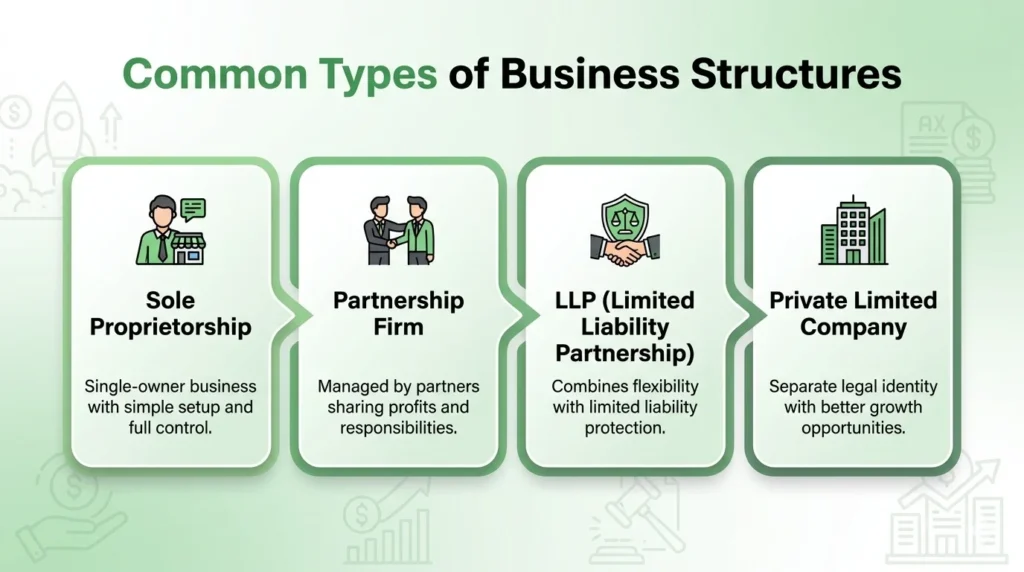
Businesses can choose from different legal structures based on their ownership model, operational requirements, and long-term goals. Understanding these structures helps entrepreneurs make informed decisions before company registration online.
A. Sole Proprietorship
A Sole Proprietorship is the simplest business structure where a single individual owns and manages the business. The owner and the business are treated as the same legal entity.
This structure is commonly suitable for small businesses, freelancers, consultants, and local service providers with limited operational complexity.
B. Partnership Firm
A Partnership Firm is formed when two or more individuals agree to manage a business together and share profits and responsibilities.
Partnerships require clear agreements regarding ownership, profit sharing, decision-making, and operational responsibilities to avoid future disputes.
C. LLP (Limited Liability Partnership)
A Limited Liability Partnership (LLP) combines features of a partnership with limited liability protection for partners. LLPs offer flexibility in management and operational structure.
One of the key advantages of an LLP is that partners generally have limited personal liability for business obligations and debts.
D. Private Limited Company
Private Limited Company Registration creates a separate legal entity distinct from its owners. This structure supports organised management, legal recognition, and long-term business continuity.
Key features of a Private Limited Company include limited liability protection, structured ownership, and the ability to raise investments through shares, making it a preferred choice for many startups and growing businesses.
Why Business Structure Matters Before Company Incorporation
Selecting the right business structure before company registration online can influence compliance, taxation, operational flexibility, and future business growth. The structure chosen forms the foundation for how the business will function in the long term.
A. Impacts Legal Responsibilities
Different business structures carry different legal responsibilities, ownership obligations, and liability levels. Entrepreneurs should understand how each structure affects personal liability, management authority, and compliance requirements before incorporation.
B. Influences Funding Opportunities
Investors and financial institutions may prefer certain business structures based on scalability and transparency. Private Limited Company Registration is often preferred for businesses planning to raise investments or expand operations through external funding.
C. Affects Taxation and Financial Management
Business structure can impact taxation methods, compliance obligations, and financial reporting requirements. Proper financial planning becomes easier when businesses choose a structure aligned with their operational and growth goals.
D. Determines Business Credibility
A properly structured and registered business often creates stronger trust among customers, vendors, and stakeholders. Company registration online helps businesses establish a professional image and improve market credibility.
E. Impacts Scalability and Long-Term Growth
The selected structure affects how easily a business can expand, add owners or investors, and manage future operational changes. Private Limited Company Registration offers flexibility for long-term growth, ownership transitions, and structured management.
Questions Entrepreneurs Should Ask Before Choosing a Structure
Before selecting a business structure through company registration online, entrepreneurs should evaluate their operational goals, funding plans, and long-term business requirements. Asking the right questions early can help businesses choose a structure that supports future growth and compliance needs.
What are the long-term business goals?
Businesses planning long-term expansion, large-scale operations, or structured management may benefit from Private Limited Company Registration. Smaller businesses with limited operations may initially choose simpler structures depending on their goals.
Will external funding be required?
If the business plans to raise investments from angel investors, venture capital firms, or financial institutions, a Private Limited Company structure is often preferred because it allows equity participation and structured ownership.
How many owners or partners will be involved?
A Sole Proprietorship may suit single-owner businesses, while Partnership Firms or LLPs are suitable for multiple owners. Private Limited Company Registration supports structured ownership for businesses with multiple shareholders and management roles.
What level of compliance is manageable?
Different structures involve different compliance responsibilities. Businesses should evaluate whether they can manage annual filings, tax compliance, accounting, and regulatory requirements before selecting a structure.
Is limited liability protection important?
Entrepreneurs seeking separation between personal and business liabilities may prefer LLPs or Private Limited Companies, as these structures generally offer limited liability protection.
Will the business require scalability in the future?
Businesses expecting future expansion, funding opportunities, or ownership changes may benefit from Private Limited Company Registration because it supports scalability, structured management, and long-term operational flexibility.
Common Mistakes Businesses Make Before Company Incorporation
Many businesses make structural decisions based only on immediate operational needs without considering long-term growth and compliance requirements. These mistakes can create challenges as the business expands.
- Choosing a business structure without proper long-term planning for growth, funding, and scalability
- Ignoring legal responsibilities, taxation, and compliance requirements associated with different structures
- Selecting a structure only for short-term convenience instead of future operational flexibility
- Failing to evaluate investor preferences and funding requirements before company registration online
- Not understanding how ownership, liability, and management responsibilities differ across structures
- Delaying professional guidance before proceeding with Private Limited Company Registration or other incorporation processes
How the Right Structure Supports Future Business Success
Choosing the right business structure before company registration online helps businesses create a clear operational and legal framework. A well-planned structure can simplify management responsibilities, improve compliance handling, and support smoother day-to-day operations.
The right structure also plays an important role in future business growth and stability. Businesses that make informed incorporation decisions are often better prepared for expansion, funding opportunities, and long-term operational success.
- Creates better operational clarity and defined management responsibilities
- Supports organised financial management and compliance processes
- Improves business credibility among customers, investors, and vendors
- Helps businesses prepare for future expansion and scalability
- Provides flexibility for ownership and management changes
- Strengthens the foundation for funding and investment opportunities
- Supports long-term business continuity through informed company incorporation decisions
Conclusion
Choosing the right business structure before company incorporation is an important step in building a stable and growth-oriented business. The structure selected through company registration online can influence legal responsibilities, taxation, compliance management, funding opportunities, and long-term scalability.
Private Limited Company Registration and other business structures each offer different operational and compliance advantages depending on business goals and ownership requirements. Evaluating these factors carefully before incorporation can help businesses avoid future operational challenges.
A well-planned business structure creates a stronger foundation for credibility, financial management, expansion, and long-term business success.