
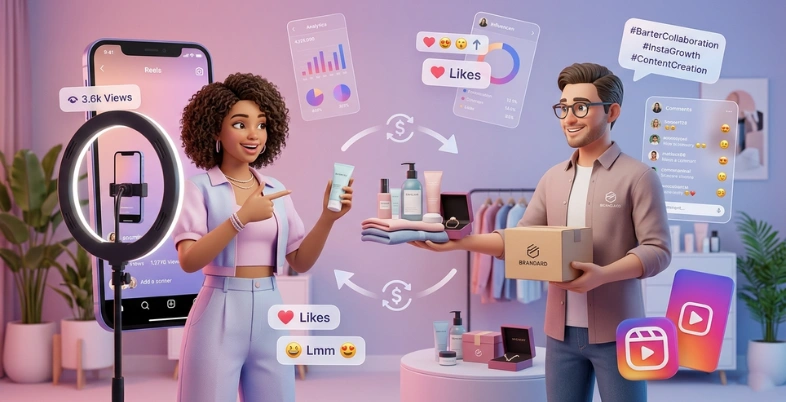
Scroll through Instagram for more than five minutes, and you’ll inevitably run into a creator showcasing a sleek new skincare line or unboxing a premium clothing brand. While it’s easy to assume heavy payouts are changing hands behind the scenes, a massive portion of these partnerships rely on a much simpler arrangement known as a barter collaboration. Instead of cash, brands send free products, and creators provide content in return. It’s a modern reimagining of humanity’s oldest trade system, and right now, it is quietly powering a massive chunk of social media marketing.
This setup matters more today than ever because the traditional advertising landscape is both incredibly crowded and increasingly expensive. For businesses, launching paid ad campaigns can quickly drain a budget with zero guarantee of a return. For creators, standing out in a sea of algorithmic noise requires consistent, high-quality content, which requires a steady stream of products to feature. Barter collaborations solve both problems simultaneously, offering a low-risk, high-reward framework where creativity serves as the primary currency.
Because it sidesteps the need for massive budgets, this model is highly accessible. It is an ideal launching pad for micro and nano-influencers who are actively building their portfolios and need tangible brand experience to show future clients. At the same time, it is a goldmine for bootstrapped startups, e-commerce store owners, and local businesses looking to build authentic social proof without breaking the bank. In this guide, we will break down exactly how barter collaboration on Instagram works, how both brands and creators can make the most of it, and the steps to build partnerships that actually drive results.
What Is Barter Collaboration on Instagram?
At its core, a barter collaboration on Instagram is a straightforward exchange of value where products, rather than cash, serve as the currency. In this setup, a brand sends a selection of its goods or services to an influencer for free. In return, the influencer uses their platform, creativity, and reach to create dedicated content such as Reels, Stories, or carousel posts showcasing those items to their audience while helping brands track Instagram shares, reach, and overall engagement performance.There is absolutely no money involved in the transaction; the entire deal relies on the mutual benefit of trading tangible products for digital visibility.
This framework strips away the financial friction that often stalls traditional marketing campaigns. For creators, it is a way to try new products they genuinely love and generate fresh content for their feed without spending their own money. For brands, it offers a direct line to targeted communities by leveraging the influencer’s established trust. Because the transaction begins and ends with the product itself, it levels the playing field, allowing both parties to collaborate and grow their respective presence on Instagram based purely on the value they bring to the table.
How To Start a Barter Collaboration On Instagram
Stepping into the world of barter collaborations requires more than just sending a flurry of direct messages and hoping for a response. To build partnerships that actually yield results, you need a structured approach that establishes your credibility from the very first impression. Here is a step-by-step blueprint to help you successfully navigate the process.
Step 1: Niche Down Your Profile
Before you approach any business, your profile needs to tell a clear, cohesive story. Brands don’t just look at follower counts; they look for alignment. If your feed jumps from fitness tips on Monday to baking recipes on Wednesday and gaming clips on Friday, businesses won’t know who your audience is or why their product fits your page.
Focusing on a specific niche whether it is sustainable fashion, tech gadgets, budget travel, or plant-based cooking instantly defines your target audience. Use your bio to state exactly what you do and who you serve. When your content consistently revolves around a specific theme, you present yourself as an authority in that space. This makes it incredibly easy for a brand to see exactly how their product will fit into your aesthetic and appeal to your community.
Step 2: Find the Right Brands
Once your profile has a clear direction, your next task is to identify businesses that naturally align with your content style. The goal here is relevance, not size. If you are a micro-influencer, targeting massive global conglomerates right out of the gate will likely lead to dead ends. Instead, look for homegrown brands, e-commerce startups, or local businesses that are actively trying to build their digital footprint.
You can find these partners by exploring hashtags related to your niche (e.g., #SkincareStartup or #HandmadeJewelry) or checking the “Suggested for You” arrow on accounts you already admire. Look closely at their existing feed: Are they already working with creators your size? Do they repost user-generated content? If they show a willingness to collaborate with rising creators, they are prime candidates for a mutually beneficial barter agreement.
Step 3: Outreach and Pitching
Pitching is where many creators drop the ball by sending generic, copy-pasted messages. To stand out in a crowded inbox, your outreach needs to be personalized, professional, and concise. Whether you are reaching out via Instagram DM or, ideally, finding the business email listed in their profile, your pitch should focus entirely on what they stand to gain.
Start by introducing yourself briefly, complimenting a specific product they make, and explaining why it resonates with your community. Instead of asking for “free stuff,” propose a clear exchange.
Example Pitch Framework:
“I have an active community of [Your Niche] enthusiasts who frequently ask for recommendations in this category. I’d love to feature your new [Product Name] in a dedicated Instagram Reel showcasing how to use it, in exchange for the product itself.”
Keep it friendly, attach a simple media kit if you have one, and always close with a clear call to action that invites a discussion.
Step 4: Finalize Terms of Negotiation
When a brand expresses interest, do not assume you are both on the same page. Miscommunications at this stage are the number one cause of failed collaborations. You need to explicitly agree on the deliverables before any product is shipped.
Treat this discussion with the professional care it deserves. Clearly define the answers to these questions:
- What exactly will you create? (e.g., one main feed Reel and two accompanying Stories with a product tag).
- What is the timeline? Agree on a realistic deadline for the content to go live after the product arrives.
- Are there specific brand guidelines? Ask if there are key talking points, specific hashtags, or restricted words you need to keep in mind.
- How will the content be used? Clarify whether the brand has the right to repost your content or use it for paid advertising.
Putting these details in writing even via a simple confirmation email or message—protects both parties and ensures a smooth workflow.
Step 5: Provide Quality Content
The product has arrived, the terms are set, and now it is time to deliver. Treat a barter collaboration with the exact same level of professionalism and effort as you would a high-paying commercial contract. This is your chance to build a portfolio of stellar work that you can leverage for paid deals down the road.
Avoid making your post look like a bland, commercial ad. Instead, weave the product naturally into your usual content style. Focus on authentic storytelling: share a genuine first impression, show a before-and-after transformation, or create an educational tutorial demonstrating the product in action.High-quality lighting, crisp audio, and engaging captions make a massive difference. Using advanced editing tools for creators can also help influencers produce professional Instagram Reels and sponsored videos that stand out When you over-deliver on your promise, you don’t just satisfy the brand, you open the door for long-term partnerships and turn a one-time trade into an ongoing professional relationship.
List of 5 Best Apps & Platforms for Barter Collaboration in India
1. OPA
OPA is arguably India’s most popular marketplace specifically tailored for product-gifting and barter collaborations. It has built a massive network by prioritizing micro and nano-influencers, allowing homegrown startups and major D2C brands alike to execute large-scale campaigns without heavy financial outlays. The platform is incredibly popular because it removes the manual stress of searching for creators, automating the selection and shipping process through a clean, intuitive app interface. Brands love it for its affordability, while creators trust it because it offers direct, invite-only access to premium brand campaigns.
- Key Features: Automated creator matching, an invite-only app ecosystem for verified profiles, automated shipping management, and real-time tracking of deliverables.
- How it Works: Brands register on the platform and set up a product campaign. OPA then pushes invitations out to relevant influencers on its app. Interested creators apply, the brand selects its favorites, and OPA handles the product distribution. Once the product arrives, creators upload their content links directly to the app.
- Best For: D2C startups looking to scale their social proof quickly and nano/micro-influencers seeking consistent product deals.
2. Kofluence
Kofluence relies heavily on data analytics to streamline influencer marketing across India. Acting as a self-serve platform, it helps businesses automate their workflow while matching them with hyper-targeted creators. Kofluence stands out by giving both sides equal control over who they work with, ensuring that every barter partnership is rooted in audience alignment rather than guesswork. Its built-in social listening tools and detailed performance metrics allow brands to evaluate exactly how much traction their free products are generating, taking the ambiguity out of unpaid campaigns.
- Key Features: AI-driven creator discovery tools, social listening capabilities, automated content workflow approval, and transparent campaign ROI analytics.
- How it Works: A brand creates a barter campaign brief outlining the target audience and content requirements. Creators browse active campaigns on the Kofluence app and apply to those that fit their niche. After the brand approves an application, the creator builds the content, submits it for a quick review on the platform, and takes it live.
- Best For: Brands that want a completely automated, data-backed approach to campaign tracking, and creators who prefer clear creative briefs.
3. Plixxo
Launched by the popular digital media network POPxo, Plixxo is one of India’s largest and oldest influencer networks. It acts as a massive community hub where thousands of fashion, lifestyle, beauty, and travel creators gather. What makes Plixxo unique is its accessibility; creators with as few as 1,000 followers can sign up and start pitching to brands. Because it is backed by a major media house, it frequently hosts campaigns for household consumer brands looking to complement their massive paid marketing pushes with grass-roots barter campaigns.
- Key Features: Low entry barrier for emerging creators, massive database across lifestyle and beauty categories, easy profile management, and a centralized campaign dashboard.
- How it Works: Creators register their handles and link their Instagram analytics to Plixxo. Brands list their active barter or paid requirements on the platform. Creators can browse these listings and directly express interest. Plixxo manages the communication pipeline, enabling brands to approve hundreds of creators simultaneously for a single product drop.
- Best For: Aspiring nano-influencers trying to land their very first brand deals, and lifestyle brands targeting a young, trends-focused audience.
4. Qoruz

Qoruz is a highly sophisticated, premium influencer intelligence platform used by some of India’s biggest brands and agencies. While it supports massive paid celebrity endorsements, its robust search wizard makes it an incredible resource for discovering highly specific, niche micro-influencers for barter campaigns. Instead of relying on manual scrolling, the platform provides deep-dive analytics into a creator’s audience demographics, fake follower percentages, and historic engagement rates. This ensures that even when a brand is only trading a product, they are giving it to a creator with a real, active community.
- Key Features: Advanced multi-parameter search engine, comprehensive audience psychographic insights, influencer comparison matrix, and end-to-end relationship management (CRM) tools.
- How it Works: Brands use Qoruz’s advanced search filters to find creators based on niche hashtags, specific keywords, or geographic locations. Once a curated list is built, the brand uses the platform’s integrated messaging system to send direct, personalized barter proposals and manage the entire negotiation pipeline from one dashboard.
- Best For: Mid-to-large businesses that want complete control over manual vetting and want to ensure their barter partners are high-quality, brand-safe creators.
5. InfluCollabs
InfluCollabs is a rising, tech-forward influencer marketing platform in India that focuses heavily on hybrid and self-managed campaigns. It balances cutting-edge AI matching algorithms with a team of dedicated campaign managers, giving businesses a safety net if they aren’t ready to handle influencer logistics entirely on their own. The platform is highly regarded for its diverse campaign options ranging from straightforward product reviews to store visits—making it a fantastic option for regional businesses looking for local Instagram foot traffic in exchange for their services.
- Key Features: AI-powered matching across 12 unique audience parameters, dedicated human campaign managers, flexible “self-managed” dashboards, and easy asset tracking.
- How it Works: Brands list a barter campaign specifying exactly who they want to reach. InfluCollabs uses its database to filter verified creators who meet those exact parameters. The brand can choose to manage the outreach themselves using the automated tools or let an InfluCollabs manager handle the product delivery logistics and deliverable deadlines.
- Best For: Local businesses (like cafes, salons, or boutiques) looking for experiential barter campaigns, and creators looking for structural support during a campaign.
Barter vs Paid Collaboration – Key Differences
Understanding the structural differences between barter and paid collaborations helps both brands and creators set realistic expectations. While both models aim to drive engagement and awareness on Instagram, they operate on entirely different operational dynamics, risk levels, and legal frameworks.
| Feature | Barter Collaboration | Paid Collaboration |
| Primary Compensation | Free products, services, or exclusive experiences. | Financial payout (flat fee, commission, or performance bonus). |
| Upfront Financial Risk | Low for brands (cost of goods); Low for creators (time investment). | Higher for brands (direct capital layout); Low for creators. |
| Content Control | Moderate; creators usually maintain more creative freedom. | High; brands enforce strict briefs, scripts, and multi-stage approvals. |
| Ideal For | Bootstrapped startups, local businesses, and micro/nano-influencers. | Established brands with dedicated budgets and mid-to-mega influencers. |
| Usage Rights | Usually restricted to standard Instagram reposting unless negotiated. | Broad usage rights often included for paid ads and websites. |
| Legal Agreements | Often rely on casual written confirmations or simple contracts. | Require detailed legal contracts covering deliverables, exclusivity, and indemnity. |
Benefits of Barter Collaboration
Barter partnerships offer a unique win-win dynamic, acting as a low-barrier entry point for commercial growth on Instagram. Because these arrangements skip financial transactions, they unlock distinct operational and strategic advantages for both businesses and content creators.
For Brands
- Cost-Effective Scalability: Instead of dipping into limited cash reserves to fund traditional advertising, brands can leverage their existing inventory. The actual cost of a product is significantly lower than its retail value, allowing businesses to launch widespread influencer campaigns and build widespread social proof at a fraction of the cost.
- Rapid Content Generation: Every collaboration results in fresh, high-quality media assets. Brands can often negotiate the rights to reuse this user-generated content (UGC) across their own Instagram feeds, website product pages, and email marketing newsletters, saving thousands on professional studio photoshoots.
- Authentic Audience Building: Micro and nano-influencers typically possess highly engaged, tight-knit communities. When a creator features a product they genuinely enjoy using in their daily life, their endorsement feels like a trusted recommendation from a friend rather than a forced commercial advertisement, driving higher consumer trust.
For Influencers
- Portfolio Building Without Financial Strain: For rising creators, landing paid deals requires showing a track record of high-quality brand work. Barter deals allow influencers to build a professional portfolio, test their creative boundaries, and prove their ability to drive engagement without spending their own money on content assets.
- Steady Stream of Fresh Content: To stay favored by the Instagram algorithm, creators must post consistently. Partnering with diverse brands provides a steady influx of new products, tools, or clothing to unbox, review, and style, keeping their content pipeline fresh, interesting, and relevant for their audience.
- Gateway to Long-Term Paid Partnerships: Exceptional work rarely goes unnoticed. When a creator treats a barter campaign with utmost professionalism and delivers stellar results, it frequently opens the door to long-term ambassadorships or transitions into high-paying, contractual agreements down the line.
Common Mistakes To Avoid
Even though barter collaborations don’t involve cash, treating them casually can damage your reputation or waste valuable time. To ensure your partnerships run smoothly and deliver real value, keep an eye out for these frequent pitfalls.
- Vague or Undefined Deliverables: Jumping into a collaboration without a clear, written agreement on exactly what content needs to be created is a recipe for misunderstanding. Creators might assume a single Instagram Story is enough, while the brand expects a full-length Reel. Always explicitly confirm the format, platform, and quantity of posts before any products change hands.
- Ghosting or Extreme Shipping Delays: Professionalism is the foundation of a good partnership. Brands that take weeks to ship items without keeping the creator updated, or creators who disappear once they receive a free product, quickly build a bad reputation in the industry. Maintain open, honest communication if unexpected delays pop up on either side.
- Ignoring Audience Alignment for Free Stuff: It can be incredibly tempting for emerging creators to accept every free product offered, and equally tempting for brands to work with any influencer who says yes. However, if a fitness influencer suddenly promotes a fast-food brand, it breaks audience trust and yields zero return for the business. Always prioritize brand-audience synergy over convenience.
- Treating Barter Campaigns with Lower Priority: Treating an unpaid collaboration as a second-class project is a massive missed opportunity. Delivering rushed, poorly lit, or uninspired content just because there wasn’t a cash payout stops brands from wanting to work with you again. Treat every barter deal as an audition for a long-term, high-paying partnership.
Conclusion
In conclusion, barter collaborations are a fantastic reminder that you don’t need a massive marketing budget or a million followers to make a real impact on Instagram. At the end of the day, these partnerships are all about mutual growth and genuine connection. Brands get a budget-friendly way to get their products into the hands of real people, while creators get the perfect opportunity to build a professional portfolio and keep their feeds fresh. When both sides focus on building a real relationship rather than just a quick exchange, it creates a win-win scenario that naturally drives engagement.
If you are ready to jump into the world of barter partnerships, remember that clarity and professionalism are your best tools. Take the time to find the right match, keep your communication honest, and always deliver on your promises. By avoiding common mistakes and treating every single deal with respect, you can turn simple product trades into powerful, long-term business relationships. Instagram is built on community and barter collaborations are one of the smartest ways to grow yours.