
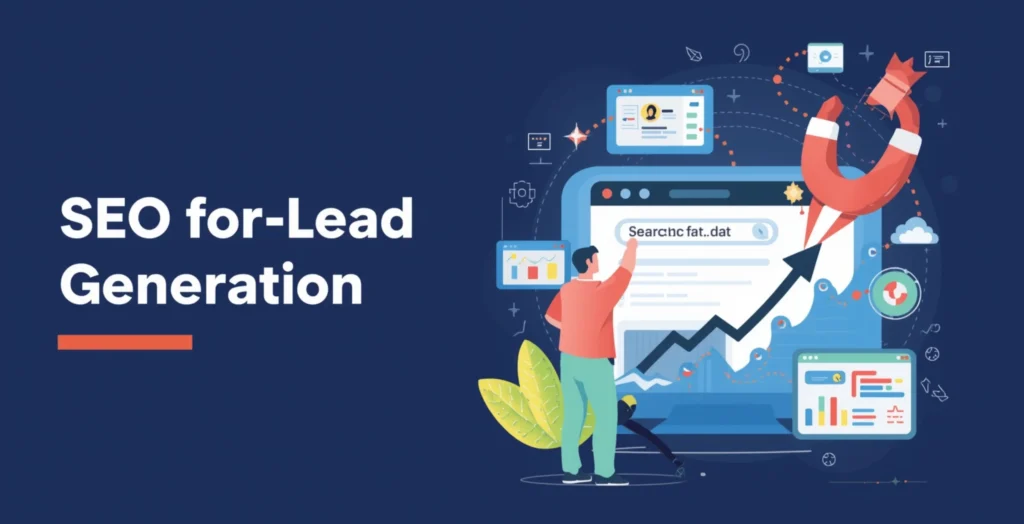
Search engines are often the first place potential customers turn when they’re looking for solutions, making visibility in search results a powerful driver of business growth. SEO for Lead Generation focuses on attracting the right audience at the right moment—people who are already searching for products or services you offer—and guiding them toward becoming qualified leads.
By combining strategic keyword targeting, high-quality content, and optimized user experiences, SEO transforms your website into a consistent source of inbound opportunities. Instead of chasing prospects, businesses can position themselves directly in front of users with intent, capturing attention and building trust before a single conversation begins. When executed effectively, SEO doesn’t just increase traffic—it builds a steady pipeline of potential customers who are more likely to engage, convert, and stay loyal over time.
What Is Lead Generation?
Lead generation is the process of attracting and converting people who are interested in a product or service into potential customers, known as “leads.” It involves capturing their information such as name, email, or phone number through methods like websites, forms, ads, social media, or content marketing. Once a person shows interest, businesses try to engage them further and guide them toward making a purchase. Lead generation is important because it helps companies build a list of interested customers and increases the chances of turning them into actual buyers in the future.
Why We Use SEO in Lead Generation
We use SEO in lead generation because it helps businesses reach people who are actively searching for their products or services on search engines like Google. Instead of randomly targeting users, SEO focuses on attracting high-quality traffic that is more likely to convert into leads. It improves a website’s visibility, builds trust, and brings long-term organic visitors without paying for every click like in ads. When a website ranks higher in search results, more users visit it, fill out forms, make inquiries, or contact the business, which ultimately increases sales opportunities and business growth.
The Difference Between SEO and Lead Generation
Search Engine Optimization (SEO) and lead generation have different roles in a marketing plan: SEO is aimed at raising the organic visibility and traffic, whereas lead generation is more focused on collecting contact information of potential customers who are willing to work with. Consider the process of SEO as the erection of the plumbing to get visitors to your site, and lead generation as the actual plumbing or plumbing tactics that are used to convert visitors to your site into actionable prospects.
Core Differences
The key differences between these two strategies are pointed out in the following table:
| Feature | SEO | Lead Generation |
| Primary Goal | Improve search engine visibility and traffic | Capture contact details or direct inquiries |
| Timescale | Long-term investment for sustainable growth | Often delivers quicker, direct results |
| Approach | Organic attraction via rankings | Direct outreach, ads, or conversion funnels |
| Traffic Nature | Broad to specific search intent | Highly qualified prospects ready for action |
Strategic Roles
SEO is a background traffic generator, which will increase the visibility of your website to those users who are searching for the relevant services. Since it depends on search engine algorithms, the results may take a long time to become a reality, but it does have the advantage of establishing long-term authority and a sustainable flow of visitors.
The process of generating leads is more goal-oriented and immediate, and it may utilize tactics such as paid advertisement, targeted email outreach, or optimized landing pages to request information from users. Whereas SEO is about getting people to your website, lead generation is a mechanism that converts the visitors into a sales pipeline.
8 Proven SEO Strategies to Lead Generation.
The strategies emphasize the ability to drive qualified traffic, which turns into leads through alignment of SEO and the user intent and business objectives.
1. Target High-Intent Keywords
High-intent keywords are search terms such as “best CRM software” which indicate that the searcher is a buyer who is willing to take action, as opposed to a casual searcher. Target these with the help of such tools as Google Keyword Planner, which will help find phrases with a commercial intent, e.g., buy or quote, and so on, which will have a lower volume but a higher conversion rate. Give them priority in your content to bring visitors nearer to the purchase.
2. Map Content to the Buyer Journey.
The buyer path consists of steps: awareness (identifying the problem), consideration (exploring solutions), and decision (purchasing). Produce content on each of them, such as blog posts to create awareness, comparison guides to create consideration, and case studies to create decision, to move users naturally towards leads. This correspondence enhances relevance, and it retains visitors longer.
3. Landing Pages: Optimize the Lead Capture of Landing Pages.
The landing page are supposed to have clear headlines, a few forms (3-5 fields at the most), visible CTAs, such as Get Free Demo, and social evidence, such as testimonials, if above the fold. Reduce compress load times to less than 3 seconds and adjust page content to an ad or search query to improve Quality Scores. Such tweaks are capable of doubling the conversion rates by cutting down on the friction.
4. Long-Tail Keywords to attract Niche Traffic.
Long-tail keywords, like “SEO tools for small business lead gen in Delhi,” are specific queries with less competitive and more intent-related queries. They generate niche traffic that is 2-3x more likely to convert, as searchers know the specific niche they desire. Leverage them through people also ask features of Google as quick wins.
5. Fix Technical SEO
Bounce rates are prevented by technical SEO fixes such as mobile responsiveness, HTTPS security, fast site speed (via image compression and caching), XML sitemaps, and clean URL structures. Audit and solve problems such as duplicate content or broken links with tools such as Google PageSpeed Insights. Sound technical underpinnings will enable crawlers to index your lead-gen pages with efficiency.
6. On-Page SEO Optimization
Some of the elements of on-page SEO include unique title tags (less than 60 characters), meta descriptions with keywords, H1-H3 structure, and natural placement of keywords in the first 100 words. To enhance click-through rates, include alt text on pictures and schema markup on rich snippets. When properly done, this will indicate relevance to both the search engines and the users.
7. Local SEO to get location-based leads.
In case you can serve Delhi or certain cities in India, optimize on local-intent keywords such as, in this case, the following: digital marketing agency in Delhi, franchise consultant in Gurgaon.
Register and optimize your Google Business Profile, add location-based schema, and be listed in relevant local directories and review platforms to capture nearby leads.
8. Internal Linking Strategy
Internal links are links between related pages, such as blog posts to landing pages, using descriptive anchor text, such as download our lead gen checklist. Goal: 3-5 links per post to distribute link equity and send users further down your funnel. This increases dwell time and assists search engines in comprehending the site hierarchy so as to rank higher.
SEO Lead Generation for B2B vs B2C
Lead generation strategies in SEO vary greatly depending on whether a target group comprises a business entity or an individual consumer. By comprehending these differences, marketers will be able to customize their content, keywords, and conversion funnels to fit the unique decision-making processes of each segment.
B2B SEO Lead Generation.
The B2B lead generation is a long-term and multi-step process where the aim is to build quality leads and not to make instant sales. This is precisely where B2B SEO plays a defining role by aligning search visibility with the specific needs and pain points of professional buyers at every stage of their journey. Since the buying cycle involves a set of decision-makers, the SEO strategies are focused on establishing the authority and the trust of the decision-makers with the help of highly targeted and educative content.
- Content Strategy: Focus on whitepapers, case studies, and deep-dive blog posts addressing particular pain points in the industry.
- Conversion Tactics: To get prospects through the funnel, use specialized calls to action (CTAs) like, Request a demo, Talk to an expert, or Get a custom quote.
- Lead Capture: Introduce gated content and simplified lead capture forms that collect information required without introducing unnecessary friction to professional users.
B2C SEO Lead Generation.
B2C SEO lead generation, in contrast, is geared towards speed and emotional appeal, with the goal being direct conversions, such as product purchases, app downloads, or newsletter sign-ups. The tactic frequently capitalizes on high-volume keywords and compelling and emotionally engaging messaging to turn individual consumers around within a brief period.
- Content Strategy: Concentrate on product pages, interesting videos and brief and high impact information that emphasizes benefits and appeals to emotions.
- Conversion Tactics: Take advantage of limited time offers, direct and clear promotion messages, and retargeting ads to promote action.
- Focus: It is important to focus on the measures of sales volume, traffic volume, and cost-per-lead so as to refine campaigns constantly.
Comparison Table for B2B vs B2C
List Of 10 Best Tools for SEO Lead Generation
1. Google Search Console
website:https://search.google.com/search-console/about
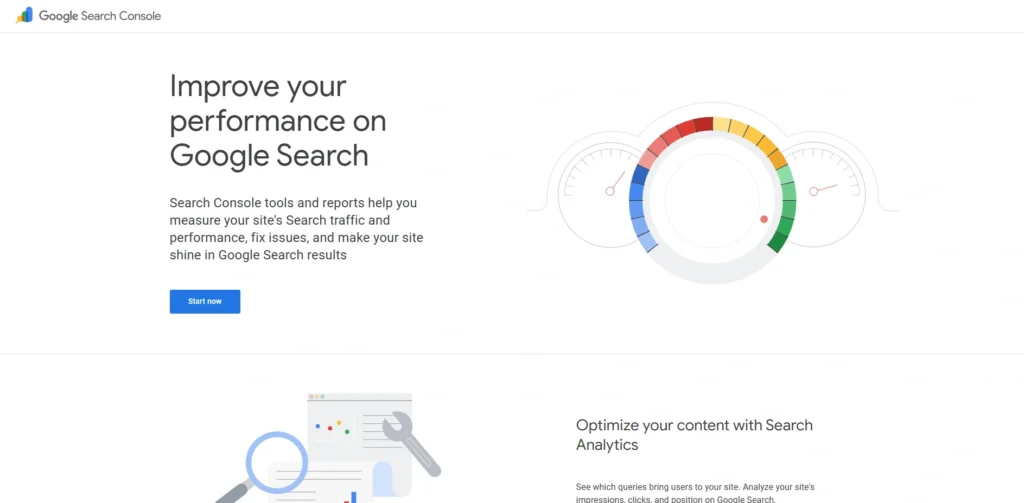
Google Search Console is a free product of Google that allows you to understand how your site looks and performs in Google search to be able to improve ranking, clicks, and eventually leads in Google search. It shows what keywords drive traffic, on what pages the impressions and clicks are being made, and on which pages technical issues (such as indexing or mobile) may be blocking visibility. With this information, you can optimize an intent-rich keyword, correct underperforming pages, and ensure that your key landing page are fully indexed and user-friendly, which directly supports lead generation through organic search.
Key features:
- Performance report (clicks, impressions, CTR, average position by query and page)
- Uses search queries and top pages data to identify high-intent keywords and top-performing content.
- Indexing/Coverage reports to see which pages are indexed and fix indexation errors
- URL Inspection tool to test and request indexing of particular landing pages.
- Sitemaps submission to enable Google to identify all the significant URLs.
- Record experience to enhance UX and conversions.
- Links report with internal links and external backlinks.
- Manual steps and security concerns are warning signs to safeguard visibility and trust.
Pricing:
- free
2. Google Analytics (GA4)
website: https://developers.google.com/analytics
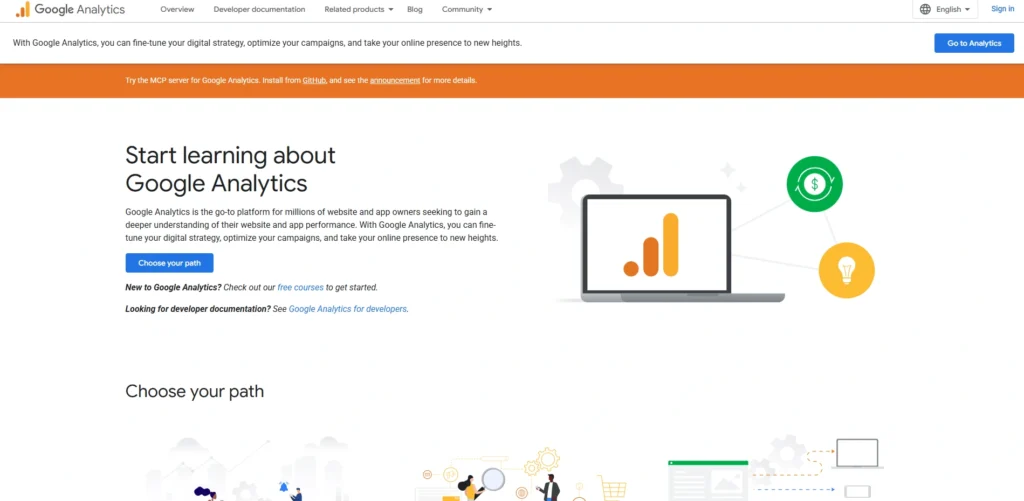
Google Analytics (GA4) is a free web analytics tool by Google that can help you understand how people find and use your site so that you can convert organic traffic into qualified SEO leads. It attributes user behavior as eventsacross devices and sessions, and attributes that behavior to traffic sources such as Google Search, social media, form submissions, and lead-generation actions. Based on this data, you can see what keywords, landing pages, and content attract engaged visitors, and where they drop off in the funnel, as well as which touchpoints drive form fills, demo requests, or calls- allowing you to refine your SEO strategy and optimize pages that actually contribute to lead generation and revenue.
Key features:
- Tracking of meaningful activity based on event-based tracking
- Improved measurements that automatically record the most basic interactions such as page views, outbound clicks, and site search without custom code.
- Conversion (key event) is set up in such a way that you can mark leads as being primary objectives and can see which pages and channels of the search engine drive them.
- Landing page and acquisition reports to indicate which channel, sources/mediums, and landing URLs generate the organic traffic and leads.
- Building the audience to separate the high-intent users to remarketing and CRO experiments.
- Tracking between devices and insights to predict user behavior based on multiple sessions and a forecast of whether they will convert.
Price:
- free
3. Google Keyword Planner

Website: https://ads.google.com/home/tools/keyword-planner/
Google Keyword Planner is a free keyword research tool designed by Google to help SEO professionals, marketers, and advertisers to discover high impact keywords, analyze search volumes , and understand the level of competition to optimize both organic content strategies and paid advertising campaigns. Initially created to use in Google Ads campaigns, it has now become invaluable as an SEO lead generation tool since it can help you to identify high volume low competition keywords that can then be used to drive targeted organic traffic to your site, to improve search rankings , and ultimately to give good quality leads. The tool can give you data-driven insights such as average monthly search volumes, competition analysis, cost-per-click estimates, and seasonal trends.
Key Features:
- Find new ideas of keywords using seed keywords, web site addresses, or product lines.
- See average search volumes per month and learn how searches change over time.
- Evaluates the difficulty of keywords based on low, medium, or high level of competition.
- Find estimated cost-per-click information to use in budget planning in paid campaigns.
- Narrow down keyword lists based on location, language, device, range of search volumes, and level of competition.
- Determine seasonal trends and changes in the performance of key words.
- Predicting clicks, impressions, and costs: Predicting before rolling out campaigns.
- Automatically sort keywords into ad groups and campaigns to plan accordingly.
Price:
- free
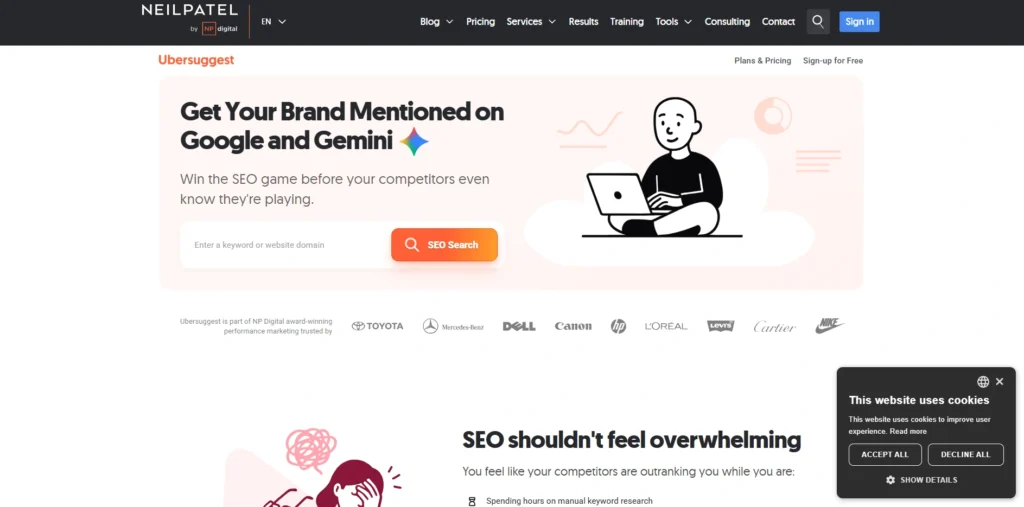
4. Ubersuggest
Website: https://neilpatel.com/ubersuggest/
One of the SEO Tools you may use to convert search traffic into leads is Ubersuggest. It helps generate leads by displaying keyword search volumes, SEO difficulty, paid difficulty, and CPC so that you can pick high-intent phrases that are easier to rank and that are more likely to convert. You may also review the best pages and links of competitors to find out what topics they are getting traffic and leads on, and then create a better version of that content and also create similar links.
Site audit and rank tracking capabilities at the time enable you to fix technical problems and track how your keywords are climbing the search results, so in the long run you will gradually increase the targeted organic visitors who are far more likely to become an inquiry, sign up, or sale.
Key features:
- Keyword research (search volume, SEO difficulty, CPC, related and long‑tail ideas)
- Ideas of content that are based on the pages and subjects that have been performing very well in your niche.
- Domain overview to view organic traffic, ranking keywords, and top pages of any site.
- Site audit to detect technical SEO issues and get suggestions to fix them
- Analysis of backlinks to see referring domains and link opportunities.
- Rank tracking to see your key positions as time goes on.
- AI-based content and keyword recommendations to accelerate the process of creating SEO content.
Price:
- free
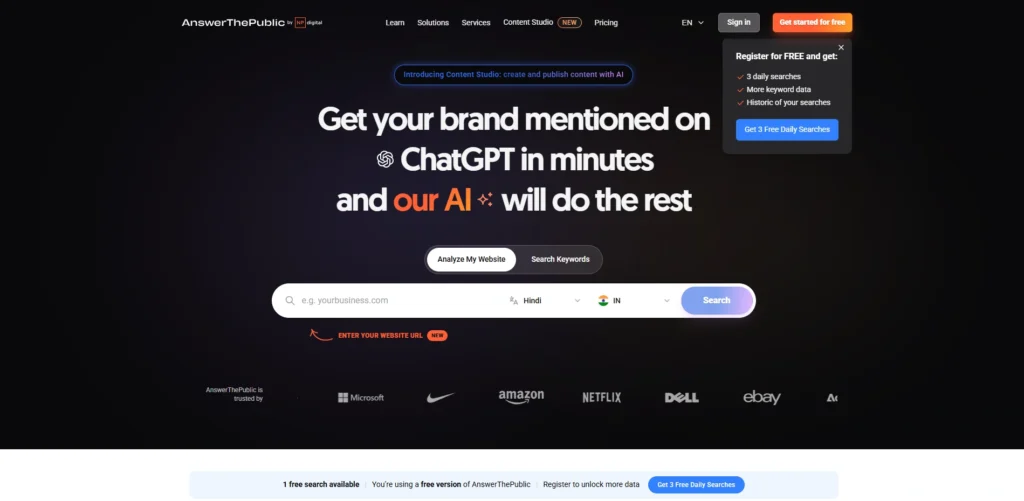
5. AnswerThePublic
website: https://answerthepublic.com
AnswerThePublic is a search-listening and keyword research engine that assists you in creating SEO-centered content ideas by displaying the authentic queries and phrases individuals type into Google and other search engines around a seed topic, which you can consequently transform into blogs, landing pages, videos, and frequently asked questions that will attract and qualify leads.
It can be viewed as a visual representation of queries, visualizing queries as “questions (who, what, how, why) and as prepositions (for, with, near), and comparisons, among other long-tail phrases that indicate strong buying interest. By creating content that directly answers these questions and aligning each piece with a lead magnet or CTA, you capture organic traffic due to users already searching to find solutions, create topica topic authority, and feed your lead generation funnel with more likely to convert visitors.
Key features:
- Displays queries that individuals put across a keyword (who/what/why/how/where queries).
- Group keyword ideas are put into questions, prepositions, comparisons, and lists in alphabetical order to plan the content with ease.
- Plots keyword clusters in search cloud graphs, and topic clusters and FAQs are easy to plan.
- Pulls automatically completes search queries of the major search engine to reveal the trending and long-tail keywords.
- Supports country and language-based filters to target local and international SEO.
- Allows you to compare topics (e.g., SEO vs SEM) to identify more promising content.
- Export data to CSV to be able to input keyword ideas in your content calendar and reporting.
- Paid plans provide search volume and CPC to allow prioritizing lead-driving topics.
Price:
- free
6. Semrush

website: https://www.semrush.com
Semrush assists in the generation of search engine leads by providing you with data-driven methods of attracting, qualifying, and converting search traffic into real business leads. It allows you to find high-intent keywords so that your content targets people who are already searching for your services, and it also helps with competitor monitoring tools by analyzing which keywords, pages, and backlinks bring competitors their traffic and leads. Along with this, you can run technical and site audits so your landing pages rank higher and load faster, which in turn improves conversions.
Then you can use tools like Lead Finder and lead-generation widgets to identify companies that best fit your ideal client profile, see their traffic and tech stack, and capture their information into a CRM or export list to target with your business or agency.
key features.
- Long-tail/high-intent keyword research to draw qualified organic traffic.
- An analysis of the competitors (Domain Overview, Organic Research, Keyword Gap) to locate keyword/content opportunities your competitors utilize to gain leads.
- On-page SEO tools and Site Audit to correct technical problems and improve those pages that convert visitors into leads (forms, landing pages, and so on).
- link building tools and Backlink Analytics to identify link opportunities and outreach opportunities that have the potential to become partnerships or clients.
- Lead Finder / Lead Generation solution to agencies: filters thousands of businesses by their buying potential, based on their niche, tech stack, traffic, backlinks, and a Semrush Lead Score.
Pricing:
- Pro: about 139.95 USD/month
- Guru: about 249.95 USD/month
- Business: about 499.95 USD/month
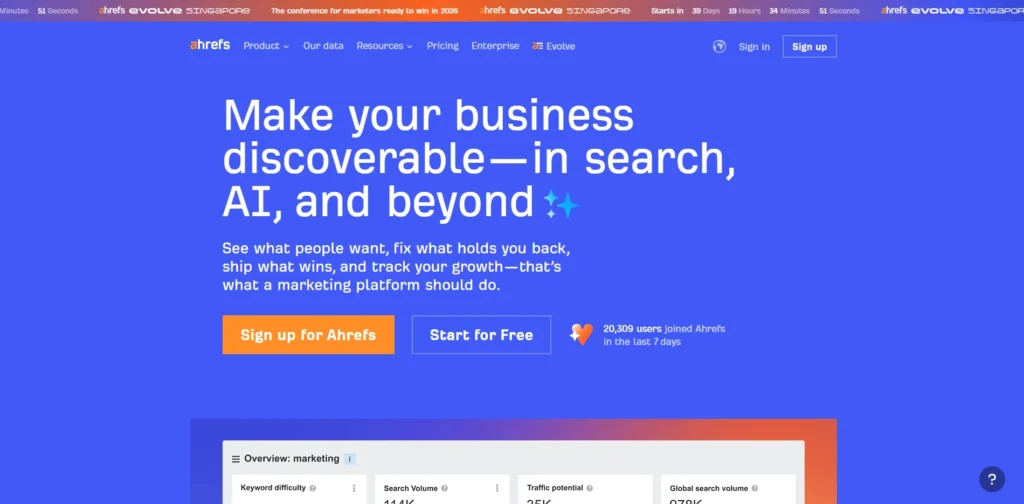
7. Ahrefs
website: https://ahrefs.com
SEO lead generation can be done using Ahrefs to help you find and rank keywords that your ideal customers are actually searching, analyze competitors who already get that traffic, and then turn that knowledge into high-intent content and landing pages that capture leads (forms, demos, trials, etc.). With the help of tools like Keywords Explorer and Site Explorer, you can identify what has real business potential, understand search intent, and see which competitor pages are generating leads.
This also includes backlink analysis tools, which help you study competitor link profiles and discover authority websites that are boosting their rankings, so you can build similar high-quality links for your own pages. All of this allows you to create better, more relevant content and optimize on-page SEO to outrank them.
The backlink, content gap, and competitor analysis features of Ahrefs allow you to identify link opportunities and uncovered topics, boosting authority so these lead-focused pages rise in rank and continue to attract qualified organic traffic that transforms into inquiries, sign-ups, or sales.
Key features:
- See what the competitors have done with their websites, their top pages, backlinks, and what kinds of keywords they are using to drive traffic to their websites, so that you can model similar lead-driving content.
- Identify keyword ideas that have search volume, difficulty, and intent to identify topics capable of generating high-quality leads.
- Audit your site to detect technical SEO problems that can block rankings and correct to increase visibility.
- This is used to track the progress of the keywords over a given time and to observe which pages and keywords are driving traffic.
Pricing
- Lite:$129 /mo
- Standard:$249 /mo
- Advanced:$449 /mo
8. Surfer SEO

Surfer SEO is an on-page and content optimization tool that helps you turn SEO content into a predictable engine that generates leads by using actual SERP data to guide what you write and how you structure it. It breaks down the ranking pages of your target keywords and provides you with clear advice on word count, headings, use of keywords, inner links, and the structure of your content .
So that when your pages reach the rank, they are better placed to be ranked and attract qualified organic traffic to your web pages. When your content has begun to rank, the features of Surfer that can be useful include content audits and keyword research, and you can use them to build topical authority, refresh non-performing pages, and systematically target pages that include money keywords which drive form fills, demo requests, or calls.
Key features:
- Content Editor with real-time optimization suggestions (keywords, headings, structure, word count, NLP terms, readability).
- Keywords research and clustering to find related, high-intent keywords and topic groupings to scalable lead-gen content hubs.
- Audit tool that links to your already-created content, scores it, and provides clear suggestions to improve scores (e.g., missing terms, word count, structure).
- Internal linking on the page and improvement of the content (content score, meta tags) to enhance the site structure and transfer users to conversion pages.
- Integrations and extensions (Google Docs, WordPress, Chrome/Keyword Surfer) to integrate Surfer into already existing workflows of writing and publishing.
Pricing:
- Standard:99 USD per month
- Pro:182 USD per month
- Peace of Mind: 299 USD per month
- website: https://surferseo.com
9. HubSpot

Website: https://www.hubspot.com/
HubSpot is a complete marketing and CRM tool that combines the capabilities of an SEO tool with lead generation functions, enabling you to generate organic traffic and transform a visitor into a qualified lead. As opposed to stand-alone SEO tools, HubSpot links your entire lead process, beginning with the first organic search and continuing through to closed deals with tight CRM integration that tracks visitor behavior, form submissions, and engagement schedules.
The platform provides AI-driven content strategy suggestions, topic clusters, keyword data analysis, and SEO page scanning with actionable fixes, plus it offers landing pages, forms, email automation, lead scoring, and analytics all in a single dashboard. This integration allows you to track attributeson reports of which organic pages or search queries had initially attracted leads and their full conversion path, directly attributing the performance of the SEO to the pipeline and revenue.
Key Features:
- LDrag-and-drop builder with conversion-optimized templates, A/B testing ability, progressive profiling, and smart forms that change depending on visitor activities.
- The automated lead scoring with customizable criteria or with data-driven models and instant routing to the appropriate sales rep based on qualification.
- Automated email campaigns, high-intent page chatbots, and nurturing sequence programs that take leads through the sales pipeline.
- Full visibility of leads with complete engagement timelines, multi-touch attribution reports with the role of organic traffic in conversions, and seamless flow of data between marketing and sales.
- Monitor organic traffic, lead generation actions, conversion rates, and revenue are directly related to the performance of the SEO.
Pricing:
- Free: $0
- Starter: Starts at ₹752/mo/seat
- Professional: Starts at ₹66,697/mo
- Enterprise: Starts at ₹300,000/mo
10. Leadfeeder

Website: www.leadfeeder.com
Leadfeeder is an AI-based B2B intent and activation platform that turns your website into a lead generation engine by identifying companies that visit your site via organic search and other methods. To SEO professionals, it turns anonymous organic traffic into actionable company-level leads that allow you to measure the impact of SEO beyond simple pageviews and tie activity on the web to sales opportunities.
The platform can help reveal 45% of the companies that viewed your website by matching the IP addresses with its comprehensive B2B database and then automatically scoreleads based on buyer intent and routes qualified prospects to your sales team-often within minutes of visits. To track organic search traffic in particular, use behavioral filters to track visitors who have viewed a service or product.
Key Features
- Discloses the companies that visit your site in real-time, matching based on IP-to-company matching a database of 500M+ leads.
- Records page views, duration of time on a page, frequency of visits to determine high-intent prospects.
- Filter by firmographics, financials, personas, trigger events, and behavioral signals to locate exact-match accounts.
- Automatically scores and prioritizes leads based on ICP criteria and high-intent behavior
- Auto-integrates qualified leads into Salesforce, HubSpot, Pipedrive, and 50+ others.
- Build ABM and marketing strategies, lead lists, and segments.
- Receive Slack or email alerts when target accounts visit your site.
Pricing:
- Lite:€0
- Website Visitor Identification: Starting at €99/monthly
- Platform: Starting at €399/month
How to Measure the Success of SEO Lead Generation.
The success of SEO lead generation can be measured by tracking the success of organic search traffic in converting this traffic into qualified leads by considering factors such as conversion rates, cost per lead, and return on investment to assess the effectiveness of your keyword strategies, content optimization, and landing page performance in driving business growth.
Key Metrics to Track
- Organic Traffic: This is a measure of the amount of traffic visiting the site by way of a search engine, whether that search is branded or not; to track the amount of traffic arriving at the site by way of a search engine, it is necessary to track the type of search engine being used as well as the brand name of the search engine; track specific non-branded search traffic to ensure quality over quantity.
- Conversion Rate: Determines the percentage of organic traffic that undertakes lead actions such as form submissions, and calculates how well the content fits the search intent.
- Cost per Lead (CPL): This is a division of the investment in SEO by the number of leads obtained, which helps to determine cost-efficiency in relation to other channels.
- Quality Score of leads: This evaluates leads by criteria such as engagement or progressing to sales, prioritizing the high-value prospects over the sheer volume.
- Click-Through Rate (CTR): Measures the number of clicks on search results compared to impressions, and indicates title and meta description appeal.
Setting Up Conversion Tracking
- Install the Google Analytics 4 (GA4) on your site and connect it with Google Search Console to integrate organic data.
- Mark important events in GA4, like form submissions or views of the thank-you page, as conversions via the events list.
- Advanced triggers, such as button clicks, should be done using Google Tag Manager, as it ensures that the trigger will fire successfully without any reloading of the page.
- Split conversion by source (organic) and landing page to attribute leads directly to SEO activities.
- Monitor assisted conversions on GA4 in multi-touch journeys, and calculate ROI as (organic lead revenue less the cost of SEO)/costs.
Conclusion
Lead generation by using SEO is merely a matter of ease in ensuring that the right people can find you on Google and then take them through the process step by step until they become real, not just random visitors who come in and go. With high-intent keywords, content that fits every phase of the buyer journey, and traffic to clear, focused landing pages with strong calls to action, you turn your website into a silent but steady sales engine running in the background.
When you supplement this with sound on-page and technical SEO, clever internal linking, and the appropriate tools such as Search Console, GA4, and key word research tools as well as CRM connected lead tracking, you are no longer doing SEO to get traffic, you are building a predictable system that draws in people already looking to buy what you are selling and turns them into a lead you can actually follow up with.
With time, as you continue measuring what works, conversion rates, organic leads, cost per lead, and revenue attributable to SEO, you can refine the pages, keywords, and topics that are bringing you the best business results, turning SEO into one of your most cost-effective and scalable growing strategies.
FAQs
Q.1 How do I Choose Keywords That Actually Generate Leads?
Target high-intent or transactional keywords that show a user is willing to buy or find a solution, such as those that include terms like services, costs, benefits, or best [industry] solutions. By mapping these keywords to various stages of the sales funnel, you will be in a position to capture both those prospects who are researching a problem and those who are ready to make a decision.
Q.2 What Is The Best Method Of Generating Instant Leads Between SEO And PPC?
PPC will be more efficient in those cases when you require leads directly because it will act like a switch that you can switch on to attract high-intent traffic. But long-term, sustainable growth is better served by SEO; it takes longer to build, but once your rankings are established, the stream of leads will be cost-effective and compounding.
Q.3 How Does Search Intent Impact My Lead Generation Efforts?
The first aspect of whether a visitor will turn into a lead is search intent; when your content fails to provide the answer to precisely what the user is searching for, he or she will bounce no matter how well your content is ranked. You need to align the type of content you have, be it a comparison guide, a service page, or a problem-solving blog post, to a specific point in the user journey.
Q.4 What Are The Most Important Issues A Lead-Generating Landing Page Considers?
An effective lead-gen page must have one specific objective, like an email capture or a consultation booking. It should include an appealing, personalized call-to-action (CTA), quick loading time, and high-quality content that directly addresses the pain points of the visitor to engage with them.
Q.5 How Long Does It Take For SEO To Start Producing Leads?
The SEO results timeline will depend on the current domain authority of your website, the competitiveness of your preferred keywords, and your current technical health. Although one can expect some improvements within a relatively short time frame, meaningful lead generation will typically require months of consistent and high-quality content and optimization efforts.