
Starting a franchise isn’t just about buying a business; it’s about stepping into a lifestyle that millions of consumers are already chasing. Smoothie King has spent over 50 years at the forefront of the health and wellness industry, evolving from a simple juice bar into a global powerhouse that defines “purpose-driven nutrition.” In a world where people are ditching sugary sodas for functional, clean-label alternatives, this brand has managed to turn healthy living into a scalable, high-demand business model. Understanding the Smoothie King Franchise Cost is now becoming increasingly important for entrepreneurs looking to enter the booming wellness industry.
The surge in Smoothie King’s popularity isn’t a fluke. As the wellness economy continues to explode, entrepreneurs are flocking to the brand because it hits the sweet spot between convenience and health. With the rise of “meal-on-the-go” culture and a renewed public focus on high-protein, low-sugar diets, the demand for specialized smoothie hubs has reached an all-time high. Investors see more than just a menu; they see a streamlined operation with a loyal following that treats a smoothie as a daily necessity rather than a luxury.
This article serves as your comprehensive blueprint for understanding the true cost of entering the Smoothie King family. We will break down everything from the initial franchise fees and construction costs to the ongoing royalties and hidden operational expenses. By the time you finish reading, you will have a crystal-clear picture of the financial commitment required, the potential for ROI, and whether your personal goals align with the brand’s aggressive expansion plans for 2026 and beyond.
What Is The Smoothie King Franchise?
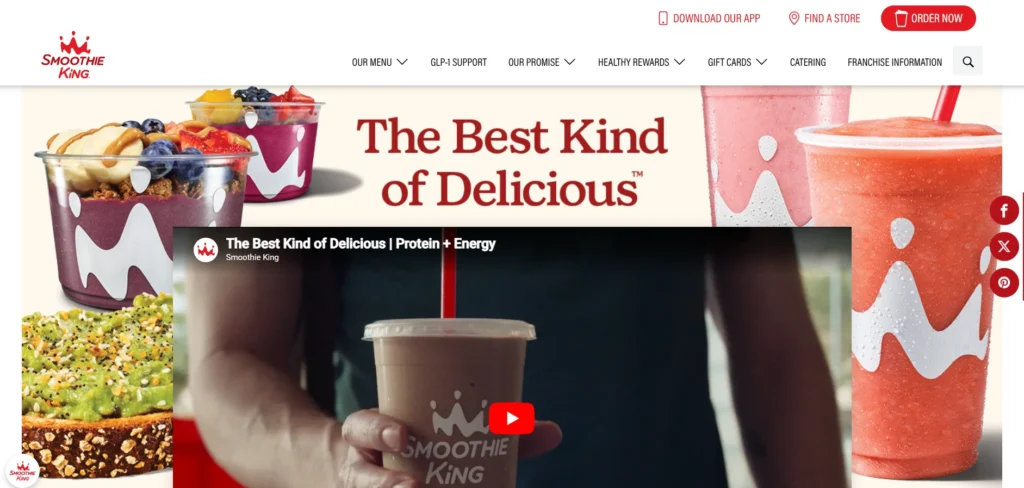
Smoothie King is the undisputed pioneer of the smoothie industry, having essentially created the category when it opened its doors in 1973. Based in Dallas, Texas, the company has spent over five decades refining a business model centered on “purpose-driven nutrition.” Rather than just serving sweet treats, the brand focuses on functional blends smoothies designed specifically for fitness, weight management, or wellness goals. Today, it operates as a global powerhouse with more than 1,200 locations across the United States, South Korea, and several other international markets. Its recent evolution into a “lifestyle brand” includes a modernized store design and an expanded menu featuring smoothie bowls and high-protein “Power Eats,” ensuring the brand remains relevant in a rapidly changing food landscape.
The franchise business model is built on high-volume, streamlined operations that cater to the booming $20+ billion global health and wellness market. As a franchisee, you aren’t just selling beverages; you are tapping into a systemized retail environment designed for efficiency, often utilizing compact footprints like end-caps or free-standing drive-thrus to maximize convenience. With the health and wellness sector projected to grow at a nearly 8% annual rate through 2026, the demand for transparent, clean-label nutrition is at an all-time high. Smoothie King leverages this by providing owners with a robust supply chain, world-class training, and a brand identity that resonates with everyone from elite athletes to busy parents looking for a meal replacement.
How Much Does A Smoothie King Franchise Cost?
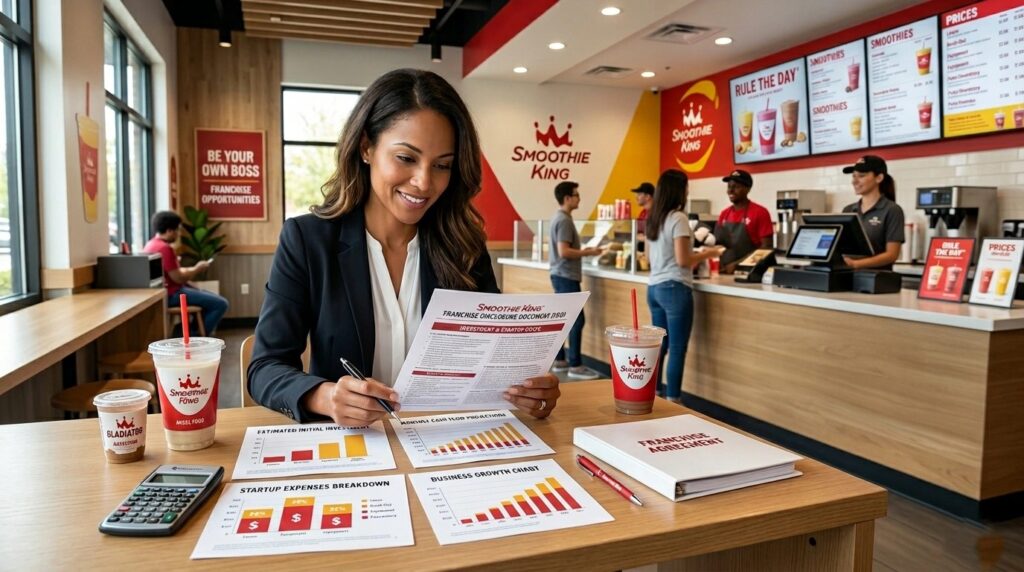
Entering the Smoothie King ecosystem requires a clear understanding of the financial landscape. Because the brand offers different store formats—ranging from compact strip-mall units to high-traffic standalone drive-thrus—the capital required can vary significantly. Generally, you are looking at a total investment range of $329,850 to $1,278,900. This wide gap accounts for real estate fluctuations, construction labor in different states, and the specific equipment package needed for your chosen layout.
Initial Franchise Fee
To officially join the network and secure your territory, you will pay an Initial Franchise Fee of $30,000. This fee grants you the right to use the brand name, proprietary recipes, and established operational systems. For those looking to scale quickly, Smoothie King often offers Area Development agreements where additional units may carry a reduced development fee of $12,500 per subsequent location. Notably, the brand frequently honors veterans with a 20% discount on this initial fee as a “thank you” for their service.
Total Investment Range
Your total “out-of-the-door” cost depends heavily on the store model:
- End-cap or In-line Locations: These typically range from $329,850 to $683,715.
- Free-standing Drive-thru Locations: Due to higher construction and real estate costs, these range from $639,950 to $1,278,900.
Equipment & Setup Cost
Setting up a high-performance smoothie bar isn’t just about blenders. This category includes commercial-grade refrigeration, POS technology systems, high-speed blenders, and specialized millwork. You should budget between $64,000 and $130,000 for furniture, fixtures, and equipment (FF&E). Additionally, leasehold improvements and the actual construction of the interior can range from $145,000 to over $800,000 depending on the “shell” condition of your site.
Working Capital Requirement
Smoothie King requires you to have a financial “safety net” to cover the early months of operation. This includes opening inventory and supplies, which usually cost between $16,000 and $29,000. Beyond that, it is recommended to have $15,000 to $25,000 in additional funds to cover the first three months of labor, utilities, and miscellaneous overhead while your customer base grows.
Ongoing Franchise Fees
Once your doors are open, the partnership continues through a structured fee system based on your gross sales:
- Royalty Fee: 6% of weekly gross sales.
- National Marketing Fund: 3% of weekly gross sales.
- Local Marketing: A requirement to spend approximately 2% of sales on your own community-level advertising.
- Technology Fee: A flat monthly contribution (typically around $200) for system maintenance and updates.
Smoothie King Franchise Profit & Revenue
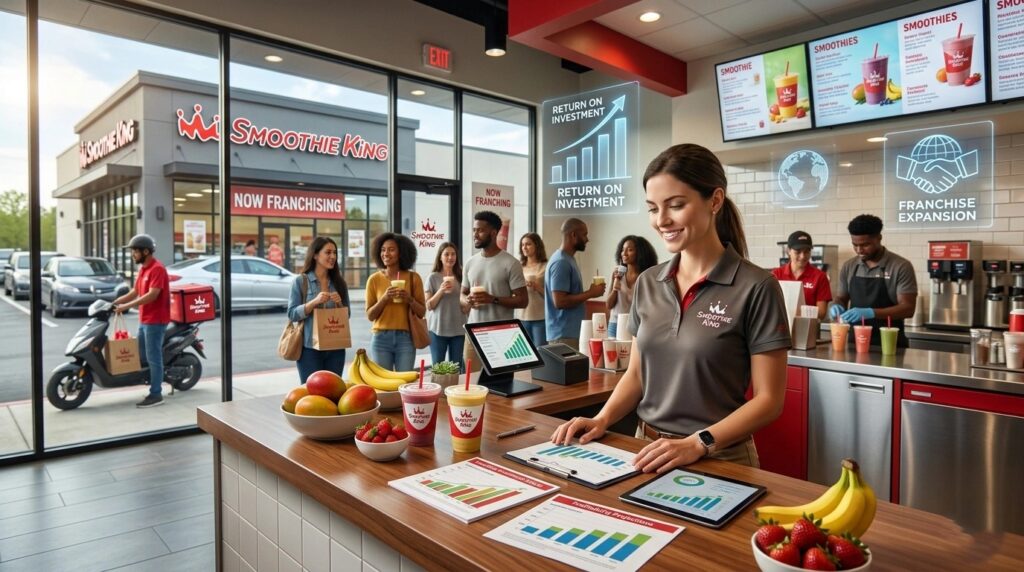
Understanding the potential return on investment is crucial for any prospective franchisee. While individual performance varies by location and management style, the brand has historically shown strong performance, particularly in high-traffic suburban areas and regions with a strong fitness culture.
The table below breaks down the key financial performance metrics based on recent system-wide data and industry averages:
| Financial Metric | Estimated Value | Description |
| Average Unit Volume (AUV) | $600,000 – $650,000 | The system-wide average across all U.S. units. |
| Top 25% AUV | $900,000+ | Frequently achieved by high-performing drive-thru locations. |
| Gross Profit Margin | 60% – 70% | High margins due to relatively low raw ingredient costs. |
| Estimated Net Profit Margin | 10% – 15% | The “take-home” after royalties, labor, rent, and utilities. |
| Average Monthly Revenue | $45,000 – $55,000 | Performance often peaks during warmer summer months. |
| EBITDA Range | 15% – 20% | Operating profit before interest, taxes, and depreciation. |
Requirements To Open A Smoothie King Franchise
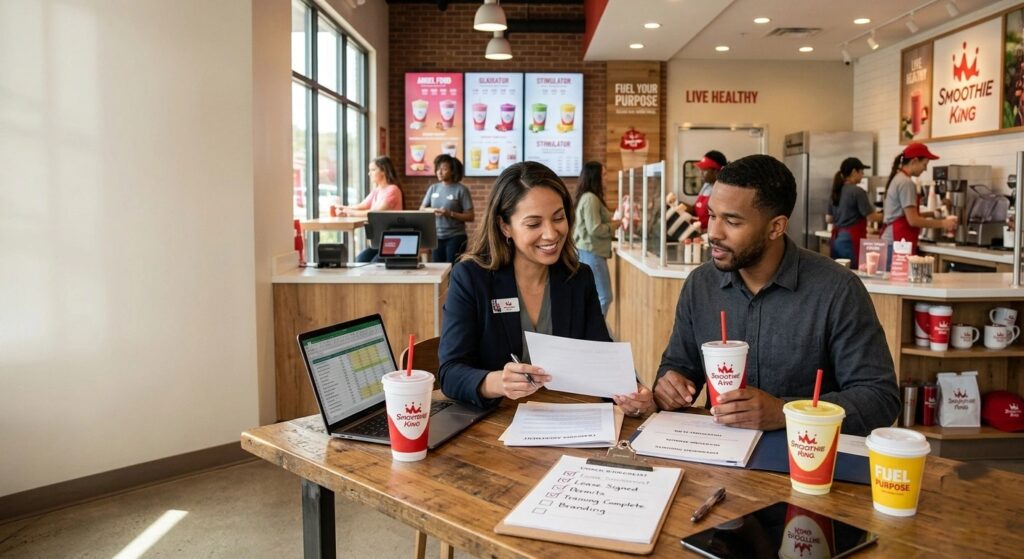
Becoming a Smoothie King franchisee requires more than just enthusiasm for the brand; the company has established strict financial and professional benchmarks to ensure each new location has the stability to succeed. Because this is a high-growth brand, they look for partners who are not only well-capitalized but also possess the leadership grit to manage a fast-paced retail environment.
Net Worth Requirement
To qualify for a single-unit agreement, you must demonstrate a minimum net worth of $300,000. This figure represents your total assets minus your liabilities, providing a snapshot of your overall financial health. If you are looking to become an Area Developer and open multiple locations, this requirement scales upward significantly to ensure you have the financial depth to handle simultaneous construction projects and a larger workforce across a specific territory.
Liquid Capital Requirement
Smoothie King requires you to have at least $100,000 in liquid assets available to invest. This must be “ready-to-use” cash or assets that can be quickly converted to cash such as savings, stocks, or bonds rather than equity tied up in real estate or retirement accounts. This liquidity is essential to cover the initial franchise fee, your first round of inventory, and the inevitable “ramp-up” costs that occur before your store reaches its break-even point.
Experience & Skills
While you don’t necessarily need a background in the food and beverage industry, Smoothie King prioritizes candidates with a proven track record in management or business ownership. Ideal candidates are those who have experience leading teams, managing P&L (Profit and Loss) statements, and maintaining a “guest-first” mentality to uphold the brand’s high service standards. They seek owners who are willing to be “on-the-ground” operators, especially during the first year, and who demonstrate a genuine passion for the health and wellness lifestyle.
Location Requirements
The brand’s real estate team is highly specific about where a Smoothie King can thrive, generally seeking sites that offer high visibility and easy access. They prioritize high-traffic retail hubs near gyms, grocery stores, or major shopping centers, with a strong preference for sites that allow for a drive-thru to maximize convenience and revenue. Typical locations range from 800 to 1,500 square feet, allowing for flexible footprints such as end-caps, in-line units, or freestanding kiosks in neighborhoods with a high concentration of active, health-conscious residents.
Step-By-Step Guide On How To Apply For The Smoothie King Franchise

The application process is designed to be a mutual discovery period where both you and the brand determine if there is a strong cultural and financial fit. Following these steps systematically will help you move from an initial inquiry to a grand opening.
Step 1: Initial Inquiry and Prequalification
The journey begins by submitting an inquiry through the official Smoothie King franchise website. You will provide basic contact information and a high-level overview of your financial standing. A franchise development manager will then reach out for an introductory call to verify that you meet the minimum net worth and liquid capital requirements.
Step 2: Interactive Discovery Process
Once you are qualified, you will enter a deeper discovery phase. This involves reviewing the brand’s history, core values, and the unique “Rule the Day” philosophy. You will receive more detailed information about the support systems provided, including marketing, supply chain, and site selection assistance, to ensure the business model aligns with your professional goals.
Step 3: Receipt and Review of the FDD
You will be provided with the Franchise Disclosure Document (FDD), a comprehensive legal document that outlines the company’s financial performance, legal history, and the detailed breakdown of all associated costs. It is highly recommended that you review this document with a qualified franchise attorney or financial advisor to fully understand your obligations and the brand’s commitments.
Step 4: Discovery Day in Dallas
If both parties are interested in moving forward, you will be invited to “Discovery Day” at the corporate headquarters in Dallas, Texas. This is a critical face-to-face meeting where you will meet the executive leadership team, tour local stores, and get a first-hand look at the corporate culture. This day often serves as the final evaluation for your approval as a franchisee.
Step 5: Franchise Agreement Execution and Training
After receiving formal approval, you will sign the Franchise Agreement and pay the initial $30,000 franchise fee. This officially welcomes you into the Smoothie King family. Immediately following this, you will begin an intensive multi-week training program that covers everything from operational excellence and staff management to mastering the proprietary smoothie recipes.
Step 6: Site Selection and Construction
With the support of the brand’s real estate experts, you will identify and secure a location that meets the demographic and traffic requirements. Once the lease is signed, you will work with approved contractors to begin the build-out, install the necessary equipment, and prepare the store for its first customers.
Step 7: Grand Opening
After passing final inspections and hiring your team, you will launch your store. Smoothie King typically provides a “Grand Opening” marketing kit and field support to help you generate local buzz, ensuring you start your business with maximum visibility and momentum in your community.
Types Of Smoothie King Franchise Locations

Smoothie King offers a variety of store models designed to adapt to different real estate environments and consumer behaviors. Choosing the right format is a strategic decision that impacts your initial construction costs, daily operational flow, and long-term revenue potential.
Inline Stores
Inline or “end-cap” stores are typically located within larger shopping centers, strip malls, or mixed-use developments. These locations benefit from the “anchor” traffic of nearby grocery stores or popular retail outlets, making them an excellent choice for capturing shoppers already out on errands. While they usually have a smaller footprint, inline stores provide a community-focused atmosphere where guests can walk in, order at the counter, and enjoy their smoothies in a modern, clean-label environment.
Drive-Thru Locations
Drive-thru models are currently the most sought-after format due to the increasing consumer demand for speed and convenience. These can be freestanding buildings or specialized end-caps with a dedicated lane, allowing the business to serve commuters and busy parents without requiring them to leave their vehicles. While the initial investment for a drive-thru is higher due to more complex construction and equipment needs, these locations historically generate significantly higher average unit volumes (AUV) because they maximize throughput during peak morning and lunch hours.
Non-Traditional Locations
Non-traditional locations allow the brand to expand into high-density, captive-audience environments where a full-sized store might not be feasible. This category includes kiosks and smaller units found in airports, university campuses, hospital food courts, and even large-scale athletic facilities or stadiums. These units often feature a streamlined menu focused on the brand’s top-selling “purpose-driven” blends, allowing franchisees to capitalize on a constant stream of foot traffic in a relatively compact and efficient operating space.
Pros and Cons of Smoothie King Franchise

Every investment carries a unique set of advantages and challenges. Evaluating these factors is essential to determine if this business aligns with your personal management style and long-term financial objectives.
Pros
- Established Brand Authority: With over 50 years in the industry, Smoothie King offers immediate brand recognition and a loyal customer base that trusts their “purpose-driven” nutritional standards.
- High-Growth Market Sector: The franchise operates within the booming $20+ billion health and wellness industry, benefiting from a global shift toward functional, clean-label meal replacements.
- Streamlined Operational Model: The business focuses on a limited inventory of mostly frozen or shelf-stable ingredients, which simplifies supply chain management and reduces the complexities found in traditional full-service restaurants.
- Strong Support Ecosystem: Franchisees receive comprehensive assistance, including a multi-week training program, site selection expertise, and national marketing campaigns that drive traffic to individual locations.
Cons
- Significant Initial Investment: The total cost to open a location can exceed $1 million for freestanding drive-thru models, which may be a high barrier to entry for some entrepreneurs.
- Ongoing Royalty and Marketing Fees: A total of 9% of weekly gross sales is dedicated to royalties and national advertising, which can impact net profit margins if operational costs aren’t strictly managed.
- Seasonal Revenue Fluctuations: While smoothies are popular year-round, many locations experience a dip in sales during colder winter months, requiring careful cash flow planning.
- Limited Creative Control: As with most franchise systems, owners must adhere to strict brand guidelines regarding menu items, store design, and marketing, leaving little room for individual experimentation.
Tips To Increase Smoothie King Franchise Profit

Maximizing the return on your investment requires a focus on both operational efficiency and proactive local engagement. While the brand provides the framework, successful owners use the following strategies to boost their bottom line:
- Optimize Labor Scheduling: Use peak-hour data to ensure you are fully staffed during the morning and lunch rushes while keeping labor lean during slower mid-afternoon blocks. Managing payroll effectively is often the quickest way to improve net margins.
- Upsell with Enhancements: Train your team to suggest functional “enhancers” such as extra protein, probiotics, or caffeine to every guest. These high-margin add-ons significantly increase the average transaction value with almost no additional labor cost.
- Focus on Local Store Marketing (LSM): Don’t rely solely on national ads; partner with local gyms, yoga studios, and high school sports teams. Offering “Healthy Reward” sign-ups or bringing samples to community events can turn nearby fitness enthusiasts into daily regulars.
- Monitor Waste and Portion Control: In a beverage-based business, even small overflows or wasted ingredients can add up to thousands of dollars in lost profit over a year. Consistent staff training on precise measurements ensures product quality and protects your food cost percentages.
- Leverage Technology and Delivery: Actively promote the Smoothie King app and third-party delivery platforms. Modern consumers value convenience, and encouraging mobile orders can increase your store’s throughput without adding to the physical line at your counter.
Smoothie King vs. Other Smoothie Franchises
Choosing the right brand requires a clear understanding of how the market leaders differ in terms of investment, scale, and core product focus. While Smoothie King is the largest in the category, competitors like Tropical Smoothie Cafe and Jamba offer different business models that might appeal to different types of investors.
The following table compares Smoothie King with its primary industry rivals:
| Feature | Smoothie King | Tropical Smoothie Cafe | Jamba |
| Core Focus | Health, Fitness & Function | Food, Smoothies & Wraps | Fresh Juices & Classic Fruit |
| Est. Initial Investment | $329,850 – $1,278,900 | $296,500 – $661,500 | $378,650 – $843,000 |
| Franchise Fee | $30,000 | $30,000 | $35,000 |
| Royalty Fee | 6% | 6% | 6% |
| Ad Fund Fee | 3% | 3% | 3% |
| Total Units | 1,200+ | 1,400+ | 750+ |
| Real Estate Style | Freestanding, Drive-thru, Inline | Inline & End-cap | Malls, Airports & Traditional |
Some Suggested Franchise Options:
- Tea Time Franchise Cost
- Campa Cola Franchise Cost
- Chai Sutta Bar Franchise Cost
- Ice Cream Franchise in India
Final Thoughts
In conclusion, choosing to invest in a Smoothie King franchise is ultimately a commitment to joining a brand that has spent decades perfecting the balance between health and business. As we have seen, the startup costs can be significant especially for high-traffic drive-thru models, and understanding the Smoothie King Franchise Cost is essential before making any investment decision, but they come with the backing of a proven system, a loyal customer base, and a slice of the rapidly growing wellness market. If you have the required liquid capital and a passion for active living, this franchise offers a streamlined path to business ownership without the guesswork of starting a brand from scratch.
Success in this venture depends on your ability to manage local operations efficiently while maintaining the high service standards the brand is known for. While fees and seasonal shifts are important factors to consider, the potential for strong revenue and the simplicity of a beverage-focused menu make it a standout option in the competitive franchising world. Before taking the next step, ensure you review the financial disclosures carefully and speak with existing owners to get a real-world perspective on what it takes to “rule the day” in your specific community.